Gas Line Repair Leander TX
Get Estimate

Commercial Gas Line Services in Leander, TX

Restaurants, retail spaces, offices, and multi-unit properties across Leander run on gas systems that carry bigger loads and answer to stricter rules than any home. We design, install, repair, and inspect commercial gas piping with the scheduling discipline a business demands — including off-hours work that keeps your doors open.


A restaurant with six ranges firing at dinner rush, a retail center along Leander's growing commercial corridors, an office building with rooftop heating units — commercial gas work is about capacity, compliance, and continuity. Undersized pipe starves equipment during peak demand, and a failed inspection stalls a buildout. We handle commercial gas systems across Leander and nearby Cedar Park, Georgetown, and Liberty Hill with planning that respects your operating hours.

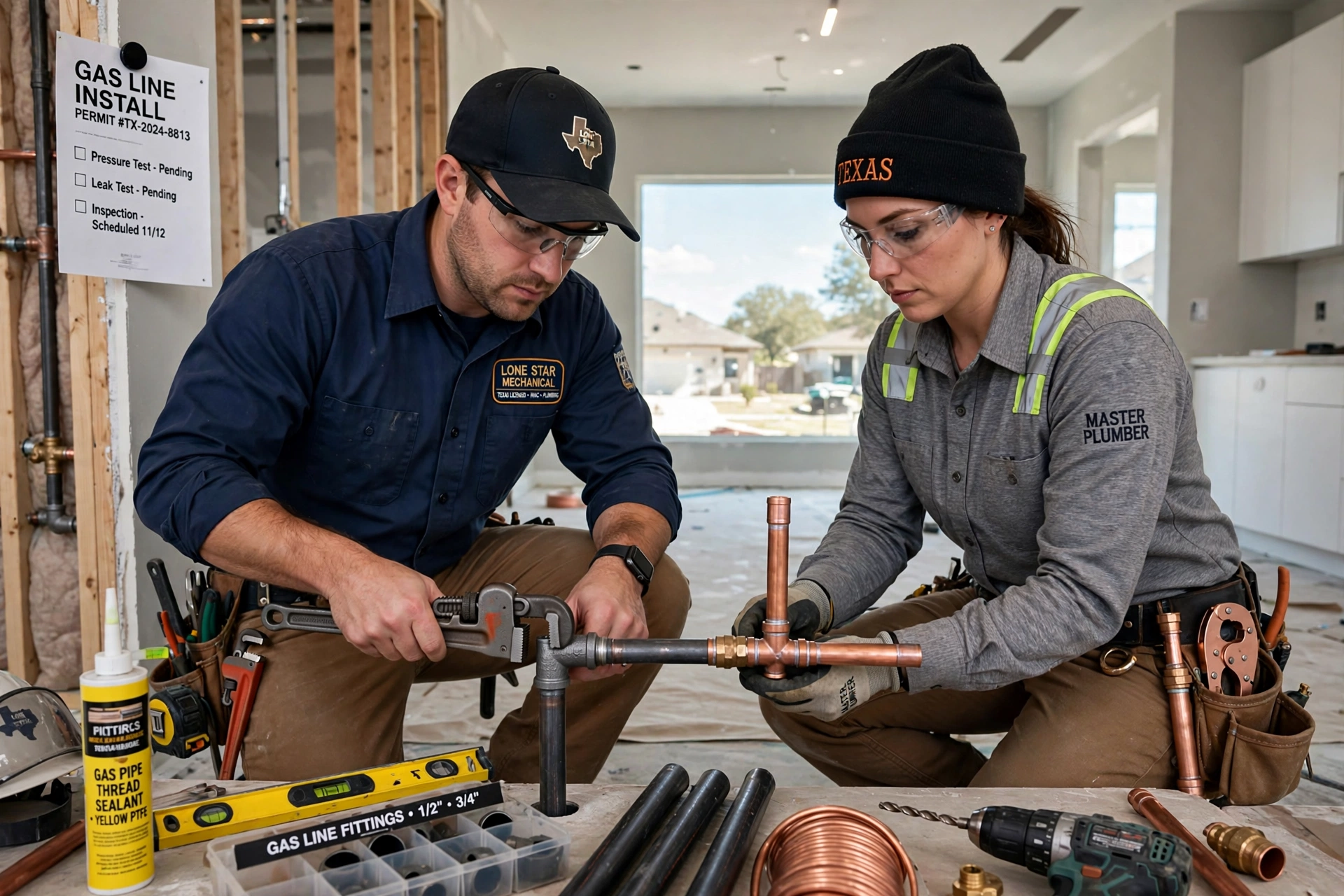
Commercial gas fitter applying thread sealant to a large-diameter steel gas fitting at a Leander, TX business
Experienced Experienced Team
Fully Insured Insured & Bonded
24/7 Emergency Ready When You Call
Quality Focused Serving Leander Businesses

Commercial Gas Systems: Bigger Loads, Higher Stakes

Commercial gas piping differs from residential in three ways that matter: larger pipe and higher BTU demand, stricter code and inspection requirements, and a business that cannot simply pause for a week. Here is how we approach each.

Load Calculations, Not Guesswork

Every commercial project starts with the numbers: the BTU rating of each appliance, the total connected load, and the peak demand when everything fires at once. We size pipe and regulators from those figures so the farthest appliance gets full pressure at the busiest hour — because a kitchen that loses flame during dinner rush is losing money.

Code and Inspection, Handled

Commercial gas work in Leander is permitted and inspected, and the requirements run deeper than residential — combustion air, shutoff accessibility, and documentation the inspector expects to see. We prepare the permit package and coordinate inspections as part of the project.

Scheduled Around Your Business

Gas shutdowns happen on your clock, not ours. Wherever the work allows it, we schedule disruptive phases for off-hours — overnight for restaurants, weekends for offices — and give you a written sequence so your staff knows exactly what to expect.

Tested Before Handover

Every commercial installation is pressure tested and walked through with the owner or facilities manager before sign-off. You get the test documentation and a clear map of shutoff locations for your building records.

Commercial Meters, Regulators, and Sizing

Every commercial gas installation starts upstream at the meter, and commercial metering is a different animal from residential. Where a home gets a small standardized meter, a business may need a larger meter set, a different service pressure from the utility, or a dedicated regulator assembly — and the utility, Atmos Energy in the Leander area, has its own requirements for commercial service sizing. Part of our job is coordinating with the utility so the service entering your building actually matches the load inside it.

Regulators are the quiet workhorses of commercial gas systems. Gas arrives from the utility at a higher pressure than appliances can use, and regulators step it down — sometimes in two stages for long runs or high-demand equipment. Undersized or failing regulators show up as appliances that underperform at peak times: the classic symptom is equipment that works fine alone but falters when everything runs together. During any commercial service we verify regulator sizing and condition, because new pipe downstream of a struggling regulator is money wasted.

Sizing ties it all together. Pipe must be large enough that pressure at the farthest appliance stays within the manufacturer's required range when every connected appliance fires at once — the peak-demand calculation that separates commercial design from residential rules of thumb. We run those calculations from actual appliance nameplate data, not assumptions, and we document them. When you add equipment later — a second fryer line, an additional rooftop unit — the documented sizing tells us exactly how much headroom the system has.

One more commercial reality: future growth. Businesses change equipment more often than homeowners do. When we design commercial gas piping, we discuss your likely equipment roadmap and, where it makes sense, install pipe with spare capacity or stub-outs for planned additions. A little foresight during the initial installation is dramatically cheaper than re-piping a working kitchen two years later.

Minimizing Downtime During Commercial Gas Work

For a business, the schedule of gas work matters almost as much as the quality of it. A restaurant that loses its gas line during Friday dinner service is not just inconvenienced — it is closed. An office building with no heat on a January morning sends everyone home. That is why every commercial project we take on starts with a shutdown plan, not just a work plan: what gets disconnected, for how long, in what order, and what the fallback is if something runs long.

The main tool is scheduling. Whenever the work allows it, we schedule shutdowns for off-hours: overnight for restaurants, early mornings or weekends for retail and offices, between-tenant windows for property managers. Phased work is the other lever — completing the installation in sections so only part of the system is ever offline, with temporary connections bridging the gaps where code and safety allow.

Communication is the other half of downtime control. The owner, manager, or facilities contact gets a written sequence before work starts: which days, which hours, which equipment goes offline and when it comes back. If the scope changes mid-project — and in older buildings it sometimes does — you hear about it immediately, with options, not after the fact. Surprises are what turn a two-day project into a lost week.

The ideal time for disruptive gas work is when the business feels it least. For restaurants that usually means the overnight hours between close and prep; for offices, weekends; for retail, early mornings before opening. We have done full commercial re-pipes where the staff arrived to a finished, tested system they never saw being built. That is the standard we plan toward — the work happens, the inspection passes, and your customers never know.

Routine Commercial Gas Inspections

Routine inspection is the most cost-effective commercial gas service there is. A scheduled inspection finds the corroded section, the failing regulator, or the code deficiency while it is still a line item — not at 6 PM on a Friday when the inspector or the gas utility red-tags your system. For restaurants, retail, offices, and multi-unit properties, we recommend inspections on a regular cycle, with the interval set by the age and condition of the system.

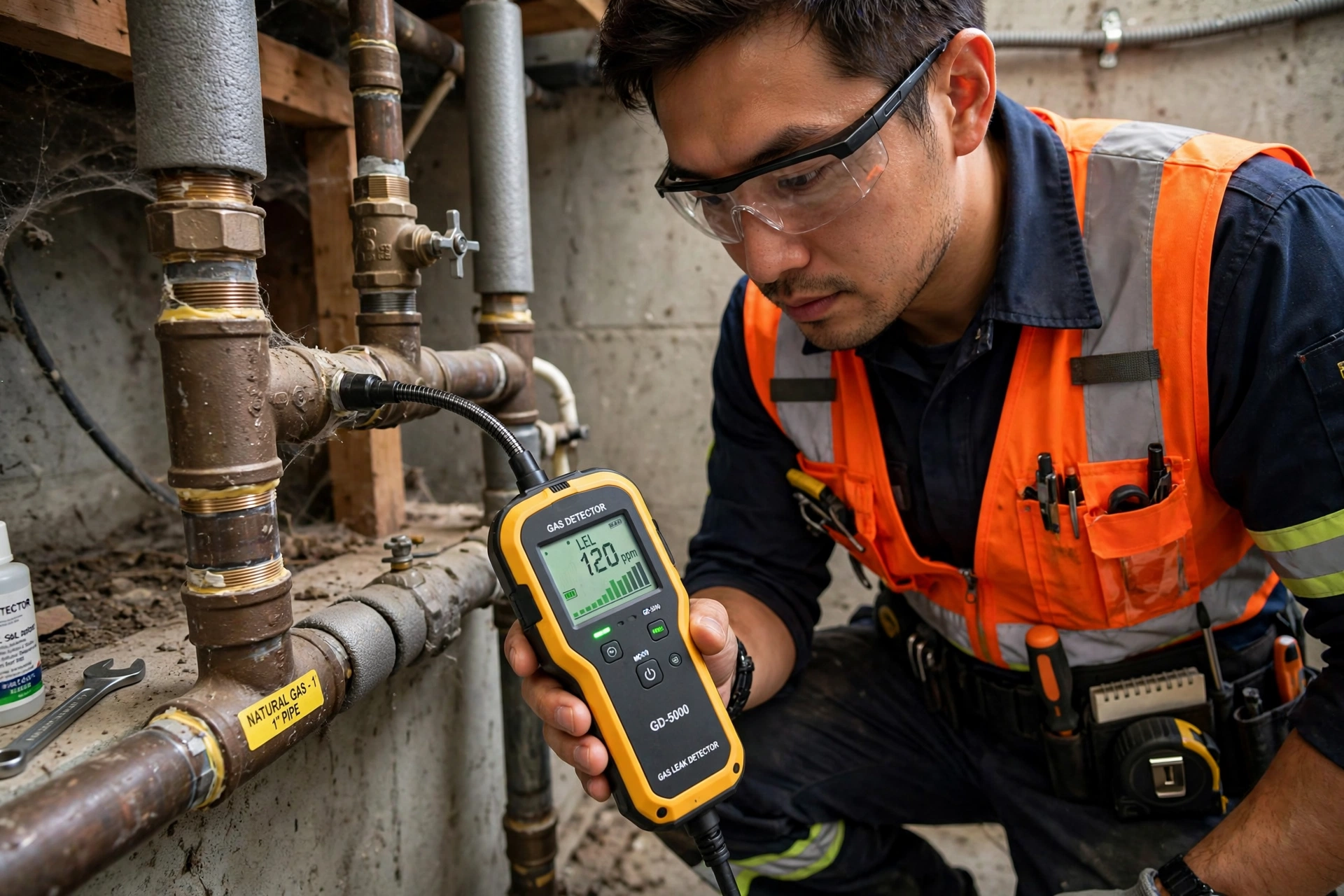
A commercial gas inspection is systematic. The technician walks the entire system from the meter inward: the meter set and regulators, exposed piping and supports, appliance connectors, shutoff valves, combustion air provisions, and venting. Each appliance is checked for proper operation and correct gas pressure. Findings are documented with photos and plain-language explanations, prioritized by safety urgency — what needs attention now versus what to plan for.

For property managers overseeing multiple buildings, inspections create something valuable: a baseline. Knowing the condition of every gas system in the portfolio turns gas maintenance from reactive emergency calls into planned capital work. We can inspect multiple properties on a coordinated schedule and deliver a single consolidated report, so budgeting for gas system work happens once a year instead of in crisis mode.

Inspection reports also protect you in transactions and lease negotiations. A documented, recently inspected gas system answers the buyer's or tenant's questions before they are asked, and it gives you leverage: either the system is sound and the report proves it, or the deficiencies are identified and priced before they become deal-breakers. Either way, you are negotiating from knowledge instead of uncertainty.

Common Commercial Gas Line Services We Provide

01

New commercial gas installations

What we do: We design and install complete gas piping for new restaurants, retail buildouts, and office spaces — load calculations, utility coordination, permits, and inspections included.

→ Your space opens on schedule with a documented, code-compliant gas system.

02

Equipment additions and changeouts

What we do: Adding a fryer line, swapping in high-BTU equipment, or converting appliances? We verify the existing pipe and meter can carry the new load and upgrade what cannot.

→ New equipment gets the gas supply it was designed for — no starved burners, no nuisance shutdowns.

03

Repairs and emergency response

What we do: Leaks, failed regulators, damaged lines, and utility red-tags — we diagnose commercial gas problems and make safe, code-compliant repairs with minimal disruption to your operation.

→ Your business gets back to full operation with the problem actually fixed, not patched.

Commercial Gas Work in Leander: Local Knowledge

Leander's commercial corridors are growing fast — new restaurants, retail centers, and office spaces rising alongside established businesses in older buildings. That mix means we work on everything from ground-up installations in new construction to bringing decades-old commercial gas systems up to current code. We know the local inspection process, the utility coordination, and the soil and weather conditions that affect buried commercial lines.

Commercial Areas We Serve

  • Hero Way Corridor

    Leander's main commercial strip, where restaurants and retail buildouts need coordinated gas work that keeps neighboring businesses running.

  • Crystal Falls Commercial

    Mixed-use and retail spaces serving the master-planned community, often with phased construction that rewards careful utility planning.

  • Old Town Leander

    Established businesses in older buildings, where bringing aging gas systems up to current commercial code is the typical project.

Local Conditions We Plan For

  • Expansive clay and buried lines

    Commercial sites with buried gas runs face the same Hill Country clay movement as homes — we specify polyethylene underground with tracer wire and protect every riser transition.

  • Growth and utility coordination

    In a fast-growing city, commercial projects often intersect with utility upgrades and road work. We coordinate with Atmos Energy early so meter and service sizing never become the bottleneck.

Typical Commercial Projects

Before

A restaurant's kitchen lost gas pressure every dinner rush when all six ranges fired at once.

After

We upsized the undersized trunk line and regulator; peak-hour pressure now holds steady across every appliance.

Maintenance: Load calculations from actual appliance ratings — so the system is proven for the busiest hour, not the average one.

Before

A retail buildout needed gas for three tenant spaces, but the existing service was sized for one.

After

We coordinated a larger service with the utility and installed a manifolded distribution system with individual shutoffs.

Maintenance: Each tenant gets independent gas service with clear shutoff locations for facilities staff.

Before

An office building's aging rooftop gas lines failed inspection during a sale.

After

We replaced the rooftop runs, brought supports and shutoffs up to code, and the sale proceeded with a clean inspection record.

Maintenance: Documented, code-current work that stands up to buyer inspections and insurance reviews.

Problems Solved by Commercial Gas Services

Commercial gas problems cost money by the hour. These are the ones we solve most often.

Problem

Pressure loss during peak demand

Equipment that performs fine in isolation but falters when everything runs together is the classic sign of undersized pipe or a struggling regulator — and in a commercial kitchen, it means inconsistent cooking and unhappy customers.

Our Fix

We calculate the true peak load from appliance ratings, then upsize pipe and regulators so the farthest appliance holds pressure at the busiest hour.

Problem

Failed inspections and red tags

A failed gas inspection can stall a buildout, delay an opening, or shut down operating equipment. Older commercial buildings in particular accumulate code deficiencies as standards evolve.

Our Fix

We correct deficiencies to current code, coordinate re-inspection, and document everything so the file is clean going forward.

Problem

Aging commercial gas infrastructure

Corroded rooftop lines, deteriorating underground runs, and obsolete materials in older buildings are reliability and liability risks — especially where the public and employees are present.

Our Fix

We replace failing commercial gas piping with modern materials, permitted and inspected, and leave you with documentation for your insurance and property records.

Newly installed commercial gas piping with shutoff valves at a Leander, TX restaurant

Benefits of Professional Commercial Gas Service

Commercial gas work done right pays for itself in reliability, compliance, and avoided downtime.

  • Reliable Peak-Hour Performance

    Properly sized pipe and regulators mean every appliance gets full gas flow when the business is busiest — consistent cooking, steady heat, no mysterious mid-rush failures.

  • Inspection and Insurance Ready

    Permitted, documented, code-compliant work stands up to city inspections, health department visits, insurance reviews, and buyer due diligence without scrambling.

  • Planned, Not Panicked

    Routine inspections and phased upgrades turn gas maintenance into budgeted capital work instead of emergency calls — you choose when the work happens.

  • Room to Grow

    Commercial systems designed with spare capacity and stub-outs absorb new equipment without re-piping. When the menu expands or the tenant mix changes, the gas system is ready.

Commercial Gas Project Cost Factors in Leander

Commercial gas projects are quoted individually — a single fryer line addition and a full restaurant buildout live in different worlds. What drives the number is consistent: scope, materials, access, and scheduling. Understanding those drivers helps you evaluate any quote on its merits.

Typical Investment Range

Every project priced in writing

You receive a detailed written proposal — scope, materials, schedule, and inspection coordination — before any work begins.

What changes the price

01

Scope and BTU Load

Total connected load determines pipe sizing, regulator requirements, and labor — a high-demand commercial kitchen is a very different project than a small office heater.

02

Materials and Routing

Larger-diameter commercial pipe, rooftop routing, trenching across a parking lot, and core drilling each carry their own labor profile.

03

Scheduling and Phasing

Off-hours and phased work that keeps your business running requires more coordination — and it is worth it when downtime costs more than the premium.

Why Leander Businesses Trust Our Gas Work

What We Bring to the Job

  • Commercial-focused experience — restaurants, retail, offices, and multi-unit properties are core work for us, not an occasional side job
  • Commercial code knowledge — every project is permitted, inspected, and built to current commercial fuel gas requirements
  • Utility coordination — we work directly with the gas utility on service sizing, meter sets, and inspection scheduling

How We Treat Your Business

Off-hours scheduling

Disruptive work happens overnight, on weekends, or between tenants — your customers see a finished system, not a construction zone.

Written shutdown plans

You get the sequence in writing before work starts: what goes offline, when, and for how long. No surprises mid-project.

Documentation for your files

Load calculations, pressure test results, and inspection records — the paperwork your insurance, buyers, and inspectors expect.

Our Experience With Commercial Gas Systems

Commercial gas work rewards specialization: load calculations, utility coordination, phased scheduling, and documentation. That is the work we do — for restaurants, retail spaces, offices, and multi-unit properties across the Leander area.

  • Complete gas piping for restaurant buildouts and kitchen equipment additions.
  • Multi-tenant distribution with individual shutoffs and clear labeling for facilities staff.
  • Rooftop and exposed commercial gas lines replaced and brought up to current code.
  • Routine inspection programs for property managers with consolidated reporting.
Get Started Today
Gas fitter installing a large commercial gas valve with a pipe wrench at a Leander, TX business

How We Handle Every Commercial Project

Three standards guide our commercial gas work in Leander.

Your business stays open. We schedule disruptive work for off-hours and phase installations so your operation — and your revenue — keeps moving.

O

Open for Business

Downtime planned to near zero

Code and paperwork are part of the job. Permits, inspections, load calculations, and test documentation arrive organized and complete — ready for your files, your inspector, and your insurer.

D

Documented Work

Ready for inspections

One point of contact from first walkthrough to final sign-off. You always know the schedule, the scope, and what happens next.

S

Single Point of Contact

Clear communication throughout

Frequently Asked Questions

How is commercial gas line work different from residential?

Three things: scale, code, and continuity. Commercial systems carry far larger BTU loads, which means bigger pipe, commercial meter sets, and regulators sized from actual appliance ratings. Code requirements run deeper — combustion air, shutoff accessibility, and documentation inspectors expect to see. And the work has to fit around your business: shutdowns are scheduled for off-hours and phased so your operation keeps running.

Can you do the work outside our business hours to avoid downtime?

Yes — off-hours scheduling is standard for our commercial work. Restaurants typically get overnight windows between close and morning prep; offices and retail get weekends or early mornings. You receive a written sequence before work starts showing exactly what goes offline and when it comes back, so there are no surprises for your staff or customers.

Do commercial gas projects require permits and inspections?

Yes. Commercial gas piping in Leander requires permits from the city's building inspections office, and the finished work must pass inspection. Commercial requirements are more extensive than residential, covering items like combustion air provisions and shutoff accessibility. We prepare the permit package, coordinate the inspections, and make sure the documentation file is complete.

My restaurant cannot afford to shut down. How do you handle that?

We plan the project around your operating hours from day one. Disruptive phases happen overnight or during your slowest windows, and phased installation means only part of the system is ever offline at once. For many restaurant projects, the staff arrives to a finished, tested system they never saw being built. You will have a written shutdown plan before we start, so you can staff and plan with confidence.

How often should a commercial building's gas system be inspected?

It depends on the system's age and use, but most commercial properties benefit from a professional inspection on a regular cycle — annually for high-use kitchens, less often for light-use office systems. Older buildings and properties changing hands should always be inspected. An inspection documents the system's condition with photos and prioritized findings, which is also valuable for insurance and property transactions.

We are adding new gas equipment. Do we need to upgrade the piping or meter?

Sometimes. Every appliance adds BTU load, and the existing pipe and meter were sized for the original lineup. We calculate the new total connected load from the equipment nameplates and check it against your current pipe sizing and meter capacity. If the system has headroom, we connect and verify. If not, we show you exactly what needs upsizing — pipe, regulator, or a larger service coordinated with the utility — before the equipment arrives.

Do you service multi-unit apartment or condo buildings?

Yes. Multi-unit properties have their own pattern: individual unit shutoffs, common-area equipment like boilers and pool heaters, and long distribution runs. We inspect and service these systems with consolidated reporting for property managers, and we coordinate access across units so the work disrupts as few residents as possible. Routine inspection programs across a portfolio turn gas maintenance into planned work instead of emergency calls.
Get Commercial Gas Line Services in Leander Today

Whether it is a new buildout, an equipment addition, or an aging system that needs attention, talk to us before the problem picks the timing. Contact us for a walkthrough and a detailed written proposal.

Call Now Request Service

Get in Touch with Us

Tell us about your commercial gas project — new installation, equipment addition, inspection, or repair. Reach out during business hours and we will respond promptly.

Or call us right now at (512) 877-2533 — we answer.

Gas Line Repair Leander TX


  • Address

    1789 S Bagdad Rd, Leander, TX 78641, USA, Leander, Texas

  • Hours

    Mon–Fri: 7AM – 7PM
    Sat: 8AM – 4PM
    Sun: Emergency Only
    24/7 Emergency Available

Call (512) 877-2533 Get Quote
Call Quote