Frequently Asked Questions
What exactly is a gas line pressure test?
It is a leak-tightness check with measured proof. We isolate a section of gas piping from the supply, seal every opening, fill it with air to a set test pressure, and watch a calibrated gauge over a timed period. If the pressure holds steady, the piping is leak-free; if it drops, air is escaping somewhere and there is a leak to find. The readings are recorded so you have documentation, not just our word.
When is a pressure test required in Leander?
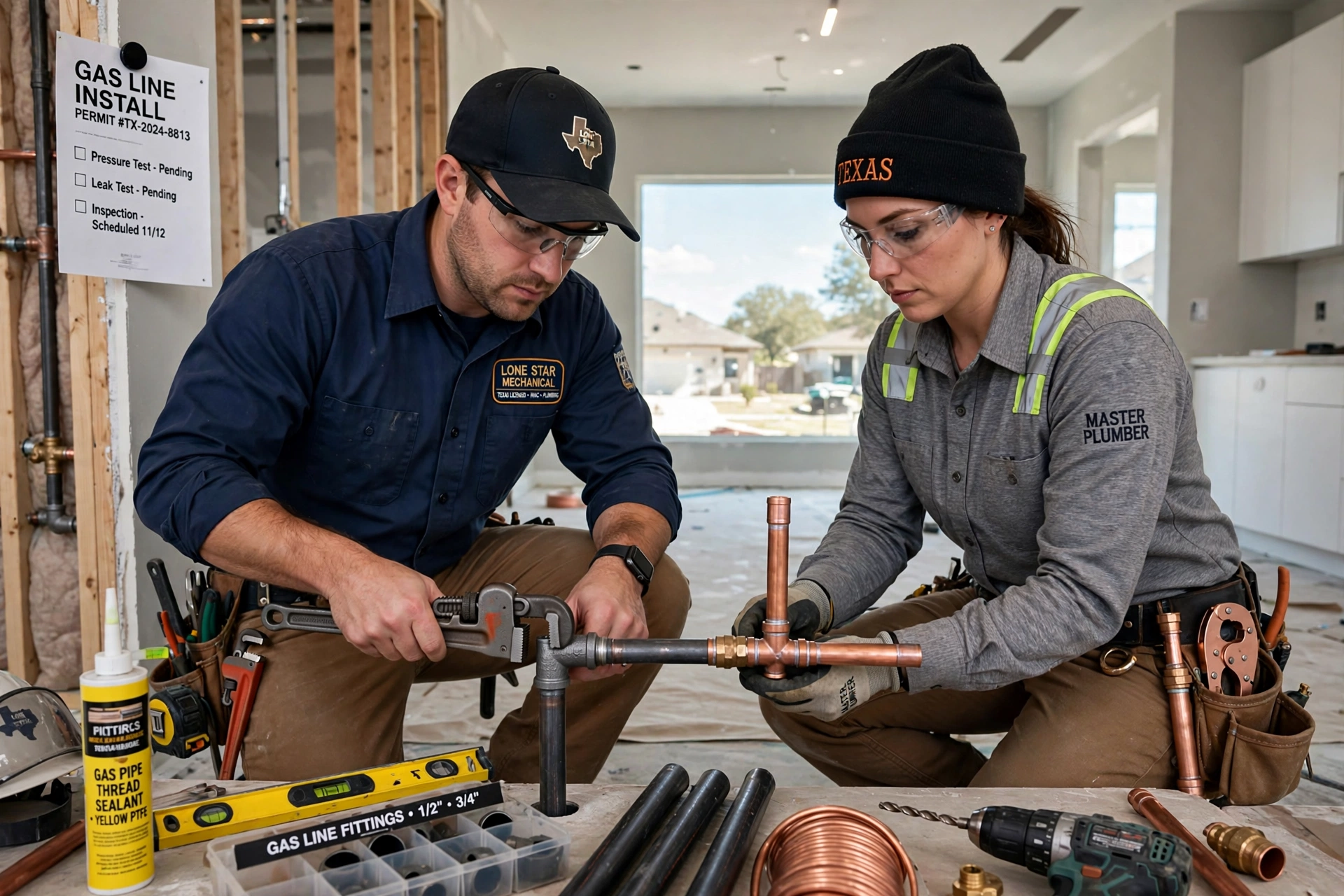
The most common triggers are new gas line installations, repairs or modifications to existing piping, and real-estate transactions where the buyer or inspector wants proof the system is sound. New gas work tied to a city permit generally needs testing before the inspection sign-off, and Atmos Energy typically wants assurance the piping is tight before restoring service after a shutoff. When in doubt, call (512) 877-2533 and describe your project — we will tell you honestly whether a test is warranted.
Do I need to be home during the test?
It helps to have someone available at the start so we can reach the meter, the appliance shutoffs, and any access points involved. Once the test section is isolated and the gauge is under observation, you do not need to hover — but we will want you there at the end to walk through the readings and the written results together.
Will the test damage my appliances?
No — appliances never see test pressure. Before pressurizing anything, we close each appliance’s shutoff valve and, where appropriate, disconnect appliances and cap the openings. Appliance controls are designed for low operating pressure, so isolating them is both standard practice and simple protection for your equipment.
What happens if my gas line fails the pressure test?
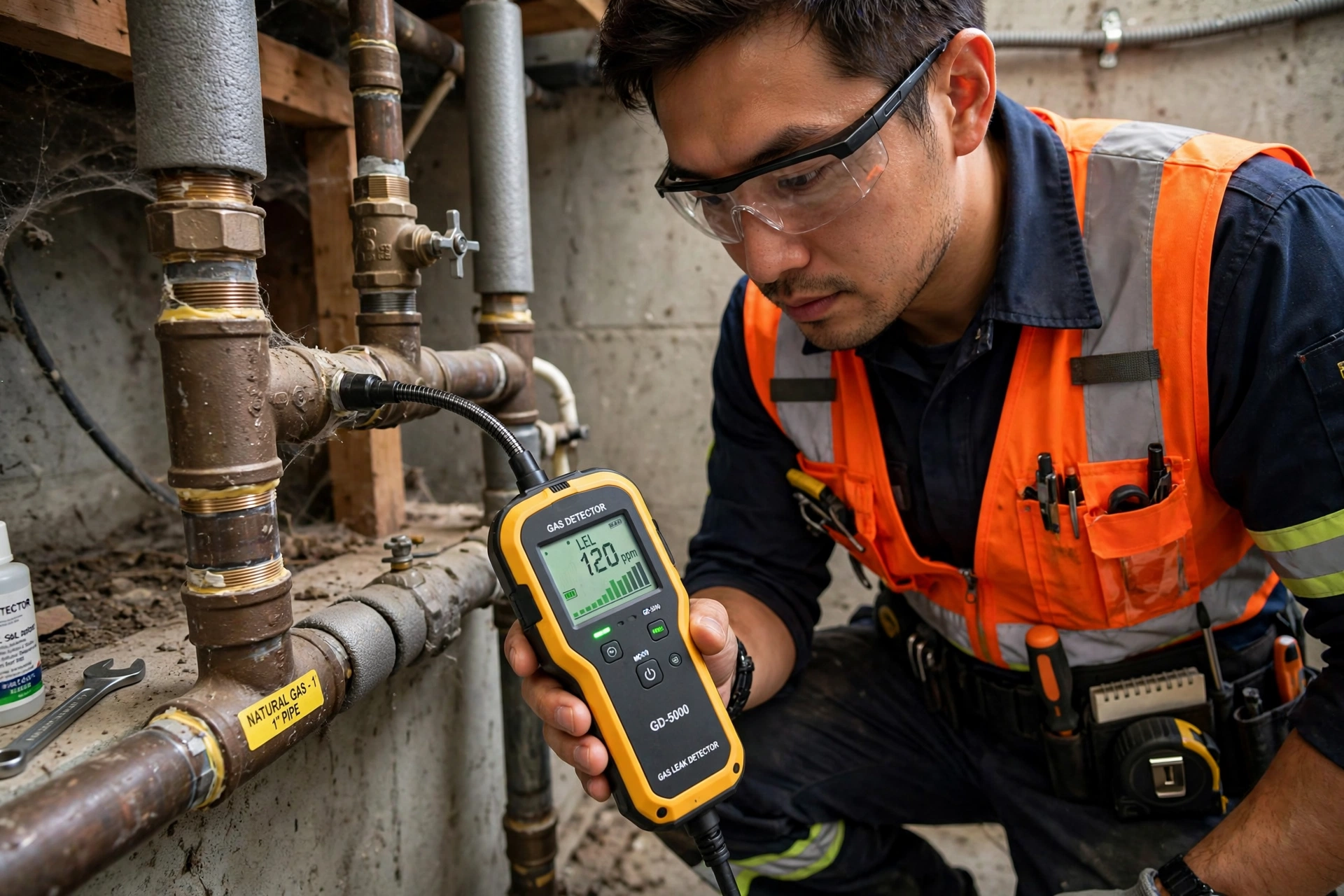
A failed test means a leak was found, so the next step is pinpointing it. We first recheck our own test connections to rule out the equipment, then work through the section methodically — isolating subsections and checking joints until the exact point of loss is found. Most failures trace to a single joint or fitting. We repair it and run the test again to confirm the system holds before calling the job done.
Can I pressure test my own gas line?
This is not a DIY task. It takes a properly calibrated test gauge, the fittings to seal and pressurize the section safely, knowledge of the correct test pressure and duration, and experience interpreting readings (temperature swings alone can fool an untrained eye). More importantly, mistakes with gas piping are dangerous. The test is affordable; the consequences of getting it wrong are not.
How long does a pressure test take?
The on-site work for a straightforward test usually takes one to two hours: isolating the section, sealing openings, setting up the gauge, pressurizing, and the observation period. Larger or harder-to-access systems take longer, and if the test finds a leak, locating and repairing it adds time. We will give you a realistic timeframe when you call (512) 877-2533.
Will your test documentation satisfy an inspector or a homebuyer?
Our test records list what was tested, the test pressure, the duration, the start and end readings, and the result — the facts an inspector or buyer’s agent needs. That written record is exactly what permit sign-offs and real-estate disclosures ask for: measured evidence the system holds pressure, rather than a verbal assurance.