How Gas Leak Detection Works in Leander
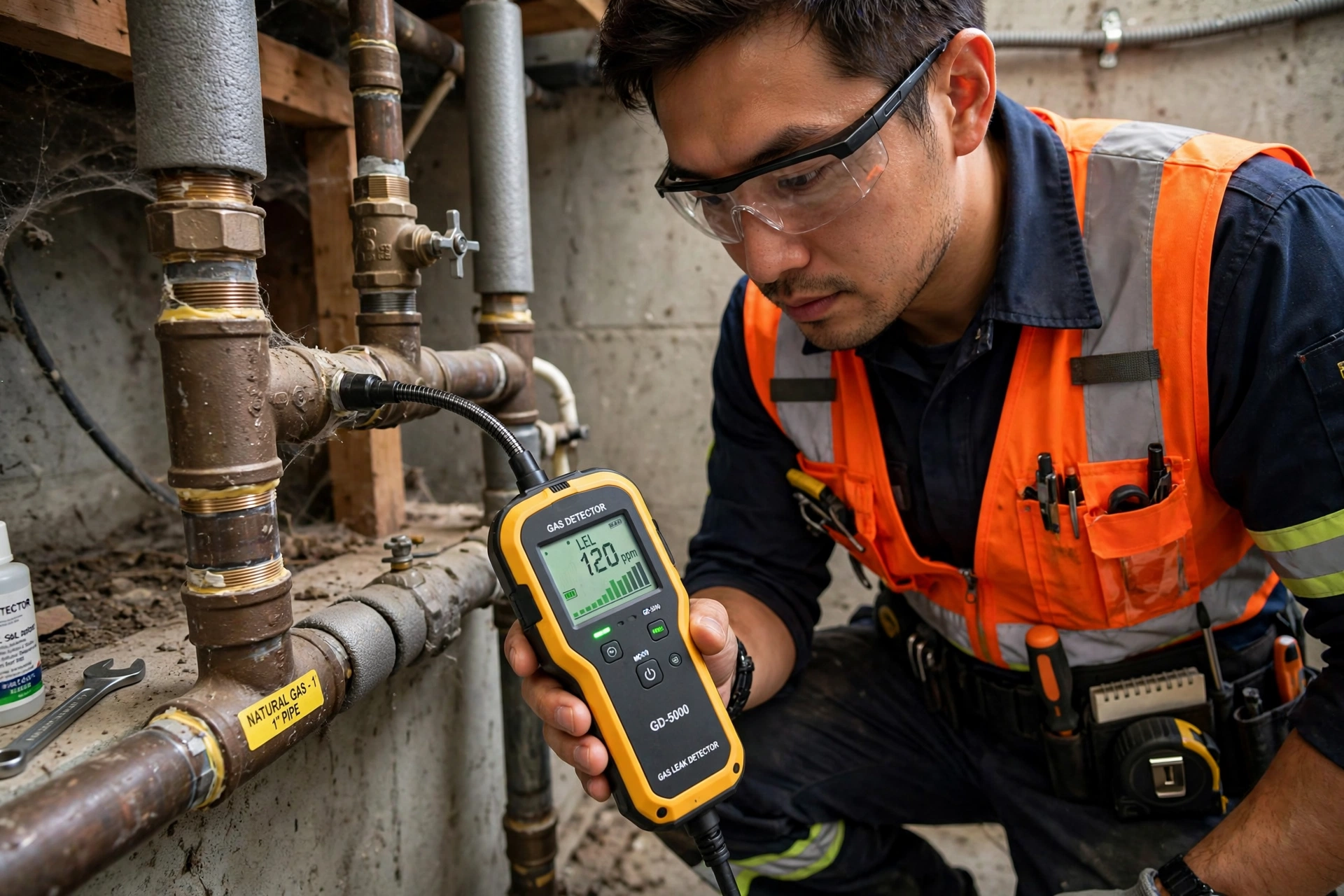
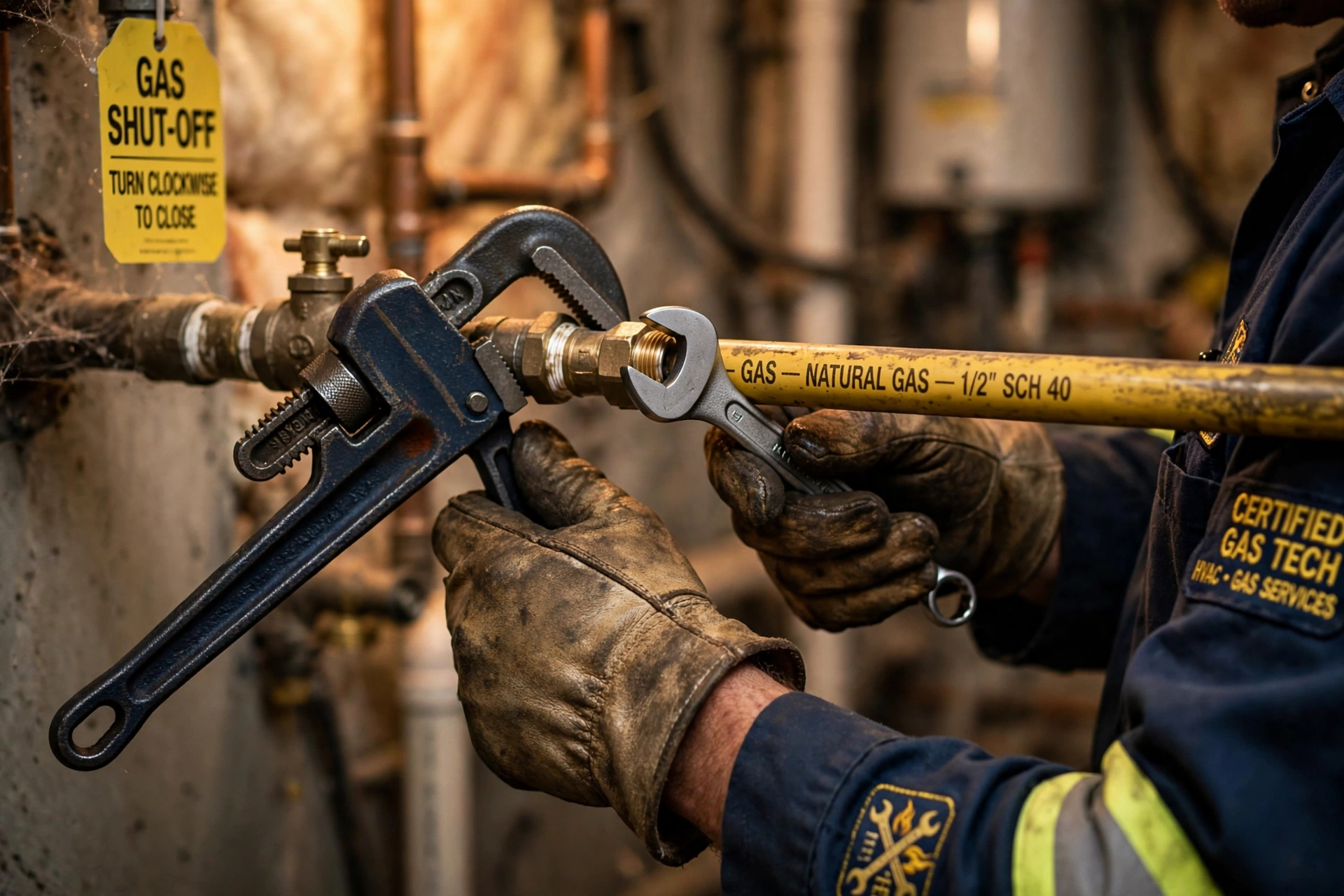
Gas leak detection pairs electronic sensing with pressure testing. The detector finds gas escaping at joints and fittings; the pressure test proves whether a sealed section is truly sealed or quietly losing gas. In Leander, leaks cluster in predictable places: threaded joints worked loose by shifting expansive clay, risers thinned by Central Texas humidity, and aging flexible connectors behind ranges and dryers in the city’s older neighborhoods. We also verify CSST bonding — improperly bonded corrugated stainless steel tubing is a known lightning-strike risk, and Central Texas sees plenty of severe storms.
Do not ignore the warning signs — a sulfur or rotten-egg smell, hissing near a line, a pilot light that will not stay lit, dead vegetation along a buried run, or a gas bill that climbs for no reason. If the smell is strong, leave immediately and call 911 or Atmos Energy from a safe location. For suspected slow leaks or unexplained symptoms, call us at (512) 877-2533 and we will track the source down.