Gas Line Repair Leander TX
Get Estimate

Gas Line Repair in Liberty Hill, TX

Liberty Hill is one of the fastest-growing cities in Texas — a rural-to-suburban corridor along SH-29 where new subdivisions like Santa Rita Ranch and Lariat grow up alongside older ranch properties. We repair, install, and inspect gas lines across Liberty Hill: CSST and polyethylene work in new construction, propane-to-natural conversions and fresh service runs on the well-and-septic outskirts, and high-capacity lines for the pools and outdoor kitchens this corridor loves.


Liberty Hill homes run on two different gas stories — natural gas in the newer subdivisions and propane on the outskirts — and both need lines that are sized right, buried right, and bonded right. Our gas line repair service in Liberty Hill covers leaks, installs, conversions, and inspections, so your home’s gas system stays safe as the city keeps growing around it.

Gas line repair in Liberty Hill
Experienced Experienced Team
Fully Insured Insured & Bonded
24/7 Emergency prompt
Warranty Backed Workmanship Guaranteed in Liberty Hill

Gas Line Repair Services in Liberty Hill

Our gas line repair service in Liberty Hill includes full-system inspections, leak repairs, propane-to-natural conversions, new-construction rough-ins, and code-compliance corrections — everything a fast-growing SH-29 corridor home needs from its gas system.

Thorough Inspections

We inspect the full system — attic CSST runs, manifold fittings, buried polyethylene service lines, and the propane tanks, regulators, and pigtails still common on the outskirts — catching the loose fittings and missed bonding that rushed new construction sometimes leaves behind.

Leak Repairs

From a loose CSST fitting in a Santa Rita Ranch attic to a buried line damaged by caliche and rock, we repair leaks with materials matched to your system and pressure-test the full run to confirm the fix holds.

Code Compliance Checks

New builds and conversions in Liberty Hill must pass inspection. We verify CSST bonding, fitting torque, support spacing, shutoff placement, and pressure-test results so the work is ready when the inspector arrives.

Final Safety Testing

Every job ends with a full-system pressure test and leak check — the section we did not touch gets verified along with the section we repaired, so you know the whole system is sound.

Common Gas Line Issues Along Liberty Hill’s Growth Corridor

Liberty Hill sits in the middle of a rural-to-suburban transition, and its gas line problems come from both sides of that divide. Inside the new subdivisions — Santa Rita Ranch, Lariat, and the phases still going up along SH-29 — the issues are production-building legacies: builder-grade fittings, unbonded or underbonded CSST, and undersized runs that cannot carry the pool heaters and outdoor kitchens homeowners add later. Outside the subdivisions, older ranch properties and acreage on well and septic often still run on propane, with aging tanks, regulators, and LP-rated lines that were never designed for a natural gas conversion. Different systems, different failures — and we work on all of them.

In the subdivisions, the pattern we see most is the loose-fitting failure: CSST fittings that were never torqued to specification, manifold connections made up just tight enough to pass the rough-in test, tubing run through attics without protection plates where drywall fasteners can reach it, and bonding conductors that were undersized or skipped entirely. None of this fails on day one. It fails in year three or year seven — often right after the builder’s warranty has expired, when the homeowner is suddenly responsible. If your home is still inside its warranty period and a fitting fails, check your warranty documents and contact the builder before authorizing repair work; the builder may be responsible for the correction.

On the outskirts, the work is conversion work. A property moving from propane to natural gas needs more than a new meter — it needs the regulator removed, a new service run trenched in (often through caliche and solid limestone), appliances adjusted for the different pressure and orifice sizing, and a full pressure test of the reconfigured system. We also see plenty of propane systems that are staying on propane but need attention: aging regulators that drift out of spec, cracked pigtails, and tank-area lines exposed to years of weather. Propane uses different pressures and hardware than natural gas, so these jobs get evaluated as their own category, not as an afterthought.

And everywhere in Liberty Hill, there is the rock. Caliche and limestone sit just under the topsoil across this corridor, and rocky trenching is the defining physical fact of underground gas work here. Lines buried without proper rock clearance get pinched and abraded; lines laid too shallow because the trench hit rock stay vulnerable to digging and traffic. Where we trench, we cut the rock properly, bed the line to protect it, and install tracer wire so the route can be found again. New construction gets a specific version of this problem — CSST routed and bonded to code in homes built over ground that will keep shifting — which is why bonding inspections and routing checks are such a common correction item in Liberty Hill’s newer homes.

Gas Line Installation Services in Liberty Hill

New gas line installation in Liberty Hill covers everything from a single appliance stub in a subdivision home to a full propane-to-natural conversion on ranch acreage. The process always starts the same way: understanding the total gas demand, confirming what the existing infrastructure can support, and planning the route through ground that is usually harder than the homeowner expects.

For indoor appliance additions — a gas range replacing electric, a tankless water heater, a new gas dryer — we calculate the new appliance’s demand against the capacity of the existing system. Liberty Hill’s slab-on-grade homes usually mean the new branch runs through the attic, so we route CSST with proper protection plates and bonding, install a shutoff valve and approved connector at the appliance, and verify the meter can carry the new total load. If the system is already near capacity, we discuss the options before any work begins: upsizing a section of piping, or a meter upgrade coordinated through the gas utility.

Outdoor installations are a major category along this corridor. Outdoor kitchens with built-in grills and burners, fire pits, patio heaters, and pool equipment all need gas, and the lines usually run underground from the house to the feature — which in Liberty Hill means trenching through caliche and limestone. We size each run for its load, cut proper trenches, bed and protect the pipe, install tracer wire, and pressure-test everything before it goes live. A pool heater deserves a special note: its demand can exceed the furnace, water heater, and range combined, so it gets its own dedicated large-diameter run.

Standby generators are increasingly popular on Liberty Hill’s outskirts, where acreage properties sit at the end of long utility runs and storm-related outages are a fact of life. Generators have the most demanding gas requirements of any residential appliance — a high, sustained draw for hours or days during an outage. A generator installation starts with a whole-system load analysis to confirm the meter and main line can feed the generator plus the home’s other gas equipment at the same time, with conversion properties getting the propane-to-natural reconfiguration as part of the same plan. Getting this right in planning is what separates a generator that performs from one that starves under load.

Gas Leak Detection in Liberty Hill

If you suspect a gas leak in your Liberty Hill home, treat it seriously. The rotten-egg smell of odorant is added to both natural gas and propane precisely so leaks are noticeable — if you smell it strongly indoors, leave the house immediately, do not operate switches or electronics, and call for emergency help from outside. For outdoor smells near the meter, along the buried line route, or around a propane tank, keep your distance and call us.

Not every leak situation is an evacuation, but every suspected leak deserves professional attention. A faint intermittent odor, a gas bill that rises without increased usage, a propane tank that needs filling far too often, or dead vegetation tracing the underground line route all warrant a proper diagnosis. Gas leaks do not improve on their own — and in Liberty Hill’s newer homes, where the piping itself is young, a leak is usually a single correctable failure: a loose fitting, a damaged buried section, or a failing regulator.

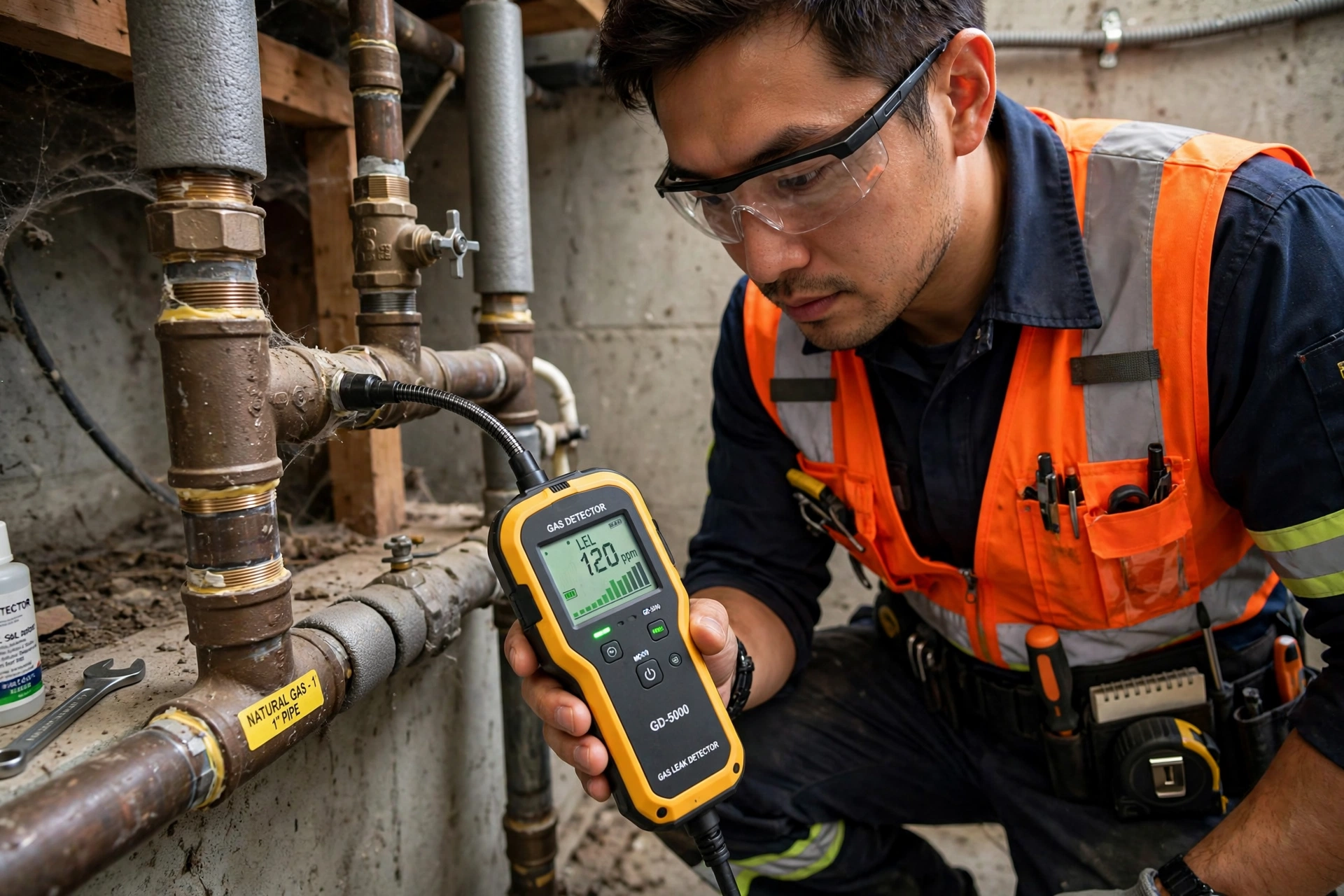
Our detection process is methodical. We pressure-test the system to confirm whether a leak exists and how significant it is, then isolate sections — indoor versus outdoor, branch by branch, tank side versus house side on propane properties — to narrow it down. Indoor leaks get pinpointed with electronic detectors at each joint and fitting. Underground leaks get located with line tracing and acoustic equipment so we dig in exactly the right spot instead of tearing up the yard.

Once found, we repair the leak and re-test the full system to confirm it holds. You get a clear explanation of what failed, why it failed, and what — if anything — the rest of your system needs. On propane properties we also check the regulator and tank connections while we are there, since those are the parts that weather wears out first.

Gas Line Services Throughout Liberty Hill and Nearby Areas

01

You notice a sulfur smell in your home.

What we do: Contact us immediately for gas line repair in Liberty Hill. Our technicians will locate and fix the leak quickly.

→ This ensures your home is safe and eliminates the risk of gas exposure.

02

Your appliances are not functioning correctly.

What we do: Our team will inspect the gas lines and connections to identify any issues affecting performance.

→ You'll enjoy improved efficiency and reliability from your gas appliances.

03

You're planning to install new gas appliances.

What we do: We provide gas line servicing in Liberty Hill to ensure safe and efficient installations.

→ This guarantees that your new appliances operate safely and effectively.

Gas Line Repair in Liberty Hill: Local Conditions

Gas line work in Liberty Hill means working in one of the fastest-growing corridors in Texas — Williamson County ground that is caliche and limestone just under the topsoil, subdivisions going up in phases, and outskirts properties still on well, septic, and propane. Our team plans every job around those realities: rock-aware trenching, propane-to-natural conversion expertise, CSST bonding and routing corrections in new construction, and installations sized for the pool heaters and outdoor kitchens this corridor keeps adding.

Neighborhoods We Serve

  • Santa Rita Ranch

    New-construction gas work dominates here — CSST routing and bonding inspections, manifold corrections, high-capacity runs for pool heaters, and outdoor kitchen and fire pit lines.

  • Lariat

    Another fast-growing subdivision where we handle new-home gas rough-ins, outdoor living gas lines, and corrections to builder-grade fittings that surface after the warranty period.

  • Downtown Liberty Hill (Old Town)

    Older homes near the town center with legacy piping — repairs, partial repipes, and upgrades that bring aging systems up to current code.

  • SH-29 Outskirts & Ranch Properties

    Acreage beyond the city lines, many on well and septic with propane — conversions to natural gas, fresh service runs through rock, and regulator and tank-area repairs.

Local Conditions We Plan For

  • Caliche and limestone soil

    Rocky ground just under the topsoil makes trenching slow and leaves shallow or damaged burials where rock was never cut properly. We trench with rock in mind and protect every line against it.

  • Propane systems on the outskirts

    Many outskirts properties still run propane, which uses different pressures, regulators, and hardware than natural gas. Conversions and LP repairs get evaluated as their own category.

  • New-construction CSST bonding

    Missed or undersized bonding is one of the most common correction items in new Liberty Hill builds — and a genuine lightning-strike hazard until it is fixed.

  • Fast growth, fast builders

    Production crews move quickly in a corridor growing this fast. Fittings torqued to spec and protection plates installed are the details that slip — we catch them.

Before: Gas Leak Detection

Before

A homeowner reported a strong sulfur smell and suspected a gas leak.

After

After our inspection, we found and repaired multiple leaks, restoring safety.

Maintenance: We recommend annual inspections to prevent future leaks.

Before

An appliance was not heating properly due to a faulty gas connection.

After

We repaired the connection, and the appliance now operates efficiently.

Maintenance: Regular checks on appliance connections can prevent future issues.

Before

The homeowner noticed inconsistent heating throughout the house.

After

We diagnosed and fixed pressure drop issues, ensuring even heating.

Maintenance: Routine pressure testing can help maintain consistent appliance performance.

Problems Solved by Gas Line Repair

Our gas line repair services address common issues that can pose risks to your home and family.

Problem

Gas leaks from corroded pipes

Ignoring gas leaks can lead to dangerous situations, including explosions or health hazards from inhalation.

Our Fix

Our team quickly identifies and repairs leaks, ensuring your gas lines are safe and compliant with local regulations.

Problem

Faulty connections causing appliance malfunctions

Faulty connections can lead to inefficient appliance operation and increased energy costs.

Our Fix

We repair and replace faulty connections, improving appliance efficiency and reducing energy bills.

Problem

Pressure drops in gas lines

Pressure drops can affect appliance performance, leading to inadequate heating or cooking.

Our Fix

We diagnose and fix pressure issues, ensuring your gas appliances operate at optimal levels.

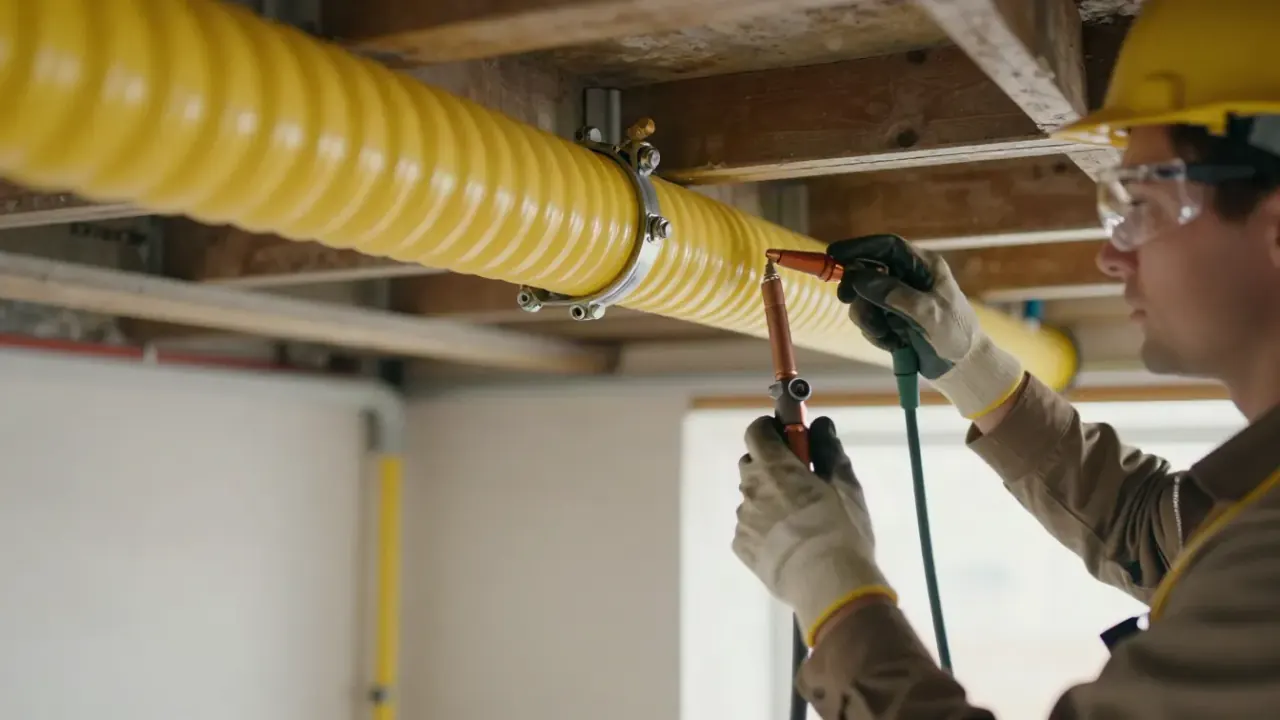
CSST gas line installation in Liberty Hill

Benefits of Gas Line Repair

Investing in gas line repair offers numerous advantages that enhance safety and efficiency.

  • Enhanced Safety

    Regular gas line repair significantly reduces the risk of dangerous gas leaks — and in Liberty Hill, the risks are specific: loose builder-grade fittings in new homes, aging propane hardware on the outskirts, and buried lines fighting caliche and rock. By addressing potential issues early, homeowners can prevent hazardous situations and keep their families safe.

  • Increased Efficiency

    Properly functioning gas lines improve the efficiency of your appliances. This can lead to lower energy bills and a more effective heating system, especially during the colder months in Liberty Hill.

  • Longer Lifespan

    Timely gas line servicing in Liberty Hill can extend the lifespan of your gas appliances. By addressing wear and tear — from corroding propane fittings to stressed buried lines — you ensure that your systems function optimally for years.

  • Compliance with Codes

    Gas line repairs in Liberty Hill ensure compliance with the National Fuel Gas Code (NFGC) and local requirements — important when new installations, propane conversions, and meter upgrades all need to pass inspection. Keeping the work documented and code-compliant protects you at resale and avoids correction orders.

Gas Line Repair Pricing in Liberty Hill

Gas line repair costs in Liberty Hill typically range from $180 to $450 in 2026, depending on the complexity of the repair. Rocky trenching, propane conversions, and buried-line replacement sit at the higher end of the range, while accessible fitting repairs sit at the lower end. Our transparent pricing ensures you know what to expect before we start any work.

Typical Investment Range

$180 - $450 depending on scope

Our pricing reflects the quality of service and materials used, ensuring long-lasting repairs.

What changes the price

01

Extent of Damage

More extensive damage requires more materials and labor, increasing costs.

02

Materials Used

The type of piping and fittings required can impact the overall repair cost.

03

Labor Intensity

Complex repairs that require more time and expertise will cost more.

Trust and Proof of Our Gas Line Repair Services

Experienced & Certified

  • Gas Fitters Certification — issued by State of Texas
  • Experienced Master Plumber — issued by Texas State Board of Plumbing Examiners
  • EPA Certification — issued by Environmental Protection Agency

Verified Reviews

Google ★★★★★4.9

Quick response and professional service! They fixed my gas leak within hours. Highly recommend!

Yelp ★★★★★4.8

Excellent service! The team was knowledgeable and friendly. They explained everything clearly.

BBB ★★★★★4.7

Very satisfied with the gas line repair. They were prompt and thorough in their work.

Our Expertise in Gas Line Repair

With local experience in gas line repair, our team is equipped with the necessary skills and certifications to handle any gas-related issue.

  • Certified gas fitters with extensive training in gas line repair and safety standards.
  • Experience working with various gas systems and appliances, ensuring effective repairs.
  • Knowledge of the National Fuel Gas Code (NFGC) and local regulations.
  • Use of advanced tools like pressure gauges and pipe cutters for accurate repairs.
Get Started Today
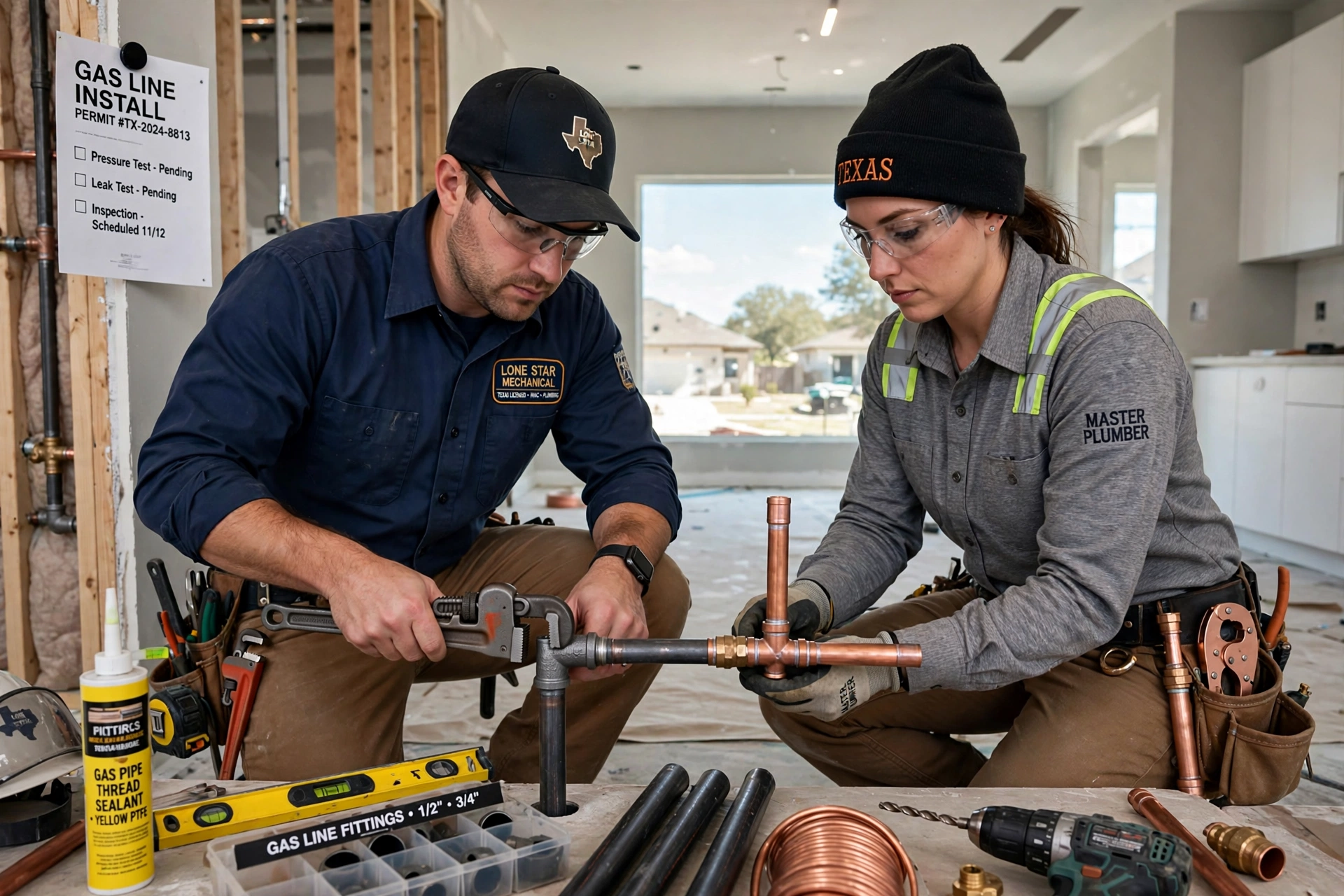
Gas fitter tightening a fitting in Liberty Hill

What Our Customers Say

Real experiences from customers who chose our Gas Line Repair services.

“I had a gas leak in my home, and the team responded quickly. They were professional and resolved the issue within hours. Highly recommend!”

S

Sarah T.

Homeowner, Liberty Hill

“Their gas line repair service was excellent. They explained everything and worked efficiently. I felt safe knowing my gas lines were in good hands.”

M

Mark L.

Business Owner, Liberty Hill

“I appreciated their 24/7 emergency service. When I had a problem late at night, they were there within an hour. Great service!”

E

Emily R.

Resident, Liberty Hill

Frequently Asked Questions

What factors affect the cost of gas line work in Liberty Hill?

Five things drive the scope of a gas line job in Liberty Hill: the type of work, the material involved, access, the ground, and project-specific requirements. A straightforward indoor repair at an accessible CSST fitting is a different job from trenching a new line through caliche and limestone. Material matters too — CSST, black iron, and polyethylene each have different handling and fitting requirements. Access is a real factor in slab-foundation homes, where runs often go through attics, and in backyards where trenching has to navigate pools, patios, and mature landscaping. Propane conversions add regulator work and appliance adjustments. We evaluate every job in person and give you a written estimate before starting, with no obligation.

My Liberty Hill home is only a few years old. Why would the gas lines need attention?

Because age is not the only thing that stresses a gas system. In Liberty Hill, the two most common culprits are builder-grade installation quality and the ground itself. Production-built homes sometimes leave the builder with fittings that were never torqued to specification, CSST routed without proper protection, or bonding that was skipped — defects that surface years after move-in. Meanwhile, the caliche and limestone under your lot make every underground repair a rock job, and any buried line installed without proper rock clearance can be pinched or abraded from the start. If your home is still inside its builder warranty period, the builder may be responsible for correcting defective work — check your warranty documents first. Either way, a pressure test and inspection will show exactly what your system needs.

Can you run a gas line for my pool heater or outdoor kitchen?

Yes — this is some of our most common work in Liberty Hill. A pool heater needs a large dedicated gas line, often larger than the homeowner expects, because its demand can exceed the furnace, water heater, and range combined. We calculate the heater’s demand, verify your meter’s capacity against the new total load, and run a properly sized line to the equipment pad — trenched through caliche and limestone with proper bedding, protection, and tracer wire. We do the same for outdoor kitchens, fire pits, and patio heaters: load calculation first, then correctly sized underground piping and full pressure testing.

How do I know if my gas line is leaking?

The main signs are a rotten-egg gas smell near appliances, the manifold, or outdoors; hissing sounds at fittings or the meter; dead vegetation in a strip along the underground line route; and gas bills that increase without more usage. On propane properties, a tank that empties far faster than normal is the equivalent warning sign. Because so much of Liberty Hill’s housing is newer, a leak is usually a single failed fitting or a damaged buried section rather than a system-wide problem — which also means it is usually very fixable once located. If you notice any of these signs, have the system checked. Gas leaks do not fix themselves.

We live on the outskirts and still have a propane tank. Can you convert us to natural gas?

In most cases, yes. First we confirm that natural gas service is available at your property — coverage along the SH-29 corridor has been expanding with the growth. Then the work is: removing the propane regulator setup, trenching a new service run from the meter to the house (through caliche and rock where necessary), adjusting or converting appliances for natural gas pressure and orifice sizing, and pressure-testing the reconfigured system end to end. Conversions require permits and inspection, and we make sure the work is ready to pass. If natural gas is not available at your lot yet, we can instead service and upgrade your propane system — regulators, pigtails, and tank-area lines — so it runs safely in the meantime.

Does Liberty Hill’s rocky soil really affect gas lines?

Yes — it is the defining physical fact of underground gas work here. Caliche and limestone sit just under the topsoil across this corridor, and lines buried without proper rock clearance get pinched, abraded, or laid too shallow to be safe. Shallow lines are vulnerable to digging, landscaping, and traffic loads. Modern polyethylene pipe handles ground movement well, but only when it is bedded and protected correctly in a properly cut trench. That is why we plan every underground job around the rock: proper trench depth, bedding, protection, and tracer wire so the route can be found again without guesswork.
Get Reliable Gas Line Repair in Liberty Hill Today

Contact us for prompt and professional gas line repair services. Your safety is our priority, so don't wait until it's too late!

Call Now Request Service

Get in Touch with Us

We're here to help you with your gas line needs. Reach out during business hours for quick responses and assistance.

Or call us right now at (512) 877-2533 — we answer.

Gas Line Repair Leander TX


  • Address

    1789 S Bagdad Rd, Leander, TX 78641, USA, Leander, Texas

  • Hours

    Mon–Fri: 7AM – 7PM
    Sat: 8AM – 4PM
    Sun: Emergency Only
    24/7 Emergency Available

Call (512) 877-2533 Get Quote
Call Quote