Gas Line Repair Leander TX
Get Estimate

Gas Leak Detection in Leander, TX

Pinpoint the leak — then fix it right


A suspected gas leak is not a wait-and-see situation. Our gas leak detection service in Leander finds exactly where gas is escaping — using calibrated electronic detectors and section-by-section pressure testing, not guesswork — so any repair targets the real problem. We serve homes and businesses across Williamson County. If you smell gas strongly right now, leave the area and call 911 or Atmos Energy first.

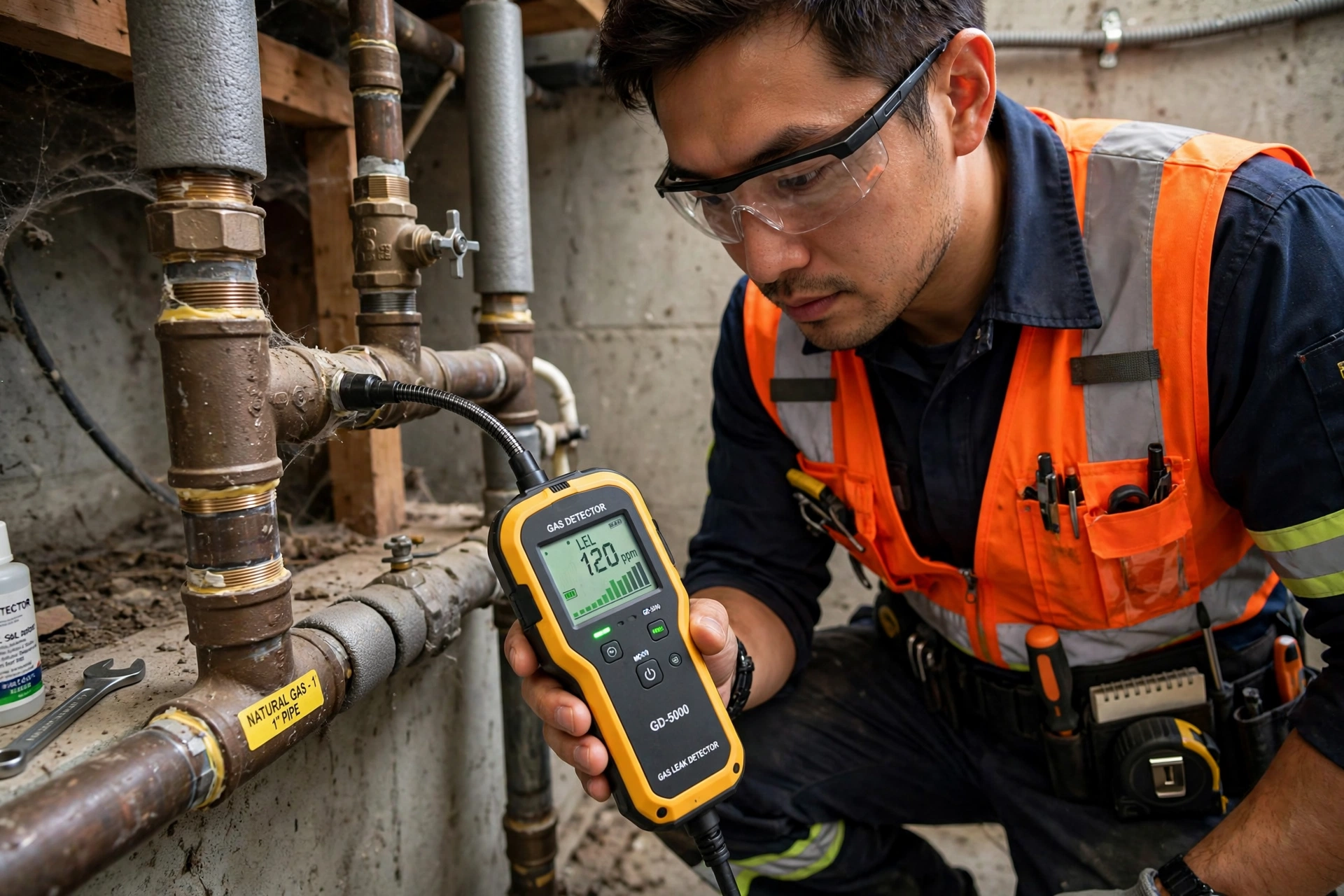
Gas leak detection in Leander, TX: technician moving an electronic detector probe along a gas line
Trained Team Leak detection specialists
Fully Insured Insured & Bonded
Emergency Help Call to book a detection visit
Careful Workmanship Exact source located

What Gas Leak Detection With Us Includes

A detection visit is focused on one question: where is the gas coming from? Here is how we answer it.

Full System Sweep

We sweep every accessible joint, valve, and connection with a calibrated electronic detector — starting at the Atmos Energy meter, following the run through the house, and checking each appliance hookup. The detector reads gas concentrations far below what a nose can catch.

Appliance Checks

Ranges, water heaters, dryers, fireplaces, and standby generators each get checked at their hookups, where flexible connectors, shutoff valves, and sediment traps are the most common leak points in Leander homes.

Pressure Verification

We isolate sections of the line and pressurize them to confirm whether a leak exists — and to narrow it down to a specific section. This is how we find slow leaks that no detector sweep and no nose would ever catch.

Clear Findings Report

You get a straight explanation of what we found, where the leak is, and what the repair would involve — in plain language, before any repair work starts. Detection first, decisions second.

How Gas Leak Detection Works in Leander


Gas leak detection pairs electronic sensing with pressure testing. The detector finds gas escaping at joints and fittings; the pressure test proves whether a sealed section is truly sealed or quietly losing gas. In Leander, leaks cluster in predictable places: threaded joints worked loose by shifting expansive clay, risers thinned by Central Texas humidity, and aging flexible connectors behind ranges and dryers in the city’s older neighborhoods. We also verify CSST bonding — improperly bonded corrugated stainless steel tubing is a known lightning-strike risk, and Central Texas sees plenty of severe storms.

Do not ignore the warning signs — a sulfur or rotten-egg smell, hissing near a line, a pilot light that will not stay lit, dead vegetation along a buried run, or a gas bill that climbs for no reason. If the smell is strong, leave immediately and call 911 or Atmos Energy from a safe location. For suspected slow leaks or unexplained symptoms, call us at (512) 877-2533 and we will track the source down.
How a Detection Visit Works

Fast, methodical, and focused on finding the source — not selling a repair.

01

Schedule

Call (512) 877-2533 or send a message through our contact form. Tell us what you are noticing — a smell, hissing, rising bills, a misbehaving appliance — so we arrive with the right equipment and a plan.

02

Detect

Our technician sweeps the system with electronic detectors, then uses pressure testing to narrow any leak down to the exact section — and often the exact fitting.

03

Repair

Once we find it, we explain the fix and the cost in writing. With your approval, we can often repair the damaged section to code on the same visit.

04

Verify

We pressure-test the repair and re-sweep every joint with the detector. The line is not done until it proves sealed — and we show you the proof.

Tools and Methods We Use for Leak Detection

Tools & Equipment

Gas Leak Detectors

Calibrated electronic instruments that sense gas at concentrations far below what a nose can catch — the core tool of every detection visit.

Pressure Gauges

Used to isolate sections of line and watch for pressure drops over time, confirming a leak exists and narrowing down which section it is in.

Pipe Wrenches

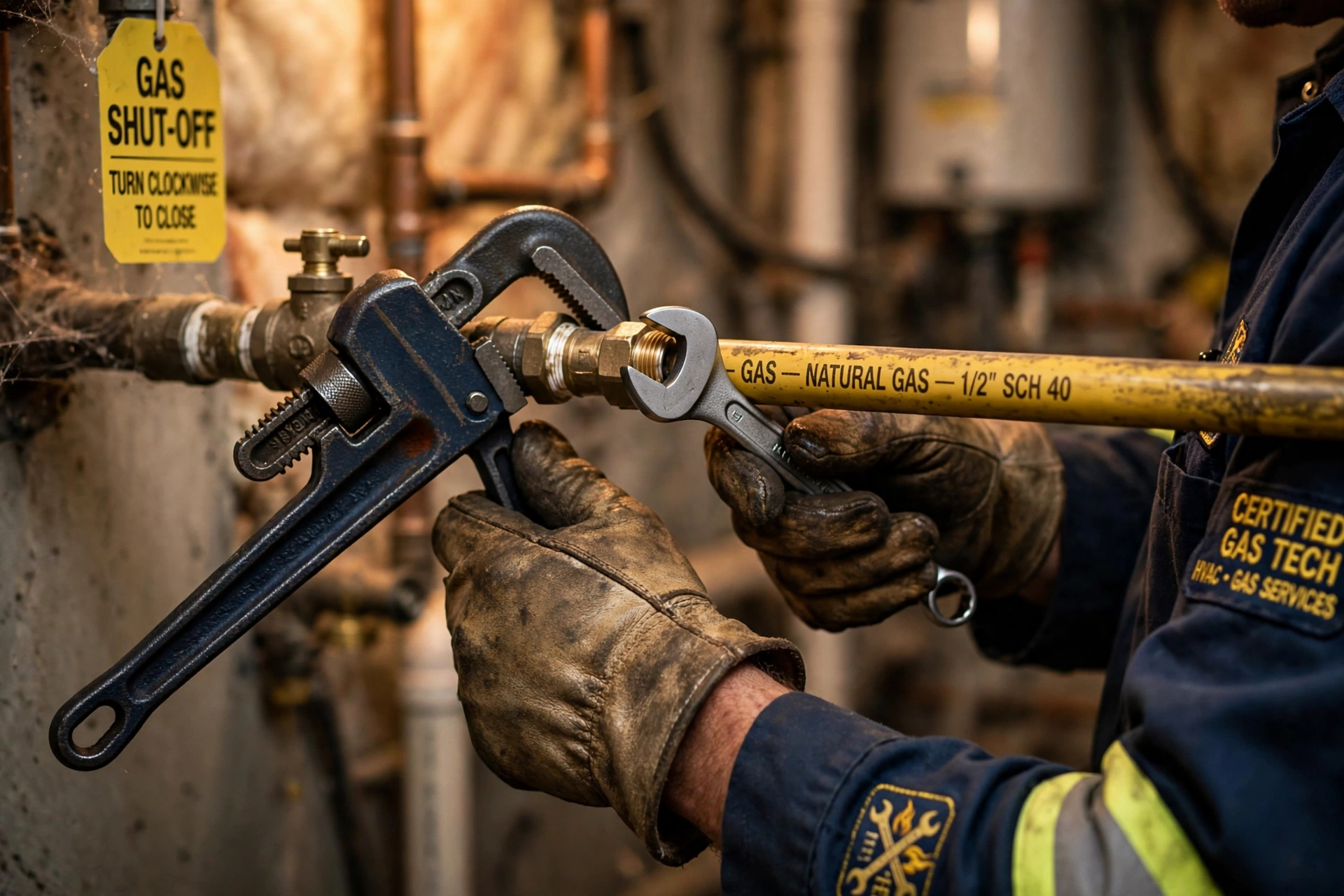
For safely opening and resealing test points and fittings during the diagnostic process — detection sometimes means taking a fitting apart to test behind it.

Combustible Gas Probes

Handheld probes that check enclosed spaces — behind appliances, inside cabinets, along baseboards — where leaking gas can collect unnoticed.

Methods & Standards

Visual Inspection

We look for the physical evidence first: corrosion on risers, damaged pipe, loose fittings, and dead or discolored vegetation along buried runs — all of which tell us where to focus the instruments.

Pressure Testing

Isolating sections and monitoring pressure over time is how we confirm a leak exists and pinpoint which section it is in — especially for slow leaks with no smell.

Electronic Detection

Sweeping every joint and fitting with a calibrated detector to find the exact leak point — accurate to the fitting, not just the room.

When to Call for Gas Leak Detection

01

You smell sulfur or rotten eggs.

What we do: Treat any gas smell as urgent: leave the area and call 911 or Atmos Energy from a safe location first — do not flip switches or use your phone near the smell. Once the scene is cleared, we come out to find the exact source and repair it.

→ You get a definitive answer on where the leak is — and a repaired, tested line.

02

Your gas bill jumped for no reason.

What we do: A slow leak bleeds gas around the clock, and the bill shows it before your nose does. We pressure-test the system section by section to find where it is escaping — even if nothing smells wrong.

→ Finding a slow leak now prevents a bigger problem — and a bigger bill — later.

03

An appliance is acting strange.

What we do: Weak flames, a pilot that will not stay lit, or soot around a burner can all trace back to a compromised connection rather than a bad appliance. We check the hookup and the branch feeding it, so you fix the right thing.

→ You find out whether it is the appliance or the line — and only pay to fix what is actually broken.

Leak Detection, Adjusted for Leander

Finding leaks here means knowing where Leander’s conditions create them. Expansive clay shifts buried lines and cracks threaded joints; humidity corrodes risers and meter connections; and in the city’s older neighborhoods, decades-old steel is simply reaching the age where leaks start. Newer Hill Country builds have their own pattern — leaks at outdoor kitchen stubs, pool heater connections, and generator hookups added after the original rough-in. Every detection visit accounts for these local patterns instead of treating your home like any other.

Neighborhoods We Serve

  • Benbrook Ranch

    Benbrook Ranch’s early-2000s steel lines are prime candidates for slow joint leaks after years of clay movement. We focus on threaded connections, buried yard lines, and the flexible connectors behind ranges and dryers.

  • Block House Creek

    In Block House Creek’s established homes, gas runs to multiple appliances through original piping. Corroded risers at the meter and aging appliance connectors are the usual suspects — both quick to check with a detector sweep.

  • Crystal Falls

    Across Crystal Falls’ mix of build years, we see two patterns: wear on original steel in the older sections, and leaks at added branches — outdoor kitchens, fire pits, standby generators — in the newer ones. We check the original system and every addition.

Local Conditions We Plan For

  • Humidity-driven corrosion

    Central Texas humidity never lets up, and it attacks exposed steel at meters, risers, and exterior runs. Corrosion-thinned pipe is a leak waiting to happen — a detector sweep catches it before it becomes one.

  • CSST bonding and lightning

    Corrugated stainless steel tubing needs proper bonding to handle lightning strikes, and Central Texas gets intense storm seasons. We verify bonding is present and correct during detection visits — it is a safety check most homeowners never knew they needed.

Before: Unattended Gas Leak

Before

A situation we see often: a homeowner notices a faint sulfur smell near the laundry room but assumes it is the dryer — weeks pass before they call.

After

Our approach: sweep the area with the detector, find the slow leak at the dryer’s flexible connector, replace the connector, and pressure-test the branch.

Maintenance: If a smell comes and goes, do not wait for it to get stronger — intermittent odors often mean a small, findable leak.

Before

Another common one: the gas bill climbs month after month with no change in usage, and no one can smell anything.

After

Our approach: pressure-test each section until the gauge drops, then use the detector to find the exact leaking joint — usually one nobody had looked at in years.

Maintenance: Compare winter gas bills year over year; a steady climb with the same habits is worth a detection visit.

Before

And the urgent kind: a strong gas smell in the kitchen on a Saturday morning.

After

Our approach: first, make sure the home is evacuated and 911 or Atmos Energy has been called. Then, once cleared, we find the source — often a failed appliance connector — and repair it to code.

Maintenance: Keep our number somewhere easy to find — in a real leak scare, you do not want to be searching.

Gas Leak Problems We Solve

Leaks come in different forms, and each one needs a different search strategy. Here is what we track down and how.

Problem

Leaks you can smell

The sulfur odor means gas is escaping somewhere reachable — a joint, a valve, a connector. It is the clearest warning sign and the one to act on fastest: leave, call 911 or Atmos Energy, then call us once the scene is clear.

Our Fix

We sweep the area with detectors to find the exact fitting, repair the failed section, and verify zero leaks before restoring service.

Problem

Leaks you cannot smell

Slow leaks in crawl spaces, behind walls, or underground never reach your nose — but a pressure test finds them, and a climbing gas bill hints at them. These are the leaks that run for months unnoticed.

Our Fix

Section-by-section pressure testing isolates the leaking run; electronic detection pinpoints the joint. Small leak, targeted repair — no tearing the house apart.

Problem

Leaks at appliances

Ranges, dryers, and water heaters connect through flexible connectors and shutoff valves that wear out, loosen, or get damaged when appliances are moved for cleaning or renovation.

Our Fix

We inspect every hookup, replace failed connectors and valves, and test the branch before the appliance goes back into service.

Leander gas leak detection: close-up of a pressure gauge connected to a gas line during a leak test

Why Professional Leak Detection Matters

Guessing at a gas leak wastes time and risks missing it entirely. Here is what proper detection gives you.

  • The exact source — not a guess

    Detectors and pressure tests find the precise leaking joint. That means the repair fixes the real problem instead of replacing parts hopefully — one visit, one fix.

  • Lower gas bills

    A slow leak runs the meter around the clock. Finding and fixing it stops the waste — and the climbing bills that tipped you off.

  • Protection for your home’s value

    Documented detection and repair reassure buyers and insurers that the gas system is sound — no lingering questions when it matters.

  • Real peace of mind

    Knowing the line was tested and verified — not just eyeballed — lets you stop worrying every time you catch a whiff near the stove.

Gas Leak Detection Pricing in Leander

Detection pricing depends on how much system there is to check and how hard the leak is hiding. We explain the cost before we start — and if the visit turns into a repair, you approve that separately with its own written estimate.

What Goes Into Your Estimate

An upfront price for the detection visit, explained before we begin — no hourly surprises.

Finding the leak is the essential first step; it keeps the repair targeted and the cost honest.

What changes the price

01

Size of the system

A home with one gas appliance is quicker to sweep than a home with a range, two water heaters, a dryer, a fireplace, and a generator.

02

How hidden the leak is

An accessible leaking joint is found fast; a slow leak under a slab or behind finished walls takes more diagnostic time to isolate.

03

Condition of the lines

Older, corroded systems need more careful section-by-section testing than newer, well-documented ones.

04

Urgency of the visit

If you need us out right away, we will do everything we can to fit you in — and we will be upfront about any priority scheduling involved.

What You Can Count On

Our Qualifications

  • Trained leak detection technicians Our team is trained in electronic leak detection, pressure-test diagnostics, and gas safety procedures.
  • National Fuel Gas Code knowledge We work to NFGC requirements and Leander and Williamson County rules on every detection and repair.
  • Safety-first process If a situation looks immediately dangerous, we tell you to evacuate and call 911 or Atmos Energy — detection comes after safety, always.

How We Work

Clear communication — you know what we find, immediately.

We tell you where the leak is, show you the detector reading if possible, and explain the repair options before any work starts.

Careful workmanship — we respect your home.

We work neatly around your appliances and living spaces, and leave everything as we found it — even on an urgent call.

Thorough safety testing — verified, not assumed.

After any repair, the line is pressure-tested and re-swept with the detector. We do not leave until the detector reads clean.

Experience With Leander Leak Detection

Leak detection is what we do every week across Williamson County — in early-2000s Benbrook Ranch homes, established Block House Creek two-stories, and new Hill Country builds alike. We know the local leak patterns: clay-shifted joints, humidity-corroded risers, and tired flexible connectors.

  • Technicians trained in electronic leak detection and pressure-test diagnostics.
  • Hands-on experience with steel, CSST, and polyethylene systems and their typical failure points.
  • Familiar with the gas appliances common in Leander homes — ranges, tankless and tank water heaters, dryers, fireplaces, and standby generators.
  • Grounded in current safety practices and local Leander code requirements.
Get Started Today
Leander, TX gas leak detection: technicians maneuvering a section of black iron pipe during a diagnostic visit

What to Expect From Our Service

A leak scare is stressful. Here is how we handle every detection visit — calmly and methodically.

“We tell you exactly where the leak is and what it will take to fix — in plain language, before any repair work starts.”

C

Clear Communication

On every visit

“We treat your home carefully while we work and leave it clean — even on an urgent call.”

H

Honest Assessments

On every job

“We verify every find with a second test before we call it a leak — no false alarms, no unnecessary repairs.”

T

Thorough Testing

Before we leave

Frequently Asked Questions

Straight answers about gas leak detection in Leander — the warning signs, how we find leaks, and what to do first.

What are the signs of a gas leak in my Leander home?
The classic signs: a sulfur or rotten-egg smell, hissing near a gas line or appliance, a pilot light that will not stay lit, dead vegetation along a buried gas run, and a gas bill that climbs without higher usage. Any one of these is worth a detection visit — especially the smell.
What should I do first if I smell gas?
Leave the area immediately and call 911 or Atmos Energy from a safe location. Do not turn lights on or off, do not use your phone near the smell, and do not try to find the leak yourself. Once the utility or fire department clears the scene, call us at (512) 877-2533 to locate and repair the source.
How do you actually find a hidden gas leak?
Two tools working together: a calibrated electronic detector that senses gas far below what a nose can catch, and pressure testing that isolates sections of line to prove where gas is escaping. The detector sweeps joints and fittings; the pressure test catches slow leaks behind walls or underground that have no smell at all.
Can you detect a leak and fix it on the same visit?
Often, yes. Once we pinpoint the source, we explain the repair and give you a written estimate on the spot. With your approval, we fix the damaged section to code the same visit — then pressure-test it and re-sweep every joint before we leave.

Schedule Gas Leak Detection in Leander Today

Do not guess about a gas leak. Call (512) 877-2533 or send a message — we will find the source, explain your options, and fix it right. If you smell gas strongly right now, leave and call 911 or Atmos Energy first.

Call Now Get a Quote

Get in Touch with Us

Suspect a leak or just want the system checked? Reach out during business hours — we will help you schedule a visit.

Or call us right now at (512) 877-2533 — we answer.

Gas Line Repair Leander TX


  • Address

    1789 S Bagdad Rd, Leander, TX 78641, United States

  • Hours

    Mon–Fri: 7AM – 7PM
    Sat: 8AM – 4PM
    Sun: Emergency Only
    Call for urgent service needs

Call (512) 877-2533 Get Quote
Call Quote