Gas Line Repair Leander TX
Get Estimate

Gas Line Inspection Leander TX

A clear picture of your gas system's health — before small issues become big ones


A gas line inspection is a head-to-toe health check for one of the hardest-working systems in your home. We trace your gas lines from the meter to every appliance, checking for leaks, corrosion, pressure loss, and code problems — then hand you a plain-language written report. For Leander homeowners, it is the simplest way to know your gas system is safe, whether you live in an established neighborhood with decades-old steel pipe or a new build in one of the master-planned communities.

Gas technician in Leander, TX inspecting an underground polyethylene gas line connection
Trained Team Gas line specialists
Fully Insured Insured & Bonded
Emergency Help Call to schedule service
Careful Workmanship Tested before we leave

What Our Gas Line Inspection Covers

Every inspection visit follows the same thorough routine. Here is what we check, and why each step matters for your home's safety.

Visual Inspection

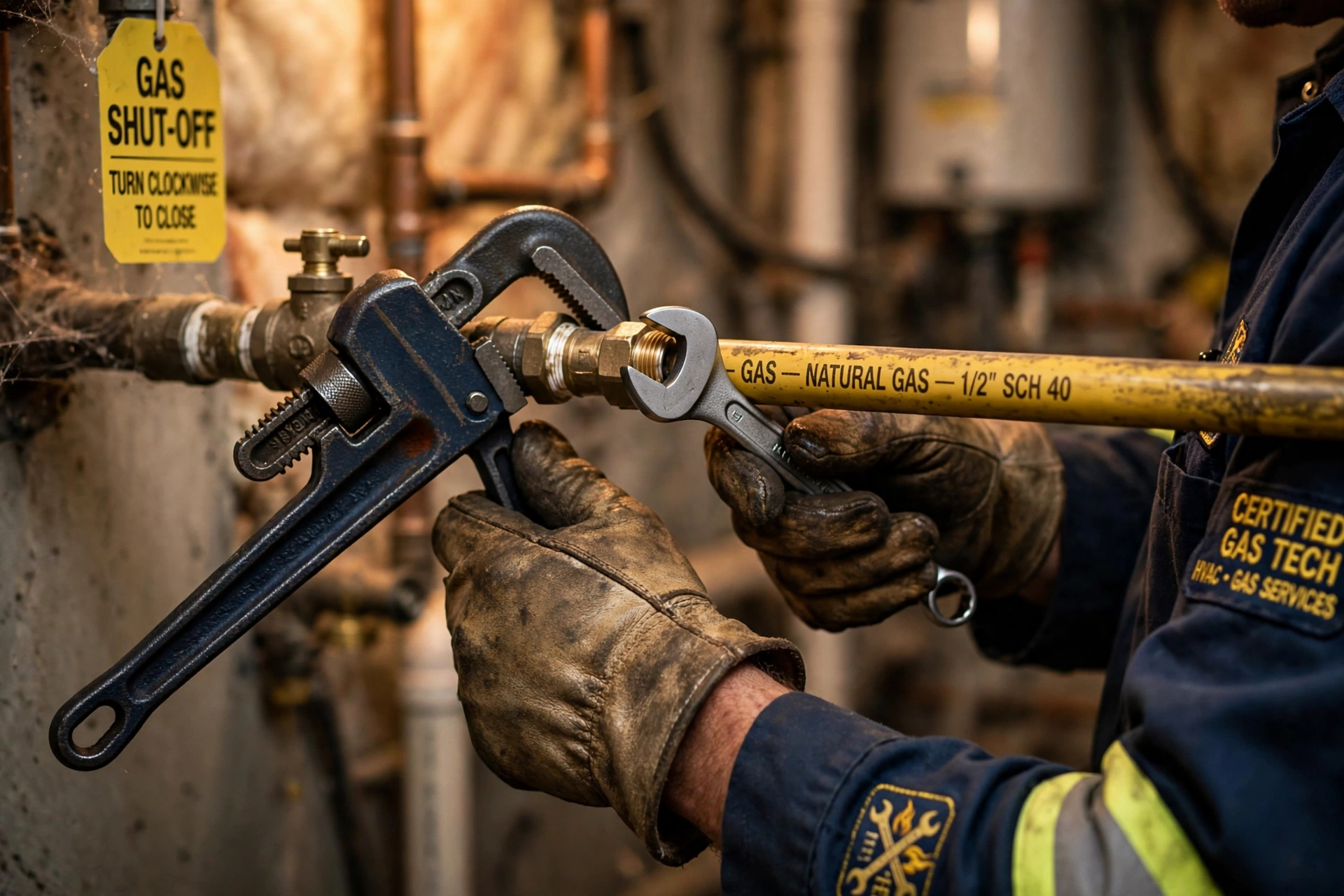
We walk every accessible inch of your gas lines — at the meter, along exterior walls, through attics and crawl spaces — looking for rust, damaged pipe, improper supports, and installation problems. In Leander's older homes, this is where we spot the early warning signs: surface corrosion on black iron pipe, fittings that have worked loose over years of soil movement, and connections that predate current code.

Pressure Testing

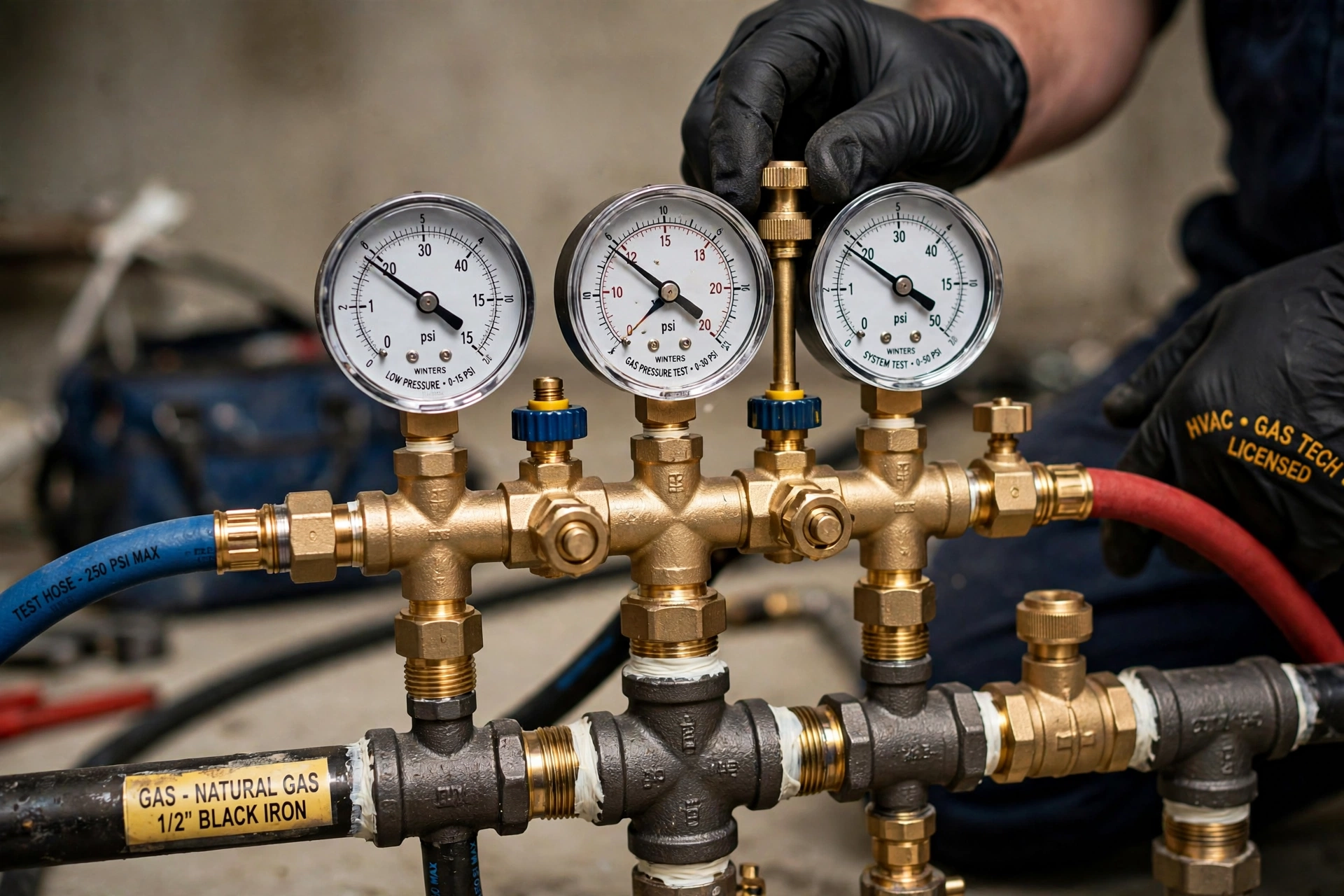
We isolate sections of the line and watch the gauge for a set period. A steady reading proves the section is sealed; a drop tells us gas is escaping somewhere and points us toward the failing run. Pressure testing is the most reliable way to confirm a line's integrity — it catches problems no visual check can see, including slow seeps inside walls or under slabs.

Gas Leak Detection

Every accessible joint, valve, and fitting gets swept with a calibrated electronic gas detector — equipment far more sensitive than the human nose. This catches the small seeps at threaded connections and valve stems that never produce a noticeable smell but can grow into real hazards over time.

Written Report

You get a written summary of everything we checked and found, with photos and locations: what is in good shape, what bears watching, and what should be repaired — prioritized by urgency. The report is yours to keep, useful for your records, for planning repairs, or for sharing with a homebuyer or insurance company.

What a Gas Line Inspection Means in Leander


An inspection is a systematic, non-invasive check of your entire gas system: the meter connection and regulator, the main run, every branch line, and each appliance connection. We are not guessing and we are not selling — we are documenting the actual condition of your piping, valves, and connectors against what a safe system should look like under the National Fuel Gas Code and local Williamson County requirements.

Leander homeowners usually call us at a few key moments: after buying an older home with an unknown service history, when a remodel has moved or added gas appliances, after a hard freeze or severe storm, or simply because it has been a few years since anyone looked. Any of these is a good reason — gas systems age quietly, and the problems they develop rarely announce themselves until they are serious.

What Happens During Your Inspection

Most inspections take about an hour for a typical Leander home. Here is the sequence from booking to report.

01

Schedule

Call (512) 877-2533 or send a message through our contact form. We will set a visit window that works for you and let you know what to expect — including which areas of the home we will need to access, so you can clear the way around the water heater, furnace, and meter.

02

Inspect

Our technician walks the full system — visual check of all accessible piping, pressure test of isolated sections, and an electronic leak sweep of every joint and valve. Everything gets noted: pipe material and condition, shutoff locations, appliance connections, and anything that looks off.

03

Report

We put the findings in a clear written report: what is fine, what needs watching, and what should be repaired — prioritized so you can plan. Photos and locations are included, so there is no guessing about which pipe or fitting we mean.

04

Review

We walk you through the report in plain language and answer your questions. If repairs are needed, you get a straightforward explanation of the options and a separate quote — the inspection itself never turns into a sales pitch.

Tools and Methods We Use for Inspections

Tools & Equipment

Gas Leak Detectors

Calibrated electronic detectors that pick up trace amounts of gas at joints, valves, and appliance connections — the small seeps you cannot see or smell. We calibrate our equipment regularly, so a clean reading actually means clean.

Pressure Gauges

Precision gauges used to pressurize isolated sections of pipe and watch for drops over time. A holding gauge is the gold standard for proving a line is sealed — or proving it is not, before a hidden leak becomes a dangerous one.

Inspection Mirrors & Lights

For seeing behind water heaters, into crawl spaces, and along tight pipe runs where corrosion likes to hide. Much of a gas system lives out of sight; these simple tools let us actually look at it.

Methods & Standards

Visual Inspection

A methodical walk of every accessible line, checking for rust, physical damage, improper supports, and code issues — with attention to the failure patterns we see most in Central Texas homes, from humidity-driven corrosion to freeze-stressed fittings.

Pressure Testing

Isolating and pressurizing sections of the line to verify integrity. A holding gauge confirms the pipe is sound; a falling gauge tells us exactly which section needs a closer look — no guesswork, no unnecessary digging or demolition.

Electronic Leak Detection

Sweeping every joint and fitting with a calibrated detector to find leaks long before they become dangerous. This is how we catch the slow seeps that never reach your nose but still waste gas and create risk.

When a Gas Line Inspection Makes Sense

01

You just bought an older Leander home.

What we do: Homes in established Leander neighborhoods like Crystal Falls and Deerbrooke often have original gas lines that have never been professionally inspected. Decades of humid summers, expansive clay soil movement, and at least one historic freeze have all left their mark. We check the full system so you know exactly what you are living with.

→ You move in with a documented picture of your gas system's health — or a clear punch list of what to fix first.

02

You finished a remodel that touched gas lines.

What we do: Kitchen and laundry remodels move gas appliances, and every moved connection is a potential leak point. We verify each new and disturbed connection, pressure-test the affected branch, and confirm the work meets current code — including proper shutoffs and sediment traps.

→ You enjoy the finished remodel without wondering about the gas work hidden behind the new drywall.

03

A hard freeze or severe storm just rolled through.

What we do: Central Texas weather is rough on gas systems: the February 2021 freeze stressed fittings and cracked vulnerable pipe, and severe thunderstorms can shift soil around buried lines or drop debris on exposed piping and meters. We check the meter, riser, and exposed runs for damage, then test the system to confirm it held up.

→ You get confirmation the system weathered the storm — or a repair plan if it did not.

Gas Line Inspections, Tuned to Leander

Leander's housing tells two stories: established neighborhoods from the 80s and 90s with aging steel gas lines, and fast-growing master-planned communities where new homes pack in gas ranges, tankless water heaters, outdoor kitchens, and standby generators. An inspection looks different for each — we tune what we check to the home in front of us.

Neighborhoods We Serve

  • Crystal Falls

    One of Leander's established communities, where many homes date to the 90s and 2000s. Original black iron and early CSST runs are common, and we pay close attention to corrosion at exterior risers and aging appliance connectors.

  • Deerbrooke

    An older Leander neighborhood where we find some of the area's most seasoned gas piping — lines installed decades ago that have ridden out countless wet-dry soil cycles. Inspections here focus on pipe wall condition, loose fittings, and outdated installation practices.

  • Travisso

    A newer Hill Country community where homes often have extensive gas systems — outdoor kitchens, fire pits, pool heaters, and generators. More gas appliances means more connections to check, and we map them all so nothing gets missed.

Local Conditions We Plan For

  • Expansive clay soil

    Williamson County's clay swells when wet and shrinks when dry, and that seasonal movement stresses buried gas lines and the risers where they enter the home. We look for the telltale signs: strained fittings, shifted meter connections, and pipe runs that have moved off their supports.

  • Humidity, storms, and hard freezes

    Long humid summers corrode exposed steel from the outside in, severe thunderstorms can batter meters and exposed piping, and hard freezes — like February 2021 — crack vulnerable fittings and stress old joints. Every Leander inspection accounts for all three.

Before: Aging Gas Lines

Before

A homeowner buys a 1990s Crystal Falls home and realizes no one has ever inspected the gas lines.

After

Our approach: a full inspection — visual walk, pressure test, electronic leak sweep — and a written report grading every part of the system. The report flagged two aging appliance connectors for replacement and gave the buried main a clean bill of health.

Maintenance: Inspections every 1–3 years keep small issues from becoming emergencies.

Before

A kitchen remodel moved the range, and the homeowner wants to be sure the gas work was done right.

After

Our approach: inspect every new and disturbed connection, pressure-test the branch, and confirm the installation meets code — including the shutoff valve placement and sediment trap.

Maintenance: Always have gas lines checked after a remodel that moved or added appliances.

Before

After a severe storm season, a homeowner worries that shifting soil and debris may have damaged the gas service.

After

Our approach: check the meter, riser, and exposed piping for impact or corrosion, test the line pressure, and report exactly what we found — including photos of anything questionable.

Maintenance: After major storms or a hard freeze, an inspection confirms your system held up.

Problems an Inspection Can Uncover

An inspection does not fix anything by itself — but it finds the problems worth fixing. Here is what turns up most often in Leander homes.

Problem

Hidden leaks

Small seeps at joints or valve stems often produce no smell and no symptoms — until they grow. They are the most common thing we find, and the easiest to fix when caught early.

Our Fix

Our electronic sweep and pressure test find them while they are still small, so repairs stay simple and inexpensive — usually a fitting replacement, not a pipe replacement.

Problem

Corroded or thinning pipe

Central Texas humidity rusts exposed steel from the outside in. By the time you can see flaking, the pipe wall may already be thin — especially on exterior risers and meter connections that take the weather head-on.

Our Fix

We flag corroded sections in the report with photos and locations, prioritized so you can plan the repair on your schedule instead of discovering it as a leak.

Problem

Code issues from old or DIY work

Missing sediment traps, hard-to-reach shutoffs, connectors run where they should not be — older homes and past remodels often hide code issues that a home inspector or insurance company will flag later.

Our Fix

The written report lists every code issue we spot, so you can address them proactively instead of scrambling during a home sale.

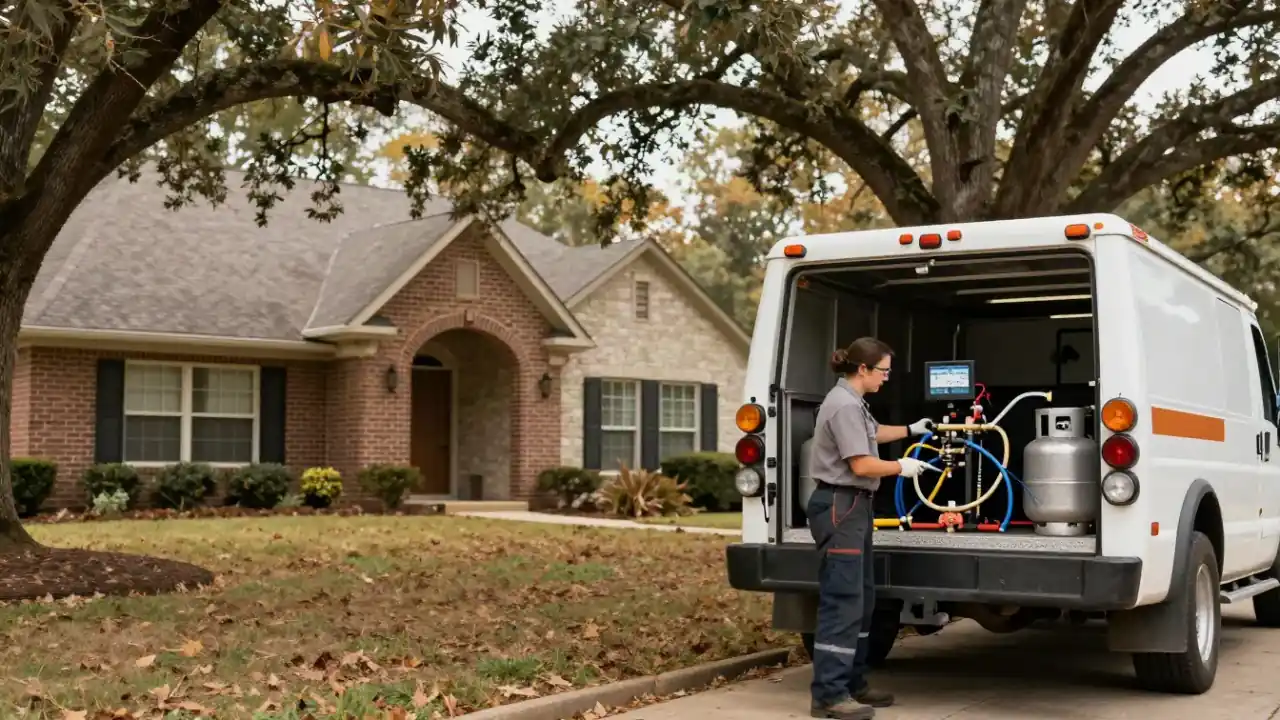
Gas service vehicle parked in front of a brick home with mature oak trees in Leander, Texas

Why Inspect Your Gas Lines

An hour of inspection buys years of confidence. Here is what it gets you.

  • Catch problems early

    A small seep or a thinning section of pipe is a simple repair today and an emergency later. Inspections find trouble while it is still cheap and easy to fix.

  • Know your system

    Our report maps your gas lines, notes their condition, and marks every shutoff location — so you know exactly what you have and where to turn the gas off in an emergency.

  • Keep appliances efficient

    Pressure drops from partial blockages or small leaks make appliances work harder and burn more gas. An inspection spots the cause so your furnace, water heater, and range all run at full efficiency.

  • Protect your home’s value

    Documented inspections reassure buyers, satisfy insurance questions, and keep you ahead of code issues that surface during a sale.

Gas Line Inspection Pricing

Inspection pricing is straightforward: it depends on the size of your system and how much of it we can access. After a quick description of your home, we quote a flat price for the visit — including the full written report.

What Goes Into Your Estimate

A flat, upfront price for the inspection visit — including the full written report. No hourly meter running, no surprise add-ons at the door.

An inspection is inexpensive protection: it finds the small problems before they become expensive ones, and the report gives you a maintenance roadmap for years.

What changes the price

01

Property and system size

A small home with one gas appliance takes less time than a large home with a range, two water heaters, a dryer, a fireplace, and a standby generator. More appliances means more connections to check.

02

Condition and accessibility

Lines behind finished walls or under slabs take longer to assess than exposed runs — access drives the time involved, and we will tell you upfront if parts of your system cannot be reached.

03

Additional services

If the inspection turns up something needing repair, that work is quoted separately — the inspection itself never balloons mid-visit. You decide what happens next.

What You Can Count On

Our Qualifications

  • Trained inspection technicians Our team is trained in gas system inspection methods, pressure testing, and electronic leak detection.
  • National Fuel Gas Code knowledge We inspect against NFGC requirements and Leander and Williamson County rules — and explain what we find in plain terms, not code citations.
  • No-pressure reporting Our job is to tell you the truth about your system. The report is yours; what you do with it is your call — no scare tactics, no upsell.

How We Work

Clear communication — you get the full picture.

We show you what we found, where, and what it means — with photos and exact locations, not vague warnings.

Careful workmanship — we respect your home.

We work cleanly around your appliances, protect floors where we walk, and leave every area the way we found it.

Thorough safety testing — nothing skipped.

Every accessible joint gets checked, every section gets tested. If we could not access something, the report says so plainly.

Experience With Leander Inspections

We inspect gas systems across Leander and Williamson County every week — 1990s steel in Deerbrooke, new CSST in Travisso, and everything in between. That local repetition matters: we know which neighborhoods hide which problems, and we know what Central Texas weather does to gas piping over time.

  • Technicians trained in gas system inspection, pressure testing, and leak detection.
  • Familiar with the failure patterns of older steel lines and the installation quirks of newer builds.
  • Up to date on inspection methods, from electronic detection to proper pressure-test procedure.
  • Grounded in the National Fuel Gas Code (NFGC) and local Leander requirements.
Get Started Today
Technician checking a gas pressure gauge connected to a residential gas line in Leander, TX

What to Expect From Our Service

An inspection should leave you informed, not pressured. Here is our approach on every visit.

“We walk the full system and show you exactly what we find — good news and bad — with photos and plain explanations.”

C

Clear Communication

On every visit

“Our report is prioritized and honest: what needs attention now, what can wait, and what is perfectly fine.”

H

Honest Assessments

On every job

“We test what we can access and tell you plainly about anything we could not reach — no guessing, no padding.”

T

Thorough Testing

Before we leave

Frequently Asked Questions

Straight answers about gas line inspections in Leander — how often to schedule one, what is included, and what to expect on the day.

How often should I have my gas line inspected in Leander?
Every one to three years is a good rhythm for most Leander homes. If your home has older steel piping, has weathered a hard freeze, or has never been professionally inspected, start with one now to establish a baseline — then follow the interval your report recommends.
What does a gas line inspection include?
A full inspection covers a visual check of all accessible piping, a pressure test of isolated sections, and an electronic leak sweep of every joint, valve, and appliance connection — followed by a written report with photos, findings, and prioritized recommendations.
Will you need to shut off my gas during the inspection?
Usually not for the whole visit. Brief, localized shutoffs may be needed to pressure-test a section of line, and we coordinate that with you so no appliance is left off unexpectedly. Most of the inspection happens with the gas on.
How long does a gas line inspection take?
About an hour for a typical Leander home. Larger homes with many gas appliances — ranges, water heaters, dryers, fireplaces, pool heaters, generators — can take longer, and we will give you a realistic time estimate when you book.
Should I get a gas line inspection before buying a home in Leander?
Yes — especially for older homes in established neighborhoods, where original gas lines may never have been professionally checked. Our written report gives you documented findings you can use in negotiations or for planning repairs after closing.
What happens if you find a problem during the inspection?
We document it with photos and locations, explain how urgent it is, and give you a separate repair quote. There is no obligation — the inspection report is yours regardless, and you decide if and when to schedule the repair.
Do you inspect outdoor gas lines for grills, fire pits, and pool heaters?
Yes. Outdoor runs take the worst of Central Texas weather — sun, humidity, storms — so we check exterior piping, risers, and every outdoor appliance connection as part of the inspection whenever they are accessible.
Schedule Your Gas Line Inspection in Leander Today

Buying an older home, finishing a remodel, or just due for a checkup? Call (512) 877-2533 or send a message — we will schedule your inspection and give you the full picture of your gas system.

Call Now Get Started

Get in Touch with Us

Questions about your gas lines, or ready to schedule an inspection? Reach out during business hours and we will help you pick the right service.

Or call us right now at (512) 877-2533 — we answer.

Gas Line Repair Leander TX


  • Address

    1789 S Bagdad Rd, Leander, TX 78641, United States, Leander, Texas

  • Hours

    Mon–Fri: 7AM – 7PM
    Sat: 8AM – 4PM
    Sun: Emergency Only
    Call for urgent service needs

Call (512) 877-2533 Get Quote
Call Quote