Gas Line Repair Leander TX
Get Estimate

Emergency Gas Line Repair in Leander, TX

If you smell gas, don't wait — and don't try to diagnose it yourself.


A suspected gas leak is never something to put off. The right first move is always the same: get everyone out of the building, avoid anything that could spark, and call 911 and your gas utility from a safe distance. Once the immediate danger is handled, we take it from there — locating the leak, making safe repairs to code, and testing the full system before gas service is restored. Leander homeowners and businesses call us when a gas problem can't wait, and we treat every one of those calls as urgent.

Gas technician in Leander, TX applying sealant to a steel gas fitting during an emergency repair
Trained Team Gas line specialists
Fully Insured Insured & Bonded
24/7 Emergency Urgent calls prioritized
Careful Workmanship Tested before we leave

What to Do Immediately If You Smell Gas in Your Leander Home

If you smell the rotten-egg odor of natural gas in your Leander home, act fast and in this order. These are the same steps fire departments and gas utilities teach — they exist because they save lives.

Get everyone out

Leave the building immediately with everyone inside, including pets. Do not stop to open windows, gather belongings, or investigate — just go. If you can, leave doors open behind you as you exit to help ventilate, but never delay leaving to do it.

Don't touch switches or appliances

On your way out, do not flip light switches, use a phone, turn appliances on or off, or start a car in an attached garage. Any spark — even a tiny one from a switch — can ignite accumulated gas. Do not light matches or candles either.

Call 911 and Atmos Energy from a safe distance

Once you are well away from the building — across the street is a good rule — call 911, then call Atmos Energy, Leander's gas utility, to report the suspected leak. They can shut off service at the meter and check their side of the system.

Call us for the repair

After the utility has made the immediate situation safe, call us at (512) 877-2533. We handle the customer-owned piping — everything downstream of the meter — locating the leak, repairing it to code, and pressure-testing the system before service is restored.

Common Causes of Gas Line Emergencies in Central Texas

Gas line emergencies rarely come out of nowhere. Most have a cause that built up over months or years — and Central Texas conditions give those causes plenty of help. Knowing what goes wrong helps you spot trouble before it becomes an emergency.

Corrosion is one of the leading culprits. Black iron pipe — the standard material for gas piping inside older homes — rusts from the outside in during long, humid Central Texas summers. Exterior risers, meter connections, and any pipe in a damp crawl space are the first to thin, and a pinhole leak at a corroded fitting is the most common emergency call we see.

Physical damage is another frequent cause. Digging for fence posts, landscaping, or new construction can strike a buried gas line — which is why calling 811 before you dig is the law in Texas. Inside the home, appliances that get moved for cleaning or remodeling can stress old connectors, and the February 2021 freeze cracked its share of vulnerable fittings across Williamson County.

Age finishes the job. Many Leander homes were built during the area's rapid growth from the 1980s through the 2000s, and their gas systems have endured decades of expansive clay soil movement — the wet-dry swelling and shrinking that works joints loose over time. Add outdated installation practices from earlier eras, and older systems simply have more ways to fail.

Warning Signs That Call for Emergency Gas Line Repair

Not every gas odor means a major emergency, but every gas odor deserves immediate attention. The strongest and most obvious sign is the rotten-egg smell of mercaptan — the odorant added to natural gas precisely because the gas itself is odorless. If you smell it, treat it as real until proven otherwise.

Beyond smell, listen for hissing or whistling near gas appliances, the meter, or along the visible pipe run — the sound of gas escaping under pressure. Outdoors, look for dead or discolored vegetation in an otherwise healthy lawn, which can mark a buried line leak, or dirt and debris blowing from a spot in the yard.

Inside the home, watch how appliances behave. A furnace or water heater with a pilot light that keeps going out, burners with weak or yellow-orange flames instead of crisp blue, or soot staining around an appliance can all signal a gas supply problem. Higher-than-normal gas bills with no change in usage are another quiet warning.

The rotten-egg smell is added to natural gas deliberately because untreated gas is undetectable by humans. Never assume a faint smell is nothing — gas can accumulate in enclosed spaces, and what seems minor can become dangerous. When in doubt, get out and call.

What Happens When Our Technician Arrives

When our technician arrives at your Leander home or business, the first order of business is confirming the area is safe. If gas is still on and a leak is suspected, we verify evacuation, check for immediate hazards, and coordinate with the gas utility if the meter still needs to be shut off.

The check starts at the meter and works inward. The technician inspects the meter, the regulator, and the main shutoff, then walks the visible piping — looking for corrosion, damage, and the telltale signs of a leak — while sweeping joints and valves with an electronic gas detector.

If a leak is confirmed, the gas is shut off at the appropriate valve — sometimes just the affected branch, sometimes the whole house — and the leaking section is isolated. Only then does repair work begin: cutting out the failed pipe or fitting and replacing it with new material, to code.

Pinpointing the leak accurately matters because it determines the scope of the repair. A leak at a single appliance connector is a one-visit fix; a corroded underground run takes locating, excavation, replacement, and testing. Accurate detection means we open up only what needs opening — no unnecessary digging, no unnecessary demolition.

After the Emergency Repair: Testing and Prevention

01

You notice a sulfur smell in your home.

What we do: Get out first — then call us at (512) 877-2533 once you are safe and the utility has been notified. Our technicians locate the leak with electronic detection, isolate the affected section, and repair it to code.

→ The leak is found and fixed, the system is pressure-tested, and your home is safe to re-enter.

02

Your appliances are not functioning correctly.

What we do: Pilot lights that will not stay lit, weak burner flames, or soot around an appliance can signal a gas supply problem. We inspect the lines and connections feeding the appliance to find whether the issue is pressure, a failing connector, or a partial blockage.

→ Your appliances run safely and efficiently again, with the underlying cause fixed — not just the symptom.

03

You hear hissing near the meter or an appliance line.

What we do: A hissing sound means gas is escaping under pressure — treat it as an emergency. Leave the area, call 911 and Atmos Energy from a safe distance, then call us. We locate the breach, shut down the affected section, and repair it.

→ The escaping gas is stopped at the source, the damaged section is replaced, and the system is tested before service returns.

Gas Line Repair in Leander: Local Execution

Gas emergencies in Leander have local patterns, and knowing them helps us work faster. Here is how the area shapes what we see and how we respond.

Neighborhoods We Serve

  • Crystal Falls

    Established homes here often have original steel gas piping that has weathered decades of humid summers. Corrosion-driven leaks at exterior risers and meter connections are the most common emergency calls from this neighborhood.

  • Santa Rita Ranch

    In this fast-growing community, emergencies more often involve newer systems — construction-related damage to buried lines, or high-demand appliances like generators and pool heaters stressing undersized runs.

  • Deerbrooke

    Some of Leander's oldest gas piping lives in this neighborhood. Age-related failures — joints loosened by years of clay soil movement, fittings from earlier installation eras — are what we find most.

Local Conditions We Plan For

  • High humidity levels in summer

    Months of humid air corrode exposed steel from the outside in. Exterior risers, meter connections, and piping in damp crawl spaces thin first — and pinhole leaks there are our most frequent emergency calls.

  • Expansive clay soil and hard freezes

    Williamson County's clay swells and shrinks with wet-dry cycles, working buried-line joints loose over the years, while hard freezes like February 2021 crack vulnerable fittings. Both turn small weaknesses into sudden failures.

Before: Gas Leak Detection

Before

A homeowner reported a strong sulfur smell and suspected a gas leak.

After

The family evacuated and called from a safe distance. We found the leak at a corroded exterior riser with electronic detection, replaced the failed section, and pressure-tested the full system before restoring service.

Maintenance: If you smell gas, leave first and call from safety — then schedule regular inspections to catch corrosion early.

Before

An appliance was not heating properly, with a pilot light that kept going out.

After

We traced the problem to a failing appliance connector that was starving the unit of gas. The connector was replaced, the line was leak-tested, and the appliance was relit and verified.

Maintenance: Appliances acting strangely deserve prompt attention — small supply problems become big ones.

Before

The homeowner noticed hissing near the gas meter after landscaping work.

After

A shovel strike had nicked the buried service line. We coordinated with the utility, excavated the damaged section, replaced it, and tested the system — a reminder to call 811 before any digging.

Maintenance: Always call 811 before digging in your yard — most buried-line strikes are preventable.

Problems Solved by Gas Line Repair

Gas emergencies threaten your home and everyone in it. Here is what professional emergency repair addresses — and why each one matters.

Problem

Gas leaks from corroded pipes

Ignoring a gas leak risks fire, explosion, and serious health effects from gas exposure. Corrosion-driven leaks only get worse — a pinhole today is a rupture risk tomorrow.

Our Fix

We locate the leak precisely, shut down the affected section, and replace the failed pipe or fitting with new material to code — then pressure-test before restoring service.

Problem

Faulty connections causing appliance malfunctions

Loose or failing connections starve appliances of gas or leak at the joint — creating both a performance problem and a safety hazard in the same fitting.

Our Fix

We replace the failed connector or fitting, verify the supply line is properly sized for the appliance, and leak-test every joint before the appliance is put back in service.

Problem

Pressure drops in gas lines

A sudden pressure drop can signal a significant leak or a failing regulator — either way, appliances stop working properly and the system needs immediate professional attention.

Our Fix

We diagnose whether the drop comes from a leak, a blockage, or a regulator failure, fix the cause, and verify stable pressure across the system before we leave.

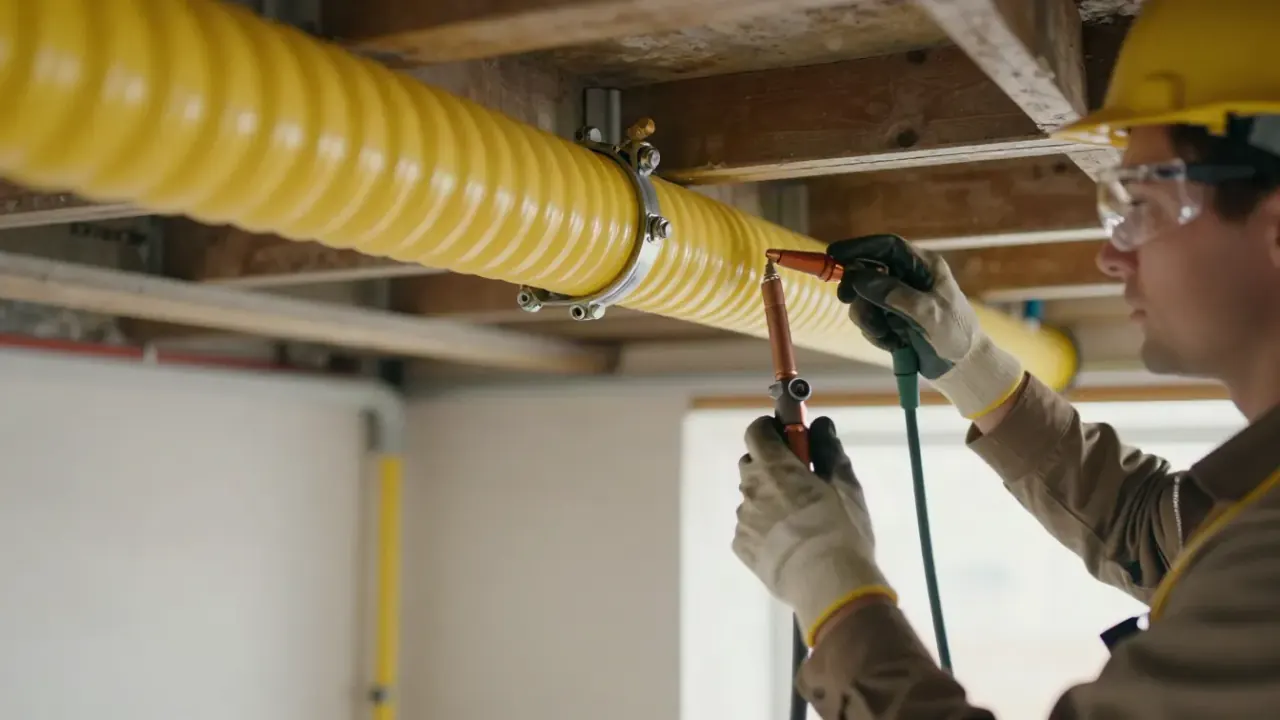
Newly installed yellow CSST gas line run inside a Leander, Texas home

Benefits of Gas Line Repair

When gas fails, the stakes are immediate. Professional emergency repair protects your household in ways that matter most.

  • Enhanced Safety

    A suspected leak gets treated as urgent from the first call: the area is made safe, the leak is located precisely, and the failed section is repaired to code — eliminating the immediate danger.

  • Increased Efficiency

    Once the system is sound, appliances get the steady gas supply they were designed for — proper flames, normal recovery times, and no wasted fuel from seeps.

  • Longer Lifespan

    Fixing the failed section before it damages neighboring pipe — and catching the corrosion or installation issue that caused it — extends the working life of the whole system.

  • Compliance with Codes

    Emergency repairs are made to the National Fuel Gas Code and local requirements, so the fix is not just fast — it is correct, documented, and built to last.

Gas Line Repair Pricing in Leander

Emergency repair costs depend on what failed and where — a single leaking fitting is a very different job from a corroded underground run. We diagnose first, then give you a clear upfront price before any work begins. You approve it; then we fix it.

Upfront pricing before work begins

Diagnosed on-site, quoted clearly, approved by you

No surprise charges in an already stressful situation — you know the price before we start, and the testing afterward is always included.

What changes the price

01

Extent of Damage

A single accessible fitting takes far less work than a buried line that must be located, excavated, replaced, and tested — scope drives the price.

02

Materials Used

The type and amount of piping, fittings, and connectors the repair requires factor into the quote — we show you what is needed and why.

03

Labor Intensity

Repairs in tight crawl spaces, behind finished walls, or underground take more time and care — and we quote that time honestly upfront.

Trust and Proof of Our Gas Line Repair Services

Training & Standards

  • Trained gas technicians — trained in emergency gas repair, leak detection, and safe work procedures.
  • National Fuel Gas Code knowledge — every repair made to NFGC requirements and local Williamson County rules.
  • Safety-first procedures — gas isolated, leaks located precisely, and the system tested before service is restored.

What Guides Every Repair

Safety first

Every emergency starts with making the situation safe — the leak located, the affected section isolated — before any repair begins.

Clear communication

You get a plain-language explanation of what failed and what the fix costs. You approve the work before it starts — no surprises during an already stressful call.

Verified safe before we leave

Every repair ends with pressure testing and a full-system leak check. Gas service is restored only when the system proves sound.

Our Expertise in Gas Line Repair

Our team handles gas emergencies across Leander and Williamson County — from corrosion failures in established neighborhoods to construction strikes in new developments. Every call gets the same disciplined sequence: make it safe, find the failure, repair to code, and prove it with testing.

  • Technicians trained in emergency gas line repair and leak response.
  • Experience with the failure patterns of both older steel systems and newer installations.
  • Knowledge of the National Fuel Gas Code (NFGC) and local regulations.
  • Professional detection, pressure-testing, and pipefitting equipment on every truck.
Get Started Today
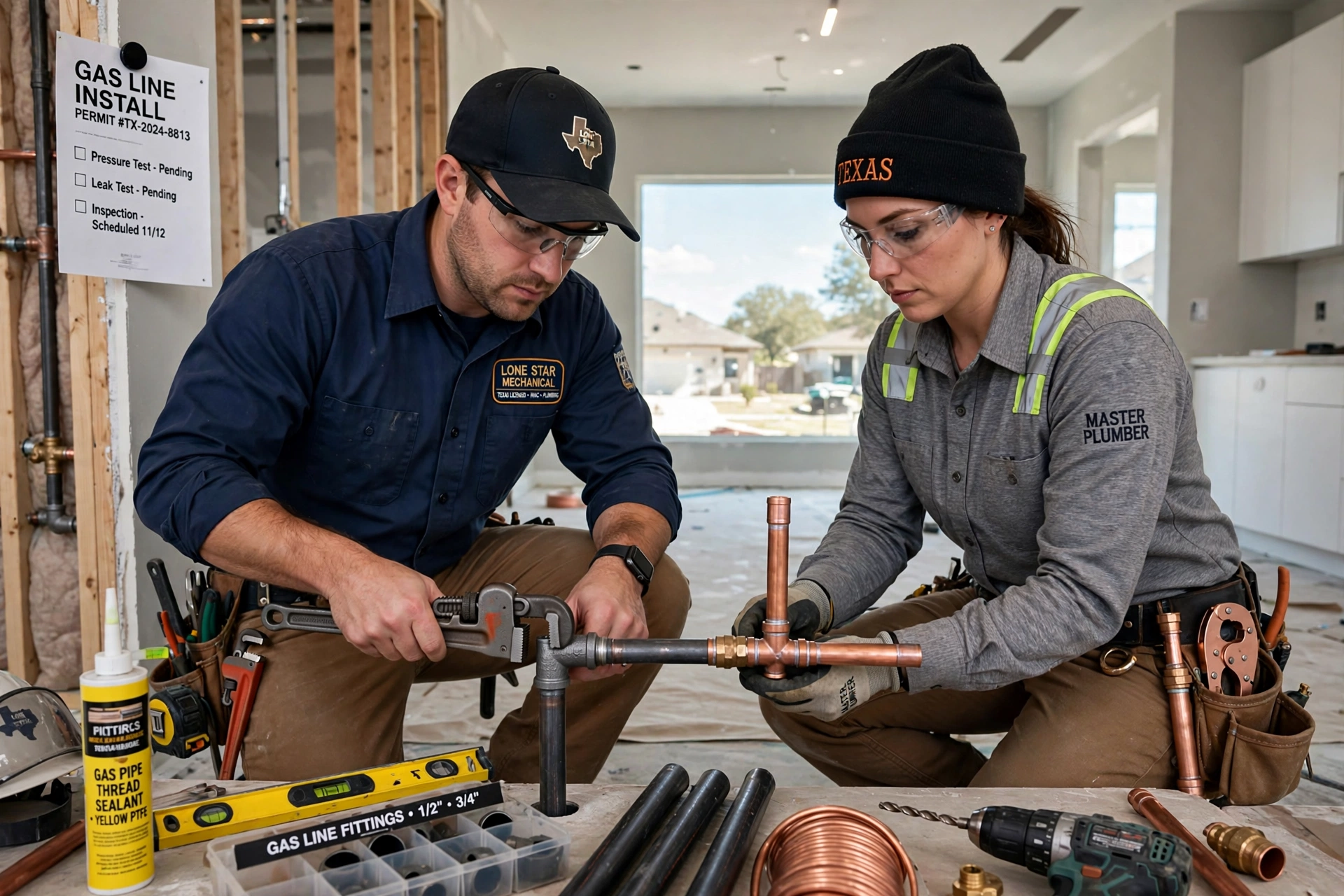
Technician tightening a gas line fitting with a pipe wrench at a Leander, TX home

Why Homeowners Call Us in an Emergency

What an emergency gas call looks like from our side — and the standards we hold on every one.

A gas emergency gets priority from the first call: the immediate danger is addressed first, then the failure is located precisely — no guesswork about where the problem is.

S

Safety First

On every emergency call

You approve the repair plan and the price before any work begins — no surprises added to an already stressful situation.

M

Make It Clear

Before any work begins

Repairs are pressure-tested and leak-checked across the full system, and appliances are relit and verified — the job is not done until the system proves safe.

E

Every Job Tested

Before we leave

Frequently Asked Questions

I smell gas in my house right now. What should I do first?

Leave the building immediately with everyone inside, including pets. Do not use light switches, phones, or appliances on your way out, and do not try to find the source of the smell. Once you are a safe distance away, call for emergency gas line repair at (512) 877-2533 and notify your gas utility. Stay out until a professional confirms it is safe to re-enter.

Should I shut off the gas myself before the technician arrives?

If you know exactly where your main shutoff valve is and can reach it safely on your way out of the building, you may turn it off. But do not go searching for it through an area where the smell is strong, and do not go into a basement or crawl space to reach it. When in doubt, leave the valve alone and let the technician handle it — your safety comes first.

How do you find where a gas leak is coming from?

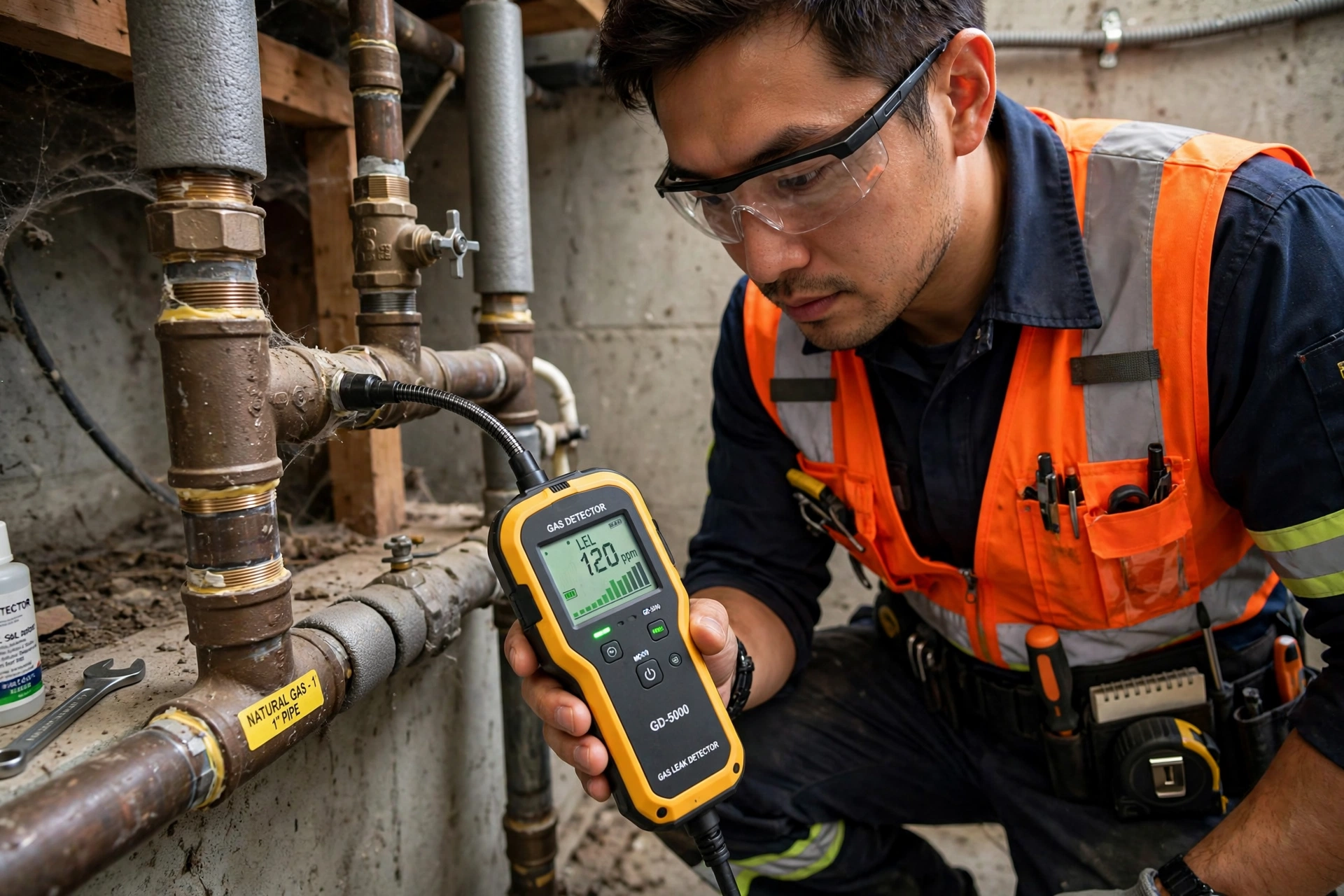
Our technicians use electronic combustible gas detectors that are far more sensitive than the human nose, sweeping every joint, valve, and appliance connection. For suspected leaks at fittings, professional leak detection fluid is applied — bubbles reveal the exact spot. For leaks inside walls or underground, sections of piping are isolated and tested individually to narrow down the failing run before any digging or opening up begins.

Is a small gas leak actually dangerous, or can it wait?

Any gas leak should be treated as urgent. Even a small leak can grow over time as corrosion spreads or a joint loosens further, and gas can accumulate in enclosed spaces. The rotten-egg odor means gas is escaping right now. There is no safe level of leak to ignore — call for professional help and let detection equipment determine how serious it is.

Should I call the gas company too, or just a repair service?

It is wise to do both. Your gas utility can shut off service at the meter and confirm there is no issue on the supply side of the line. A repair service handles the customer-owned piping — everything downstream of the meter — which is where most residential leaks occur. Calling both covers the full system and avoids delays.

What happens to my appliances when the gas is shut off for repair?

Pilot lights will go out and gas appliances will stop working while the gas line is shut off — that is normal and temporary. After the repair passes a pressure test, the technician restores service, relights pilots, and verifies that each appliance is operating correctly before leaving. You will be told clearly what was shut off and what to expect at each step.

How long does an emergency gas line repair usually take?

It depends on the cause and location. A leaking appliance connector or a single bad fitting can often be repaired in one visit. A corroded section of underground pipe takes longer because the line must be located, exposed, replaced, and pressure tested. After the repair, the system must hold pressure on a test gauge before gas service is restored, and some situations require a city inspection before the meter is turned back on.
Get Reliable Gas Line Repair in Leander Today

Don't wait on a suspected gas problem. Call (512) 877-2533 now — if you smell gas, leave the area first and call from a safe distance.

Call Now Request Service

Get in Touch with Us

Tell us about your gas emergency or concern using the form below — or, if you smell gas right now, leave the area and call (512) 877-2533 immediately.

Or call us right now at (512) 877-2533 — we answer.

Gas Line Repair Leander TX


  • Address

    1789 S Bagdad Rd, Leander, TX 78641, USA, Leander, Texas

  • Hours

    Mon–Fri: 7AM – 7PM
    Sat: 8AM – 4PM
    Sun: Emergency Only
    24/7 Emergency Available

Call (512) 877-2533 Get Quote
Call Quote