Gas Line Repair Leander TX
Get Estimate

Gas Line Repair in Leander, TX

Leaking or damaged gas line? We fix it safely, and to code.


When an existing gas line in your Leander home starts leaking, corroding, or losing pressure, guesswork is not an option. We repair damaged gas lines across Williamson County — from the Atmos Energy meter to every appliance — replacing failed sections, resealing joints, and pressure-testing every fix against the National Fuel Gas Code before gas flows again.

Leander, TX gas line repair: technician applying thread sealant to a replacement steel elbow fitting
Trained Team Leak and repair specialists
Fully Insured Insured & Bonded
Emergency Help Call to book your visit
Careful Workmanship Every joint tested

What Our Gas Line Repair Covers

Every repair visit follows the same careful routine: we find the problem, explain it in plain language, fix only what needs fixing, and prove the line is sealed before we leave.

Careful Inspections

We start by tracing the line and checking every accessible joint, valve, and connection. In Leander’s mix of older steel systems and newer CSST runs, we know the usual failure points: threaded joints loosened by shifting expansive clay, risers thinned by Central Texas humidity, and connectors worn from years of appliance vibration.

Leak Repairs

When we find a leak, we isolate that section, cut out the damaged pipe, and install new pipe and fittings rated for the location — buried, exposed, or indoors. We never seal a repair behind a wall or underground without testing it first.

Code Compliance Review

Gas work in Leander has to meet the National Fuel Gas Code along with Williamson County requirements — proper materials, accessible shutoffs, correct support spacing. We check the repaired section against both, so the work stands up if your home is ever sold, remodeled, or inspected.

Final Safety Testing

Before we call the job done, we pressure-test the repaired section and check every joint with a calibrated detector. You see the steady gauge and the clean detector reading yourself — the repair is verified, not assumed.

What Gas Line Repair Means for Leander Homes


Gas line repair means finding and fixing whatever keeps natural gas from traveling safely from your meter to your appliances: a leaking threaded joint, a corroded section of steel pipe, a failing regulator, or a damaged flexible connector behind the range. In Leander, most of these failures trace back to two local forces — expansive clay soil that shifts buried lines as it swells and shrinks with the seasons, and year-round Central Texas humidity that rusts exposed steel at meters, risers, and exterior runs.

Add in the occasional hard freeze — February 2021 burst pipes across Central Texas and reminded everyone that cold snaps punish exposed lines and fittings — plus the simple wear that comes with age in older neighborhoods, and even a well-installed line eventually needs attention. Repair is about catching that wear early: a straightforward joint fix today beats an emergency leak call later.

How Our Gas Line Repair Works

You will always know what happens next. Our visits follow four straightforward steps, and we explain each one before we start.

01

Schedule

Call (512) 877-2533 or send a message through our contact form. We will confirm a visit window that works for you and ask what you are noticing — a smell, hissing, weak appliance flames — so the technician arrives prepared.

02

Diagnose

Our technician inspects the line on site, pinpoints the problem, and walks you through the cause and the fix options in plain language. You approve the plan and the written estimate before any work begins.

03

Repair

We complete the repair to code — no shortcuts, no surprises. If anything unexpected comes up mid-job, like hidden corrosion beyond the first bad section, we explain it and get your okay before continuing.

04

Test & Review

We pressure-test the repaired section, check every joint for leaks, and review what was done with you before we leave — including where the shutoffs are and what to watch for going forward.

Tools and Methods We Use for Gas Line Repair

Tools & Equipment

Gas Leak Detectors

Calibrated electronic detectors that find even small leaks at joints and fittings — far more reliable than guessing by smell alone, and essential for confirming a repair is truly sealed.

Pipe Wrenches

Properly sized wrenches that grip without crushing, used to break loose corroded old fittings and tighten new connections to the right torque.

Pressure Gauges

Gauges that verify the line holds pressure after a repair. If the needle drops, there is still a leak somewhere — and we keep looking until it holds steady.

Pipe Cutters

Cutters that make clean, square cuts so new sections of pipe seat fully into fittings with no gaps or weak points.

Methods & Standards

Electronic Leak Detection

We sweep every accessible joint and connection with an electronic detector to pinpoint leaks before opening anything up — so we cut only where the problem actually is.

Pressure Testing

After a repair, the line is pressurized and monitored. A steady reading confirms the system is sealed; a drop tells us exactly where to keep working.

Code Compliance Review

Every repair is checked against the National Fuel Gas Code (NFGC) and local Williamson County requirements, including shutoff access and proper materials for the location.

When to Call for Gas Line Repair

01

You notice a sulfur or rotten-egg smell.

What we do: If you smell gas, leave the area and call 911 or Atmos Energy from a safe location first. Once the immediate danger is cleared and you get the all-clear, call us — we will locate the leak, replace the damaged section, and pressure-test the repair before restoring service.

→ Acting fast keeps a small leak from becoming a dangerous one — and gets your home back to safe, normal use.

02

Your gas appliances are not working right.

What we do: When a range, water heater, dryer, or fireplace underperforms, the culprit is often a loose fitting, a partially blocked line, or low pressure at that branch. We trace the issue to its source instead of replacing parts hopefully.

→ You get appliances that run the way they should, without wasted gas or uneven heat.

03

You are adding or replacing a gas appliance.

What we do: New ranges, tankless water heaters, standby generators, and outdoor kitchens often need a line extended or upsized. We run the new piping to code and tie it into your existing system safely, with proper shutoffs at the appliance.

→ Your new appliance gets the steady gas supply it was designed for, from the first day you use it.
Gas Line Repair, Planned for Leander Conditions

Leander sits at the edge of the Hill Country, where thin topsoil over limestone meets pockets of expansive clay that never sit still — swelling after Central Texas downpours and shrinking in the dry summer heat. That movement shifts buried gas lines and stresses every threaded joint, while damp soil speeds corrosion on buried steel. We plan every repair around these realities: proper bedding for buried pipe, corrosion-resistant materials where soil stays damp, and secure hangers on exposed runs. And before any digging, we make sure underground utilities are marked through Texas 811.

Neighborhoods We Serve

  • Crystal Falls

    Crystal Falls is Leander’s largest master-planned community, and its homes span enough build years that we see the full range — original steel lines with corroded risers in the older sections, and newer CSST runs in the later phases. Repairs here are usually targeted: a leaking joint here, a tired connector there.

  • Travisso

    Out in Travisso’s Hill Country terrain, gas lines run to outdoor kitchens, fire pits, and pool heaters across rocky, sloped lots. We repair weather-exposed exterior runs and the buried lines feeding backyard appliances, where shifting limestone and thin soil make proper bedding critical.

  • Benbrook Ranch

    Benbrook Ranch’s early-2000s homes are reaching the age where original steel gas lines start showing wear — fittings loosened by years of clay movement and risers rusted by humidity. We handle section replacements and joint repairs that extend the system’s life without a full re-pipe.

Local Conditions We Plan For

  • Expansive clay soil

    Williamson County’s clay swells and shrinks with moisture, shifting buried gas lines and cracking threaded joints. We use proper bedding and code-approved flexible connections where soil movement is a factor, so the repair survives the next wet-dry cycle.

  • Central Texas humidity and corrosion

    Year-round humidity accelerates rust on exposed steel pipe, especially at meters, risers, and exterior runs. We cut out corroded sections rather than patching over them, and choose materials rated for damp air wherever exposure is unavoidable.

Before: Gas Leak Detection

Before

A situation we see often: a homeowner in Crystal Falls notices a sulfur smell near the water heater and is not sure whether it is the appliance or the line.

After

Our approach: sweep the area with an electronic detector, find the leaking joint at the water heater’s shutoff, replace that section of pipe, and pressure-test the line before restoring service.

Maintenance: We recommend a yearly look at appliance connections and exposed risers to catch the next weak spot early.

Before

Another common call: a gas range in Benbrook Ranch that used to heat evenly now has weak, uneven flames while the water heater works fine.

After

Our approach: trace that branch line, find the loose or partially blocked fitting starving the range, repair it, and verify steady pressure at every burner.

Maintenance: A quick annual check of appliance connectors heads off most of these slow-developing problems.

Before

And a familiar one after a hard freeze: a homeowner worries that a February-style cold snap may have stressed an exposed gas line or its fittings.

After

Our approach: inspect the exposed portions for freeze-related stress, test line pressure, and check for leaks at the meter and riser — then explain exactly what we found, good or bad.

Maintenance: After any freeze, a pressure check is inexpensive insurance that the system came through intact.

Common Gas Line Problems We Fix

Most gas line trouble in Leander comes down to a short list of causes. Here is what we run into and how we handle each one.

Problem

Corroded steel pipe and leaking joints

Decades of humidity and shifting clay take their toll: pipe walls thin out, threads loosen, and small leaks form at joints — especially on older steel lines in Crystal Falls and Benbrook Ranch.

Our Fix

We cut out the damaged section and install new pipe and fittings, then pressure-test the repair. Where soil stays damp, we choose materials suited for the conditions so the fix lasts.

Problem

Appliances starved for gas

A loose fitting, an undersized branch, or debris in the line can leave a range, dryer, or fireplace underfueled — weak flames, slow heating, or nuisance shutdowns.

Our Fix

We trace the branch, fix or replace the faulty connection, and confirm proper pressure at the appliance so it runs as designed.

Problem

Pressure drops across the system

When several appliances underperform at once, the main run may have a restriction, a failing regulator, or a leak bleeding off pressure.

Our Fix

We test pressure at multiple points to isolate the cause, then repair the restriction or leak and verify the whole system holds steady.

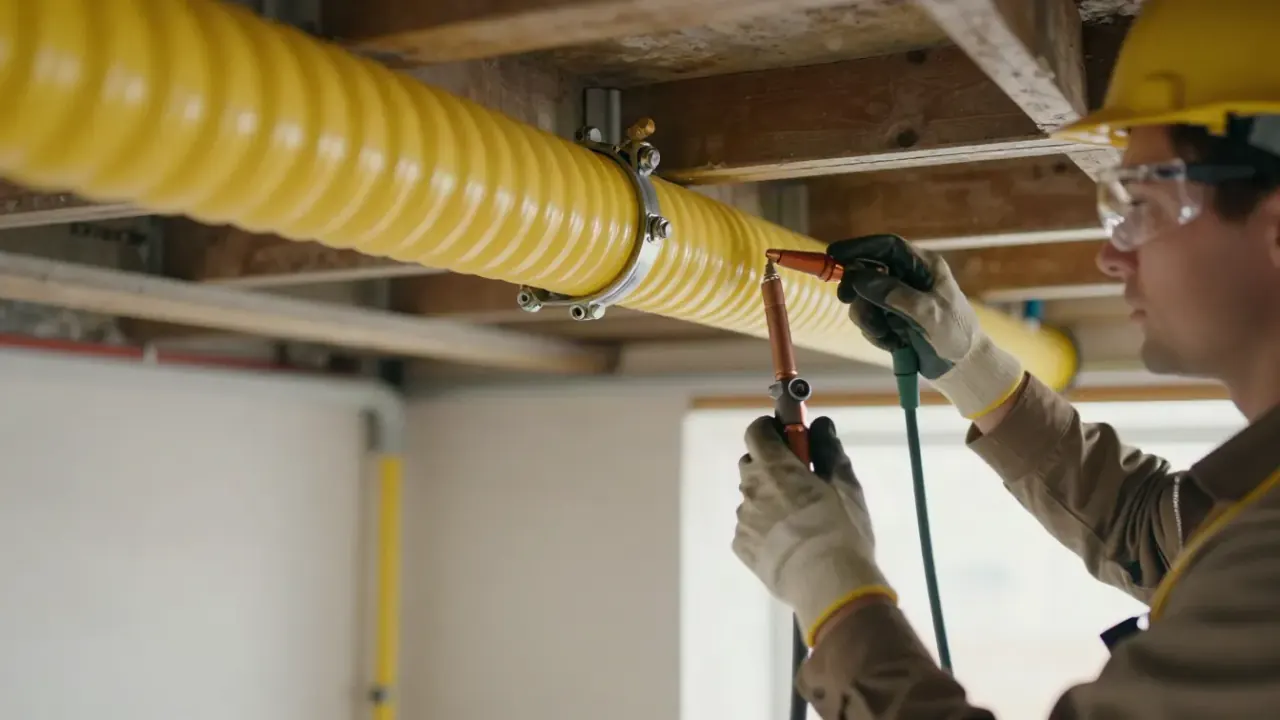
Gas line repair in Leander, TX: newly repaired section of yellow corrugated stainless steel tubing (CSST) gas line

Why Repair Your Gas Lines

A sound gas line is one of those things you never think about — until it is not. Here is what timely repair gives you.

  • A safer home

    Fixing leaks and weak joints removes the risk of gas buildup in your home. After every repair we test the line, so you know — not hope — that it is sealed.

  • Appliances that work properly

    Steady gas pressure means your range heats evenly, your water heater recovers faster, and your dryer actually dries. No more compensating for a starved appliance.

  • Fewer surprise breakdowns

    Catching a corroded section or loose fitting early costs far less — in money and stress — than dealing with an emergency leak later.

  • Code compliance

    Repairs done to the National Fuel Gas Code (NFGC) and local requirements keep your home inspection-ready, which matters when you sell or renovate.

Gas Line Repair Pricing in Leander

Every gas line repair is different, so we price by the job — not with one-size-fits-all numbers. When you call, we explain what will affect the cost in your situation and give you a clear written estimate before any work starts. No hidden fees, no surprises.

What Goes Into Your Estimate

A clear written estimate before work begins — itemized so you can see exactly what you are paying for.

Our estimates reflect the actual materials and labor your repair requires — nothing padded, nothing vague.

What changes the price

01

Extent of damage

A single leaking joint takes far less work than a long run of corroded pipe. The more pipe and fittings involved, the more the job costs.

02

Materials used

Steel, CSST, and polyethylene each have different costs, and the right choice depends on whether the run is buried, exposed, or indoors.

03

Labor and access

A line under a concrete slab or behind finished walls takes more time than an exposed run in an attic or garage — access is a big part of the labor.

What You Can Count On

Our Qualifications

  • Trained gas line technicians Our team is trained in gas line repair methods, leak diagnostics, and current safety practices.
  • National Fuel Gas Code knowledge We follow NFGC requirements plus Leander and Williamson County rules on every repair job.
  • Texas 811 aware Before any digging, we make sure underground utilities are located and marked through Texas 811.

How We Work

Clear communication — we explain the work before we start.

You will know what we found, what it means, and what your options are before any work begins. No jargon, no surprises.

Careful workmanship — we respect your home.

We protect floors and walls around the work area and clean up before we leave, so your home looks the way we found it.

Thorough safety testing — every repair gets verified.

Every repair is pressure-tested and checked with a gas detector before we call it done. If it does not hold, we keep working.

Experience With Leander Gas Lines

We work on gas lines across Williamson County every week — older steel systems, new CSST runs, buried yard lines, and appliance hookups. That local repetition matters: we know how expansive clay moves, where humidity corrodes fastest, and what local inspectors look for.

  • Technicians trained in gas line repair, leak detection, and safety procedures.
  • Hands-on experience with steel, CSST, and polyethylene piping in residential and light commercial settings.
  • Familiar with the National Fuel Gas Code (NFGC) and Williamson County requirements.
  • Equipped with calibrated detectors, pressure gauges, and proper cutting and threading tools.
Get Started Today
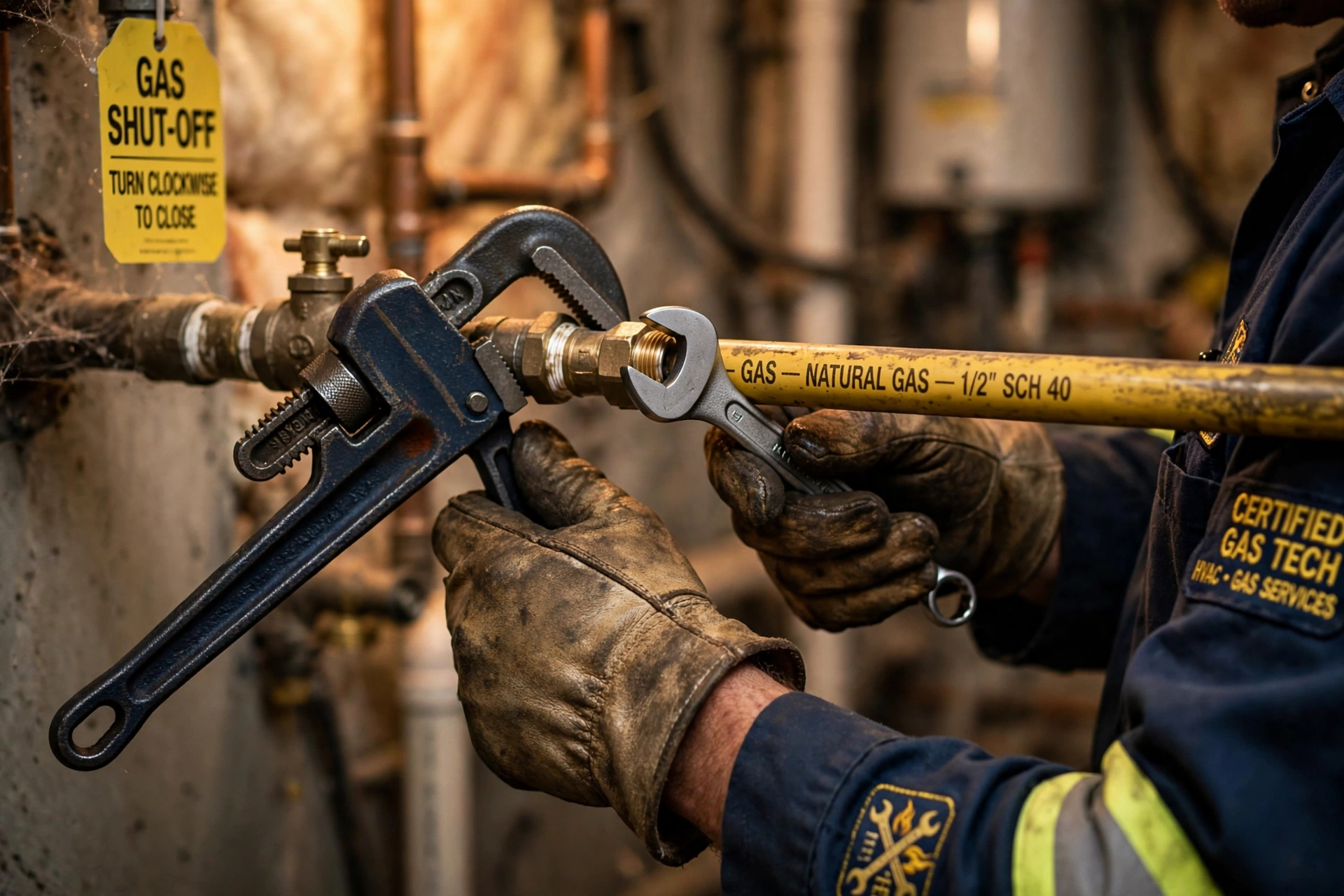
Leander gas line technician tightening a repaired gas fitting with a pipe wrench

What to Expect From Our Service

We do not ask you to take our word for it — here is exactly how we treat every repair visit, so you know what to expect when you call.

“We show you the failed section and explain the fix in plain language — you approve the plan before we touch a wrench.”

C

Clear Communication

On every visit

“We treat your home with care: drop cloths under the work area, tidy pipe runs, and a clean space when we leave.”

H

Honest Assessments

On every job

“We pressure-test every repair and check each joint with a detector before we leave — the line has to prove it is sealed.”

T

Thorough Testing

Before we leave

Frequently Asked Questions

Straight answers about gas line repair in Leander — what it involves, what affects the cost, and what to do if you suspect a leak.

How do I know my gas line needs repair instead of replacement?
Most problems are localized — a leaking joint, a corroded section, a failing connector — and a targeted repair is the right fix. Replacement only makes sense when the line has widespread corrosion or repeated failures across multiple sections. After our inspection, we explain both options honestly and let you decide.
How long does a typical gas line repair take in Leander?
Most repairs take two to four hours from diagnosis to final pressure test. Jobs with difficult access — lines behind finished walls or under slabs — can take longer, and we tell you that upfront in the written estimate so there are no surprises.
Will my gas be shut off during the repair?
Yes, briefly. We shut off gas at the meter while the damaged section is replaced, then pressure-test the repair and restore service on the same visit. Where the meter itself is involved, we follow the utility’s lockout procedures.
What should I do if I smell gas before you arrive?
Leave the area immediately and call 911 or Atmos Energy from a safe location — do not use phones, light switches, or appliances near the smell. Once the utility or fire department clears the scene, call us at (512) 877-2533 and we will repair the damaged section.

Schedule Gas Line Repair in Leander Today

Do not wait on a gas problem. Call (512) 877-2533 or send us a message — we will take a look, explain what is going on, and give you a clear estimate before any work starts.

Call Now Request Service

Get in Touch with Us

Questions about a gas line at your home or business? Reach out during business hours — a real person will respond and help you schedule a visit.

Or call us right now at (512) 877-2533 — we answer.

Gas Line Repair Leander TX


  • Address

    1789 S Bagdad Rd, Leander, TX 78641, United States

  • Hours

    Mon–Fri: 7AM – 7PM
    Sat: 8AM – 4PM
    Sun: Emergency Only
    Call for urgent service needs

Call (512) 877-2533 Get Quote
Call Quote