Gas Line Repair Leander TX
Get Estimate

Gas Line Pressure Testing in Leander, TX

A pressure test is the most conclusive way to know a gas piping system is sound — not a guess, not a sniff check, but measured proof. We pressure test gas lines for Leander homeowners, buyers, sellers, and remodelers, following a careful, repeatable procedure and leaving you with written results that mean something to an inspector, a real estate agent, or the next owner of the home.


Whether you are roughing in a new line, checking work after a repair, or documenting a system before a sale, a proper test answers the only question that matters: does this piping hold pressure with zero leaks? If it does, you have proof. If it does not, you find out now — before the trench is backfilled or the drywall goes up.

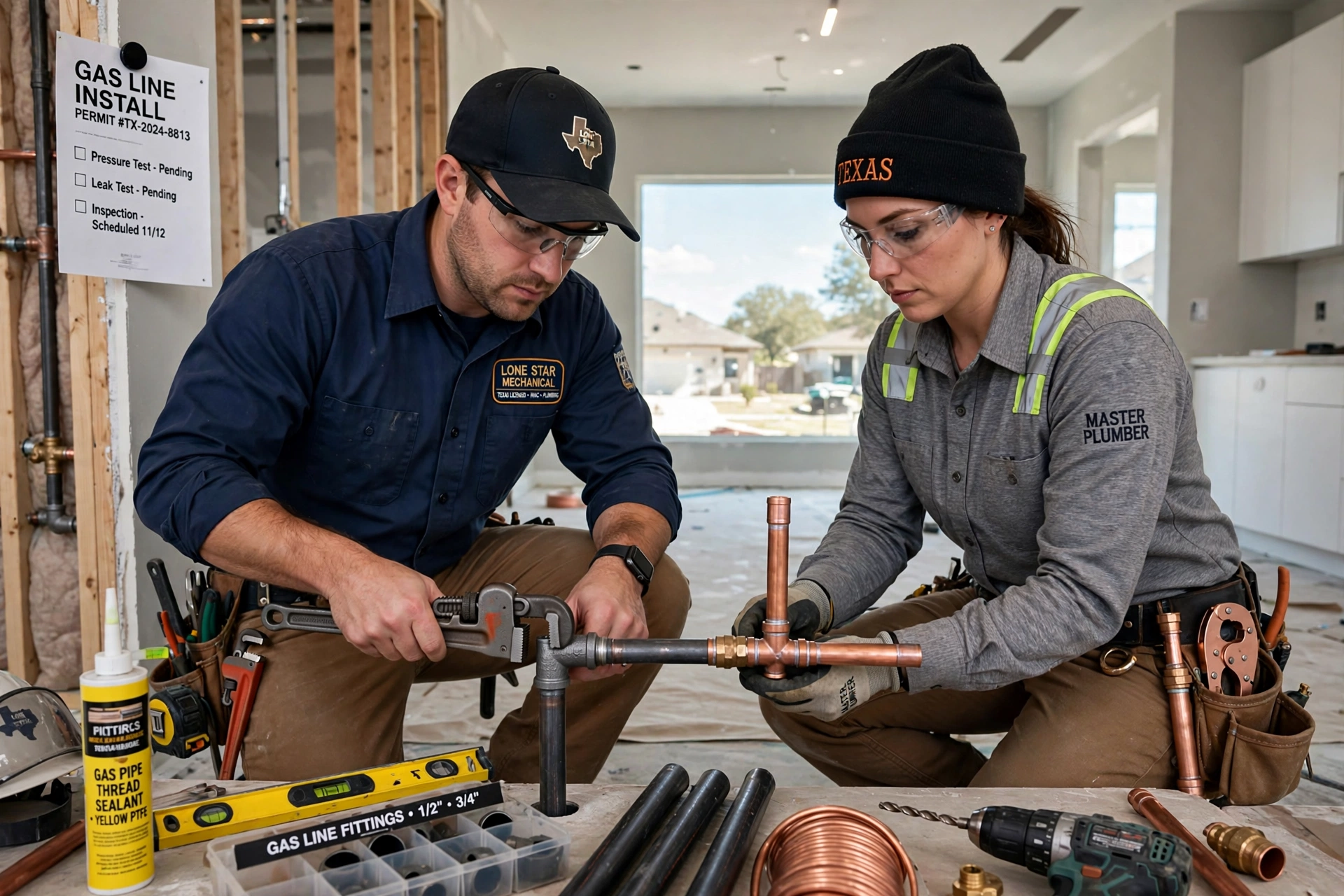
Gas technician applying pipe thread sealant to a galvanized steel fitting while setting up a pressure test in Leander, TX
Experienced Experienced & Bonded
Fully Insured Insured & Bonded
24/7 Emergency Emergency Calls Answered
Careful Workmanship Checked and Tested Before We Leave

What a Pressure Test on a Gas Line Really Proves

A pressure test is simple in concept and strict in execution. A defined section of gas piping is isolated from the gas supply, sealed at every opening, filled with air to a set test pressure, and then watched. A calibrated gauge tells the story over the observation period: steady pressure means the piping is tight; a falling needle means air is escaping somewhere and there is a leak to find. Nothing about the test is subjective, which is exactly why inspectors, homebuyers, and insurance adjusters accept it as evidence.

New Piping, Proven Before It Disappears

Freshly installed gas piping should be tested before it is buried, covered, or closed behind drywall. Once a trench is backfilled or a wall is finished, finding and fixing a leak gets expensive fast. Testing first means any weak joint, missed seal, or fitting issue shows up while it is still easy to reach — which is why most permits for new gas work in the Leander area expect a test before the inspection sign-off.

Repairs You Can Verify, Not Just Trust

After a gas line repair, a pressure test confirms the fix actually holds. It is one thing to tighten or replace a fitting; it is another to pressurize the repaired section and watch the gauge sit perfectly still. We test our repair work so you are not left wondering whether the problem is truly solved — you have a reading that says it is.

Documentation for Permits and Real Estate

Our written test records list what was tested, the test pressure, how long the gauge was observed, and the result. That paperwork is useful when a City of Leander inspector asks for proof of a sound system, when a buyer wants assurance before closing, or when a seller wants to show the gas system was checked. A verbal “we looked at it” does not carry the same weight as recorded readings.

A Baseline for Older Leander Homes

Many homes around Leander — especially older ones in established neighborhoods — have gas piping that has been in the ground or in walls for decades. A pressure test establishes a baseline: is the system tight today? That baseline is valuable before you add a new appliance, extend a line, or list the home, because it separates “probably fine” from “known good.”

When a Pressure Test Makes Sense in Leander

Pressure testing is not routine maintenance; it is called for at specific moments in a gas system’s life. The most common is new installation. Any time new gas piping goes in — a run to a new range, a line for an outdoor kitchen, a replacement section — the work should be tested before it is concealed. In our experience, the tests that get skipped are the ones people regret, because the cost of opening a finished wall dwarfs the cost of the test.

The same logic covers modifications to existing systems: extending a line to a new appliance, rerouting piping during a remodel, or tying a new branch into an old trunk. The new joints and the disturbed old ones both deserve verification. We regularly test partial systems in Leander remodels, isolating just the new or altered section so the rest of the house stays live and undisturbed.

Real estate transactions are another common trigger. Buyers — and their inspectors — increasingly ask for proof that the gas system is sound, particularly on older homes or homes where unpermitted work is suspected. Sellers, for their part, use a passing test as a selling point: documented evidence the system holds pressure. Either way, the test removes a question mark from the negotiation.

Finally, tests follow service interruptions. If Atmos Energy shut off gas to a property — after a leak call, a long vacancy, or a major repair — the utility typically wants assurance the piping is sound before restoring service and relighting appliances. A documented pressure test gives everyone involved confidence that turning the gas back on is the safe move.

How We Perform the Test, Step by Careful Step

A proper pressure test follows the same deliberate procedure every time, because the preparation matters as much as the gauge reading. Rushing the setup — or testing the wrong section — produces a result nobody should trust. Here is how we do it on a typical Leander home, whether it is a brand-new run or a decades-old system being verified for a sale.

First we define exactly what is being tested: the whole-house system, a single new branch, or a repaired section. Then every appliance on that section is isolated — shutoff valves closed, and where needed, appliances disconnected and openings capped. Gas appliance controls are built for low operating pressure, not test pressure, so keeping them out of the test protects your equipment and keeps the reading honest.

Next we seal every opening on the test section and connect a calibrated test gauge at a suitable point, usually with a proper test assembly rather than a jury-rigged fitting. The section is then pressurized with air — never with fuel gas — to the specified test pressure. We check every joint and connection with the gauge holding, watching for any immediate drop that would signal a significant leak before the timed observation even begins.

Then comes the observation period: the gauge is left undisturbed and read at the start and end, with the readings recorded along with the test pressure, duration, and ambient conditions. Temperature swings can nudge a reading, so we account for that rather than pretending it does not happen. At the end you get the verdict — pass or fail — plus the written record to keep with your home’s paperwork.

Making Sense of Your Test Results

When the observation period ends there are two possible outcomes, and both are useful. A pass gives you documented proof the tested piping is leak-free at the test pressure — the kind of proof an inspector accepts and a buyer appreciates. A fail is not a disaster; it is the test doing its job by catching a leak while it is still cheap and easy to fix.

A steady gauge across the full test period means the isolated piping has no leaks — not in the joints, not in the fittings, not along the pipe itself. That result covers the piping that was tested, at the pressure it was tested. It does not prove the appliances are in good shape — they were isolated from the test and were never part of it — but it does prove the distribution piping is sound.

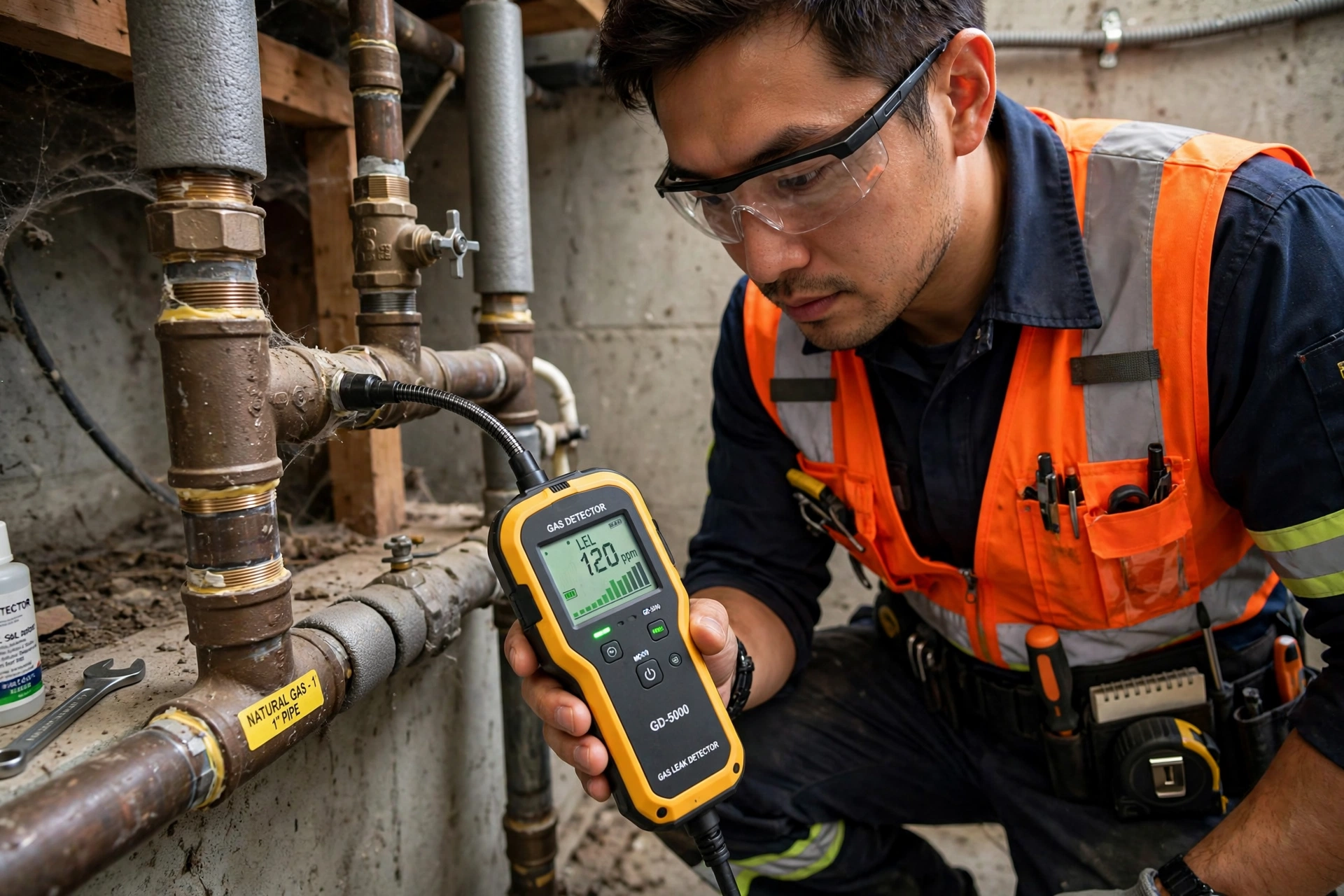
A falling gauge means air is escaping somewhere in the test section. The next step is pinpointing it: we recheck our own test connections first, then work through the section methodically — isolating subsections, checking joints, and using leak-detection methods to find the exact point of loss. Most failures trace back to a single joint or fitting, and once it is repaired, we run the test again to confirm the fix.

What matters most is that the result is interpreted correctly and written down clearly. Our test records note the section tested, the test pressure, the duration, the start and end readings, and the outcome — plain facts, no jargon. Keep that record with your permit paperwork or closing documents; it is the kind of documentation that answers questions before they are asked.

Pressure Testing, Permits, and Code in Leander

01

Plan the test around your permit

What we do: Most new gas line work in Leander involves a city permit, and inspectors want to see a sound system before they sign off. We schedule the test so the results are ready when the inspector arrives — the piping pressurized, the gauge readable, and the documentation in hand.

→ This keeps your project moving instead of stalling at inspection day.

02

Test before anything gets buried or closed up

What we do: Timing is everything. The test has to happen after the piping is complete but before trenches are backfilled or walls are closed. We coordinate with your contractor or your own project schedule so the test lands in that window — the one moment when a fix is still simple.

→ You avoid the costly surprise of opening finished work to chase a leak.

03

Keep the paperwork with the house

What we do: After a passing test, we provide a written record: what was tested, the pressure, the duration, the readings, and the result. File it with your permit card or your home records. Years from now — at resale, during a remodel, or after a freeze — that record still answers the question “was this system ever verified?”

→ Future buyers, inspectors, and contractors get answers instead of guesses.

Everyday Gas Safety for Your Leander Home

Leander sits on the edge of the Hill Country, and local ground conditions shape how gas piping ages here. Expansive clay soils swell when wet and shrink when dry, and that seasonal movement stresses buried lines and the joints where they enter the house. Add the occasional hard freeze — February 2021 reminded everyone what a deep freeze does to plumbing — and periodic verification of your gas system is simply good sense.

Leander Neighborhoods We Serve

  • Crystal Falls

    A large master-planned community where many homes are now old enough that original gas piping deserves a check — especially before adding outdoor living features or selling.

  • Bridlewood

    An established neighborhood with a mix of home ages; we often test here during remodels and pre-sale inspections where piping history is uncertain.

  • Travisso

    Hill Country terrain and newer construction; pressure tests here commonly support outdoor kitchen and fire-feature gas runs before backfill.

Local Conditions That Affect Gas Piping

  • Expansive clay soil movement

    Leander’s clay soils expand and contract with moisture changes, shifting buried piping over time. A pressure test confirms the system is still tight after years of that slow movement.

  • Hard freezes and temperature swings

    Deep freezes and fast temperature swings stress joints and exposed piping. After a hard freeze, a test is a sensible way to confirm nothing cracked or loosened.

Talk Through Your Pressure Test With Us

Call Gas Line Repair Leander TX at (512) 877-2533 to schedule a pressure test. We will explain what will be tested, how long it takes, and what the documentation looks like — then show up with calibrated gauges and a careful procedure.

Gas Line Problems We Solve in Leander

Not every gas concern needs a full repair — sometimes what you need is proof the system is sound, or a precise answer about where it is not. These are the situations we handle most often around Leander.

Problem

New gas piping with no proof it is sound

A contractor ran a new line and everything “seems fine,” but there is no test record — and the inspector or buyer wants one.

Our Fix

We isolate the new section, run a proper pressure test with a calibrated gauge, and provide written results. If it passes, you have documentation; if it fails, we find the leak while it is still accessible.

Problem

A suspected leak after soil movement or a freeze

Expansive clay or a hard freeze can disturb buried and exposed piping, leaving you wondering whether the system is still tight.

Our Fix

We pressure test the affected sections to get a definitive answer. A steady gauge means peace of mind; a drop means we pinpoint the leak, repair it, and retest to confirm.

Problem

An inspection stalled for lack of documentation

The work looks complete but the permit cannot close — the inspector needs evidence the gas piping was tested and holds pressure.

Our Fix

We perform the test to accepted practice, document the pressure, duration, and readings, and give you paperwork the inspector can rely on to sign off the job.

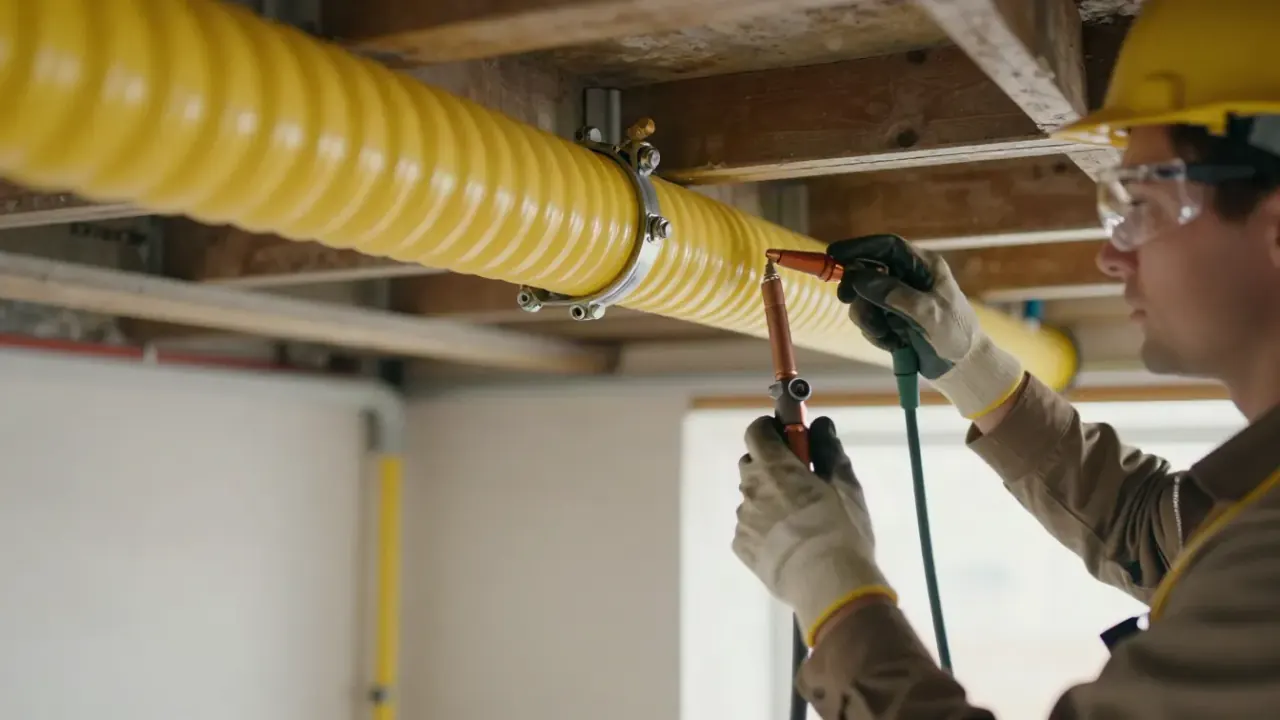
Finished yellow CSST gas line run installed along a wall in a Leander, Texas home after a passing pressure test

Benefits of a Documented Pressure Test

A pressure test is a small job with outsized value — it converts uncertainty about your gas system into a recorded fact. Here is what that fact buys you.

  • Proof, not promises

    Anyone can say a gas line looks fine. A pressure test produces gauge readings and a written record — evidence that stands up with inspectors, buyers, and insurance adjusters in a way opinions never do.

  • Leaks found while fixes are cheap

    The whole point of testing before backfill or drywall is catching problems at the cheapest possible moment. A failed test on open piping is a minor repair; the same leak found a year later behind a finished wall is a project.

  • Smoother permits and closings

    Permits close faster when the inspector gets clear test documentation, and real estate deals move faster when the buyer’s questions about the gas system already have answers. Paperwork prevents delays.

  • A safer starting point for new appliances

    Before you connect a new range, dryer, or outdoor kitchen to existing piping, a test confirms the supply side is sound. New appliances deserve a verified system feeding them — not one you are hoping is fine.

Gas Line Pressure Testing Cost in Leander

Every system is a little different — a single new branch tests differently than a whole-house verification — so we price each pressure test on its actual scope. Call (512) 877-2533 and tell us what is being tested; we will give you a clear, straightforward quote before any work begins, with no surprises.

How we price the test

Based on system size and scope — call for a clear, upfront quote

Our quotes reflect the actual work involved: isolating the section, setting up calibrated equipment, the observation time, and the written documentation. You will know the price before we start.

What changes the price

01

Size of the system

Testing one new branch is quicker than verifying an entire house. The more piping in the test section, the more setup and observation it takes.

02

Accessibility

Easy-to-reach piping at the meter or in an open trench tests faster than piping spread across a finished home with limited access points.

03

Repairs or retests needed

If the test finds a leak, locating and repairing it — then retesting to confirm — adds to the scope. We will always explain the options before proceeding.

Our Approach to Every Gas Job

How We Work

  • Fuel-gas code practices — testing and installs follow fuel gas code practices and local requirements
  • Calibrated test equipment — gauges maintained so the readings actually mean something
  • Written results, every time — you get documentation of what was tested and the outcome

Our Experience With Gas Systems in Leander

Gas work is unforgiving of shortcuts, so we treat every job — testing included — with the same deliberate process. Here is what we bring to your Leander home:

  • Daily hands-on work with residential gas piping, valves, regulators, and appliance connections across Williamson County.
  • Familiarity with the fuel gas code practices and permit expectations that local inspectors apply.
  • Pressure testing for new installs, post-repair verification, remodels, and real-estate transactions.
  • Combustible-gas detectors and calibrated test gauges on every job, so findings are measured — not guessed.
Get Started Today
Technician wearing safety glasses tightening a gas pipe fitting with a large wrench in Leander, TX

Frequently Asked Questions

What exactly is a gas line pressure test?

It is a leak-tightness check with measured proof. We isolate a section of gas piping from the supply, seal every opening, fill it with air to a set test pressure, and watch a calibrated gauge over a timed period. If the pressure holds steady, the piping is leak-free; if it drops, air is escaping somewhere and there is a leak to find. The readings are recorded so you have documentation, not just our word.

When is a pressure test required in Leander?

The most common triggers are new gas line installations, repairs or modifications to existing piping, and real-estate transactions where the buyer or inspector wants proof the system is sound. New gas work tied to a city permit generally needs testing before the inspection sign-off, and Atmos Energy typically wants assurance the piping is tight before restoring service after a shutoff. When in doubt, call (512) 877-2533 and describe your project — we will tell you honestly whether a test is warranted.

Do I need to be home during the test?

It helps to have someone available at the start so we can reach the meter, the appliance shutoffs, and any access points involved. Once the test section is isolated and the gauge is under observation, you do not need to hover — but we will want you there at the end to walk through the readings and the written results together.

Will the test damage my appliances?

No — appliances never see test pressure. Before pressurizing anything, we close each appliance’s shutoff valve and, where appropriate, disconnect appliances and cap the openings. Appliance controls are designed for low operating pressure, so isolating them is both standard practice and simple protection for your equipment.

What happens if my gas line fails the pressure test?

A failed test means a leak was found, so the next step is pinpointing it. We first recheck our own test connections to rule out the equipment, then work through the section methodically — isolating subsections and checking joints until the exact point of loss is found. Most failures trace to a single joint or fitting. We repair it and run the test again to confirm the system holds before calling the job done.

Can I pressure test my own gas line?

This is not a DIY task. It takes a properly calibrated test gauge, the fittings to seal and pressurize the section safely, knowledge of the correct test pressure and duration, and experience interpreting readings (temperature swings alone can fool an untrained eye). More importantly, mistakes with gas piping are dangerous. The test is affordable; the consequences of getting it wrong are not.

How long does a pressure test take?

The on-site work for a straightforward test usually takes one to two hours: isolating the section, sealing openings, setting up the gauge, pressurizing, and the observation period. Larger or harder-to-access systems take longer, and if the test finds a leak, locating and repairing it adds time. We will give you a realistic timeframe when you call (512) 877-2533.

Will your test documentation satisfy an inspector or a homebuyer?

Our test records list what was tested, the test pressure, the duration, the start and end readings, and the result — the facts an inspector or buyer’s agent needs. That written record is exactly what permit sign-offs and real-estate disclosures ask for: measured evidence the system holds pressure, rather than a verbal assurance.
Schedule Your Gas Line Pressure Test in Leander

Whether it is a new install awaiting inspection, a repair that needs verification, or a home sale that needs documentation — get measured proof your gas piping is sound. Call now or send a request and we will take it from there.

Call Now Request Service

Get in Touch With Us

Tell us what is being tested — a new branch, a repair, or a whole system — and we will explain the process, the timing, and the paperwork. Reach out during business hours for the fastest response.

Or call us right now at (512) 877-2533 — we answer.

Gas Line Repair Leander TX


  • Address

    1789 S Bagdad Rd, Leander, TX 78641, USA, Leander, Texas

  • Hours

    Mon–Fri: 7AM – 7PM
    Sat: 8AM – 4PM
    Sun: Emergency Only
    24/7 Emergency Available

Call (512) 877-2533 Get Quote
Call Quote