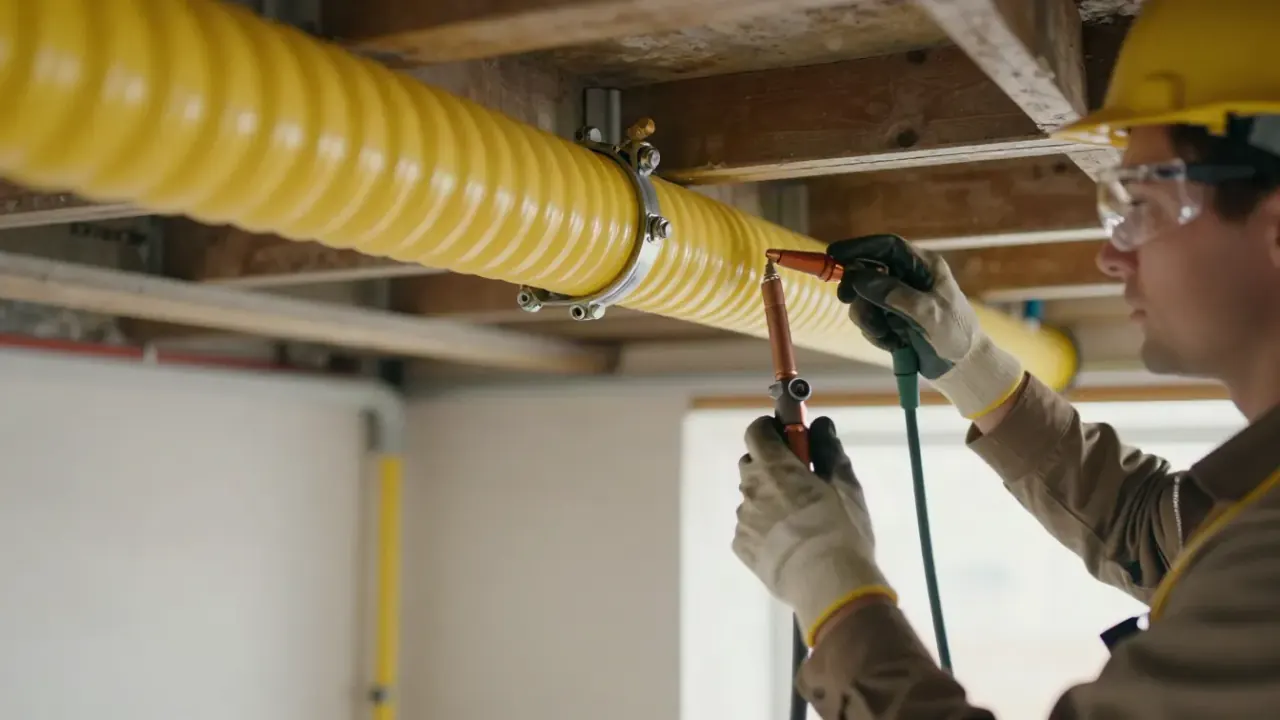
CSST Bonding & Inspection
Corrugated stainless steel tubing is standard in Hutto's 2000s–2020s homes. We verify proper bonding — critical for lightning protection — and inspect runs for damage from the clay's seasonal movement.
Our gas line repair service is built for Hutto's 2000s–2020s homes — CSST systems, clay-stressed connections, and new appliance work, all handled to current standards.
Corrugated stainless steel tubing is standard in Hutto's 2000s–2020s homes. We verify proper bonding — critical for lightning protection — and inspect runs for damage from the clay's seasonal movement.
Even newer systems develop leaks: at appliance connectors, at meter risers stressed by shifting soil, and at joints in additions. We repair them with current-standard materials.
New gas ranges, dryers, outdoor kitchens, and fire features need new runs sized from a real load calculation — never tapped off an existing line on a guess.
After every repair or installation, we pressure-test the system and verify every appliance, so the work is proven safe before we sign off.
Blackland clay is the defining fact of underground work in Hutto. It is expansive soil: it swells dramatically with heavy rain and shrinks just as dramatically in dry spells, and Hutto gets both extremes every year. That seasonal movement never stops working on what is buried in it — stressing rigid joints, shifting meter risers, and moving yard piping a fraction of an inch at a time until connections that were sound start to weep.
The damage concentrates where the system meets the ground. Gas lines enter Hutto homes through the slab or at the foundation, and when the slab shifts on swelling clay, the rigid piping connected to it has nowhere to go. Meter risers take the same abuse from the yard side. The telltale pattern we see: a system that passed every test when the home was new starts showing small leaks after a few extreme wet-dry cycles — often first noticed as a faint odor near the meter after a heavy rain.
Inside the walls, most Hutto homes run CSST — corrugated stainless steel tubing — which handles flex better than rigid pipe but has its own vulnerability: its terminations are rigid, and the tubing itself must be properly bonded to the home's grounding system for lightning protection. Bonding standards were strengthened after CSST became widespread, so homes built in the 2000s–2010s boom years deserve a bonding verification as part of any serious inspection.
We build every Hutto repair for the soil it lives in: properly supported meter risers with room for movement, flexible connections where rigid pipe meets shifting ground, correct burial depth with proper bedding for yard lines, and verified CSST bonding indoors. And we tell every customer the same thing — after an extreme wet or dry spell, walk your meter and yard line. New odors after weather changes are Hutto's most common early warning, and catching them early keeps a small repair small.
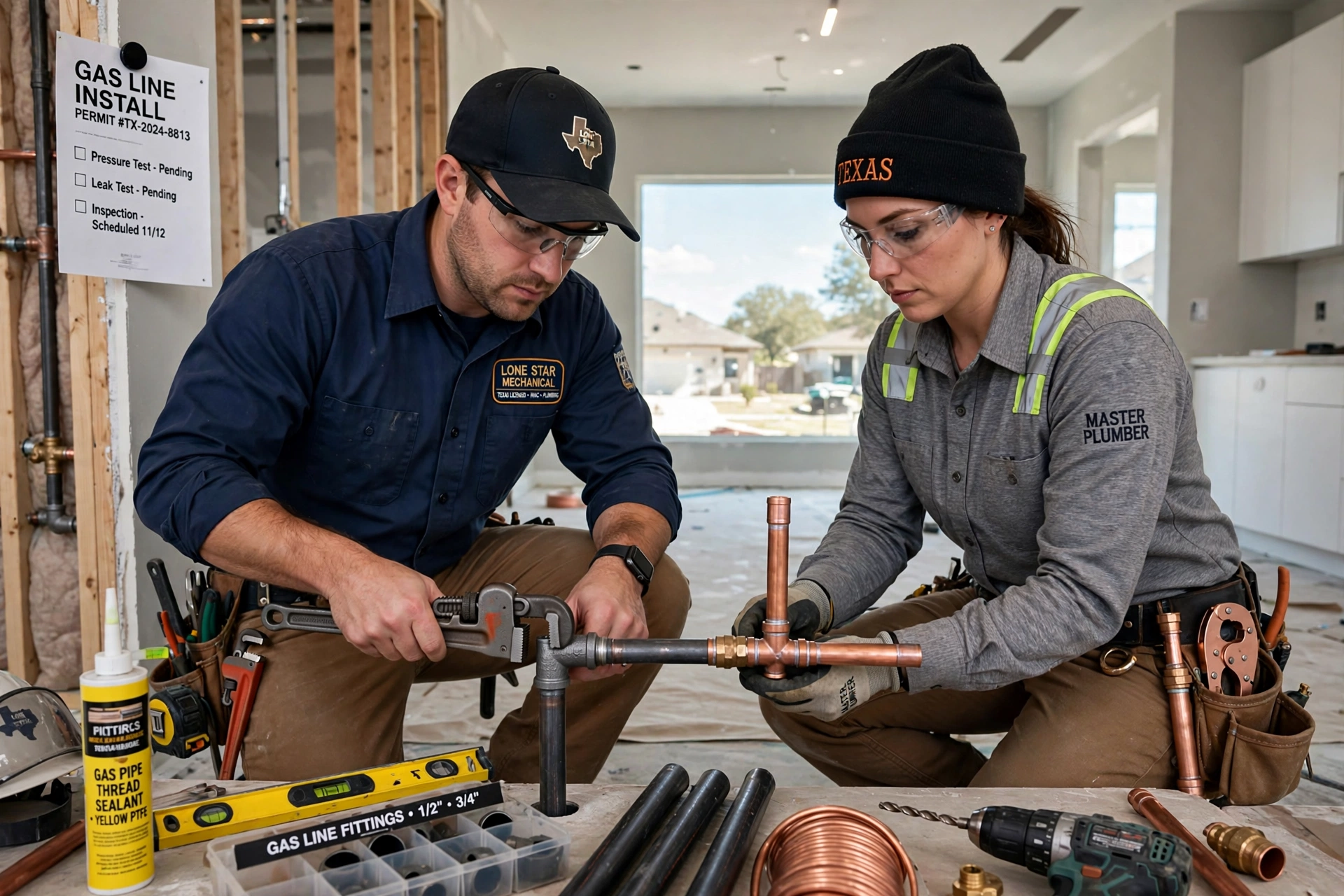
Most gas line installation work in Hutto is about additions, not original construction: a new gas range in a kitchen remodel, a gas dryer to replace an electric one, an outdoor kitchen or fire feature in a subdivision backyard, a line for a standby generator. Every project starts the same way — with engineering. We calculate the total load, verify the meter can carry it, and design the routing before any pipe goes in. The most expensive gas line is the one that has to be redone.
Indoor installations are the most frequent. In Hutto's 2000s–2020s homes, we often find the existing system needs modest upsizing to serve a new appliance comfortably — the original builder runs were sized for the original appliance package, nothing more. That upsizing is a straightforward step when it is planned from the start rather than discovered mid-project, which is why every installation begins with a real load calculation.
Outdoor installations follow the Texas subdivision pattern: outdoor kitchens, fire pits, patio heaters, and pool equipment. Each gets proper load calculation, underground distribution trenched to correct depth in the clay with proper bedding, tracer wire for future location, and individual shutoffs. We also plan the routing around what Hutto yards actually contain — irrigation lines, drainage, and the slab edges that clay movement has already stressed.
A growing share of our Hutto installation work follows new-build warranty expirations. As 5- and 10-year builder warranties run out across the subdivisions along FM 1660 and US-79, homeowners inherit systems the builder installed — and start finding the shortcuts: appliance runs tapped off existing lines without load calculations, CSST left unbonded, connectors that were never quite tight. We correct those as we install, so the addition is built right even if the original work was not.
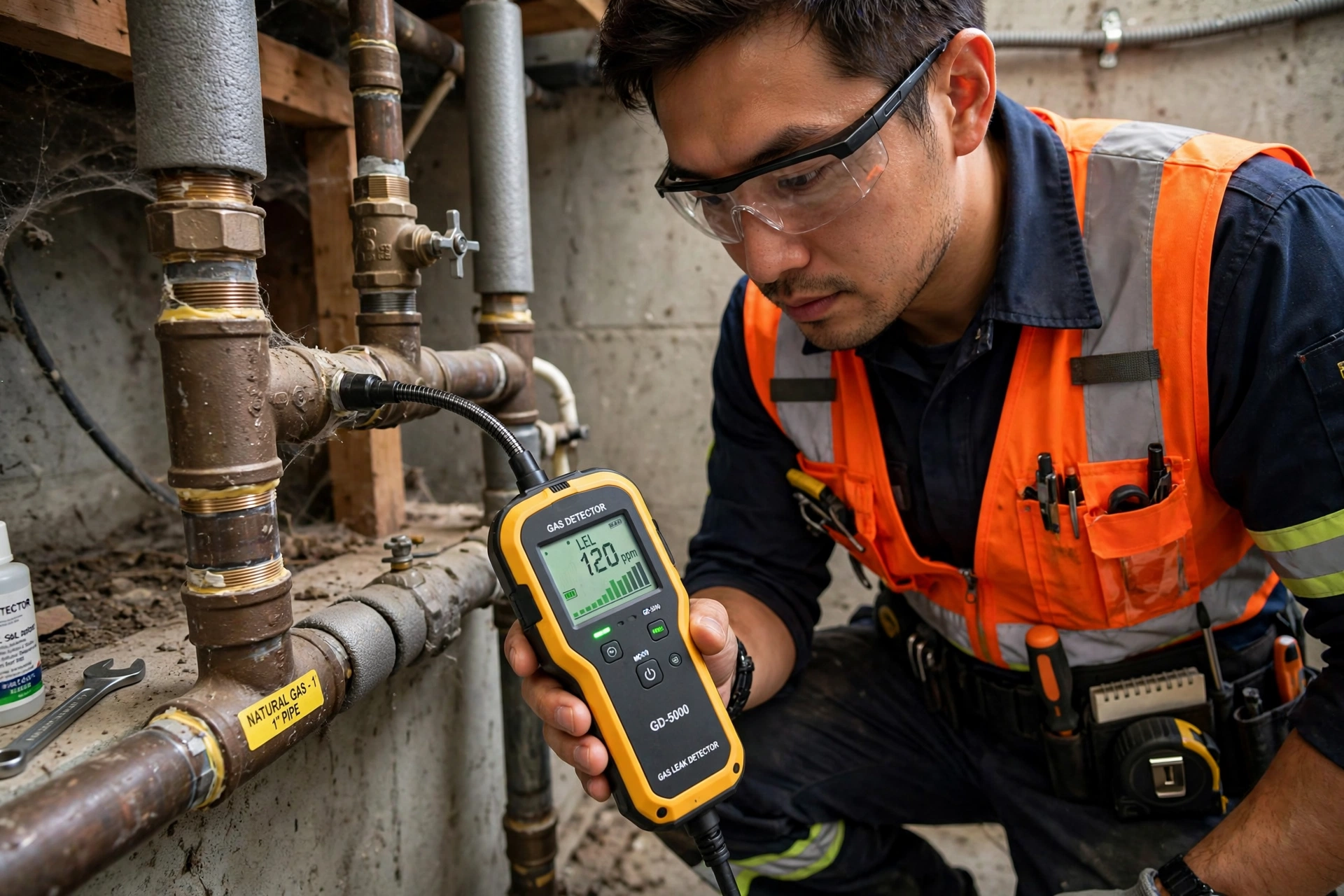
Gas leak detection in Hutto follows our systematic process, adapted to the area's newer housing stock and clay soil. Whether the property is a 2008 subdivision home or a 2021 new build, the method is the same: confirm, isolate, pinpoint, repair, verify.
Confirmation comes from pressure testing — pressurizing the system and watching for drop. This tells us whether a leak exists and how significant it is, separating a real leak from a misbehaving appliance or a misread bill. In Hutto, we pay special attention to timing: leaks that appear after heavy rain or long dry spells point to clay movement stressing connections.
Isolation narrows the search: indoor versus outdoor, branch by branch. In Hutto's CSST systems, this means testing each home run separately — the flexible tubing itself rarely fails, so a pressure drop usually leads us to a termination, a connector, or the meter riser. Outdoors, isolation separates the yard line from the house system so we know which segment is losing pressure before anyone digs.
Pinpointing uses electronic detection for indoor joints and fittings, and careful excavation for underground runs in the clay — which is unforgiving to dig, so precision matters. The goal is always to find the exact failure point with minimal disruption: a small, clean excavation at the riser, a targeted opening at a suspect fitting, not exploratory demolition across the yard.
01
What we do: Contact us for gas line repair in Hutto. We check the meter riser, yard line, and connections that clay movement stresses most.
→ This catches soil-driven leaks early, before they grow.
02
What we do: Our team inspects the gas lines and connections — including CSST runs, the meter riser, and appliance connectors — to find what is affecting performance in your Hutto home.
→ You get steady pressure and reliable operation from every gas appliance.
03
What we do: We provide gas line inspections in Hutto — a full-system checkup that finds what the warranty used to cover and you now own.
→ You know exactly what condition your gas system is in, with a prioritized plan.
Gas Line Repair in Hutto requires an understanding of two things: expansive Blackland clay and new construction. Seasonal swelling and shrinking shifts slabs and stresses gas connections, while 2000s–2020s CSST systems need bonding verification and proper installation. Our team plans every job around those realities, and every repair meets current code requirements for Williamson County.
New Subdivisions along FM 1660
Growth-corridor communities where 2010s–2020s homes run CSST systems that deserve bonding and condition checks.
Neighborhoods along US-79
East-side subdivisions in the US-79 corridor, where new builds sit on Blackland clay and shifting slabs.
Downtown Hutto & the Hippo Corridor
The historic core around the famous hippo statues, mixing older in-town homes with new infill — the widest range of gas systems in the city.
Expansive Blackland clay soil
Seasonal swelling and shrinking shifts slabs and stresses gas connections; we design repairs with proper supports and flexible connections for moving soil.
New-build warranty expirations
As 5- and 10-year builder warranties run out across Hutto's subdivisions, owners inherit their gas systems — a full inspection finds what the warranty used to cover.
Our gas line repair services address common issues that can pose risks to your home and family.
Problem
Blackland clay moves slabs and yard soil seasonally, working on rigid gas connections at the meter riser and where lines enter the home.
Our Fix
We repair stressed connections and rebuild them with proper support and flexibility for the soil they live in.
Problem
Many 2000s–2020s Hutto homes run CSST; without verified bonding, lightning and electrical faults are a real concern.
Our Fix
We inspect CSST runs and verify bonding meets current standards, correcting what doesn't.
Problem
Quick builder-era appliance taps and DIY additions leave ranges and dryers starved for gas — low flames, slow heating.
Our Fix
We calculate the real load and run properly sized lines so every appliance gets full pressure.
Gas line work in Hutto is about two things: the soil your home sits on and the systems inside it. Addressing both protects your home and your appliances.
Enhanced Safety
Clay-driven connection failures are Hutto's signature gas risk. Finding them early — after extreme weather, at warranty expiration — keeps small repairs small.
Increased Efficiency
Properly sized runs and sound connections deliver full pressure to every appliance — burners reach full flame and dryers heat the way they should.
Longer Lifespan
Timely gas line work in Hutto extends the life of your appliances and piping alike — correcting bonding, supports, and sizing now avoids emergency work later.
Compliance with Codes
Gas line repairs ensure compliance with the National Fuel Gas Code (NFGC) and Williamson County requirements — documented, permitted work that protects you at resale and inspection.
Gas line repair costs in Hutto typically range from $180 to $450 in 2026, depending on the complexity of the repair. Clay access for underground work, CSST bonding corrections, and the scope of any slab-affected connections are the most common cost drivers here. Our transparent pricing ensures you know what to expect before we start any work.
Typical Investment Range
$180 - $450 depending on scope
Our pricing reflects the quality of service and materials used, ensuring long-lasting repairs.
What changes the price
Extent of Damage
Slab-shifted connections and full-house CSST corrections mean more material and more labor than a single accessible repair.
Materials Used
CSST, black iron, and polyethylene each carry their own installed cost, as do bonding corrections and flexible riser assemblies.
Labor Intensity
Digging in Blackland clay and working around slabs, driveways, and landscaping all add labor time.
Google ★★★★★4.9
Quick response and professional service! They fixed my gas leak within hours. Highly recommend!
Yelp ★★★★★4.8
Excellent service! The team was knowledgeable and friendly. They explained everything clearly.
BBB ★★★★★4.7
Very satisfied with the gas line repair. They were prompt and thorough in their work.
With hands-on experience in Hutto's new-construction gas systems and Blackland clay conditions, our team knows what this soil and these subdivisions do to gas lines — and how to fix it right.
Real experiences from customers who chose our Gas Line Repair services.
“I had a gas leak in my home, and the team responded quickly. They were professional and resolved the issue within hours. Highly recommend!”
Sarah T.
Homeowner, Hutto
“Their gas line repair service was excellent. They explained everything and worked efficiently. I felt safe knowing my gas lines were in good hands.”
Mark L.
Business Owner, Hutto
“I appreciated their 24/7 emergency service. When I had a problem late at night, they were there within an hour. Great service!”
Emily R.
Resident, Hutto
Blackland clay is expansive: it swells when wet and shrinks when dry, and Hutto sees both extremes every year. That seasonal movement shifts slabs and yard soil, working on every rigid gas connection it touches — the meter riser, the line where it enters the house, and buried yard piping. Over time the movement loosens threaded joints, stresses risers, and can crack older rigid runs. This is why we recommend checking gas connections after extreme wet or dry spells, and why our repairs in Hutto use properly supported, flexible assemblies designed for moving soil.
Yes — and this is one of the most overlooked safety items in 2000s–2020s homes. Corrugated stainless steel tubing (CSST) must be properly bonded to the home's grounding system to protect against lightning strikes and electrical faults, which can puncture the thin tubing wall. Bonding requirements were strengthened after CSST became widespread, so many Hutto homes built in the 2000s and early 2010s were installed under older expectations. We inspect the full CSST run, verify bonding meets current standards, and correct it where it falls short — then pressure-test the system.
That is exactly the right time. While the builder warranty is active, the builder owns most system problems; the day it expires, you do. A full gas line inspection at warranty expiration documents the condition of everything — CSST runs and bonding, appliance connectors, the meter and riser, shutoff accessibility, and a pressure test of the whole system. If we find issues, you have a written report with prioritized recommendations instead of discovering them the expensive way. Many Hutto homeowners schedule this checkup in the same month the warranty runs out.
Take it seriously — in Hutto, new odors after heavy rain are a classic sign that clay swelling has stressed a gas connection. Do not try to find the leak yourself. For a strong indoor odor, leave the house and call for emergency help from outside. For fainter or outdoor odors, note where the smell is strongest and whether appliances were running, then call us for professional leak detection. We will pressure-test the system, isolate the failing segment, and repair it with an assembly built for Hutto's soil.
Gas line installations and major repairs or replacements in Hutto typically require permits and inspections through the city, and properties in unincorporated Williamson County fall under county requirements. We will let you know exactly what your specific project requires and make sure the work is ready to pass inspection — permitted work also creates a documented record of your gas system, which matters at resale.
Scope is the biggest factor: a single indoor repair on an accessible line is a modest job, while reworking connections affected by slab movement or correcting CSST bonding throughout a house is a larger project. Material choices matter — CSST, black iron, and polyethylene each have different installed costs. Access affects the total as well: clay soil is unforgiving to dig, and lines routed under driveways, patios, or established landscaping take more labor. Permits and inspections add a known, fixed component. We assess your property on-site and give a written estimate before any work begins, so you know exactly what drives the number.
Our gas line installation service ensures your new gas lines are installed safely and comply with local codes, providing reliable service for your home.
View Gas Line InstallationRegular gas line inspections help identify potential issues before they become serious problems, ensuring the safety and efficiency of your gas systems.
View Gas Line InspectionOur gas leak detection service uses advanced technology to locate leaks quickly, preventing hazardous situations and ensuring your home's safety.
View Gas Leak DetectionWe provide professional gas appliance hookup services, ensuring your appliances are connected safely and function optimally for your home.
View Gas Appliance HookupWe're here to help you with your gas line needs. Reach out during business hours for quick responses and assistance.
Phone
(512) 877-2533Address
1789 S Bagdad Rd, Leander, TX 78641, USA, Leander, Texas
Hours
Mon–Fri: 7AM – 7PM
Sat: 8AM – 4PM
Sun: Emergency Only
24/7 Emergency Available