Gas Line Repair Leander TX
Get Estimate

Outdoor Gas Line Installation in Leander, TX

Leander backyards are made for outdoor living — big lots, long warm evenings, and room for a grill station, an outdoor kitchen, or a fire pit gathering spot. We run dedicated gas lines to all of it: grills, outdoor kitchens, fire pits, pool and spa heaters, and patio heaters. One buried line from your home’s gas system, properly sized and permitted, beats swapping propane tanks for the rest of your life.


Outdoor gas work is part plumbing, part planning. The line has to be sized for everything it will feed, buried at the right depth, protected from Leander’s shifting clay soil, and fitted with accessible shutoffs. We handle the layout, the trenching, the piping, and the inspection paperwork — so your backyard upgrade is safe, legal, and ready for years of cookouts.

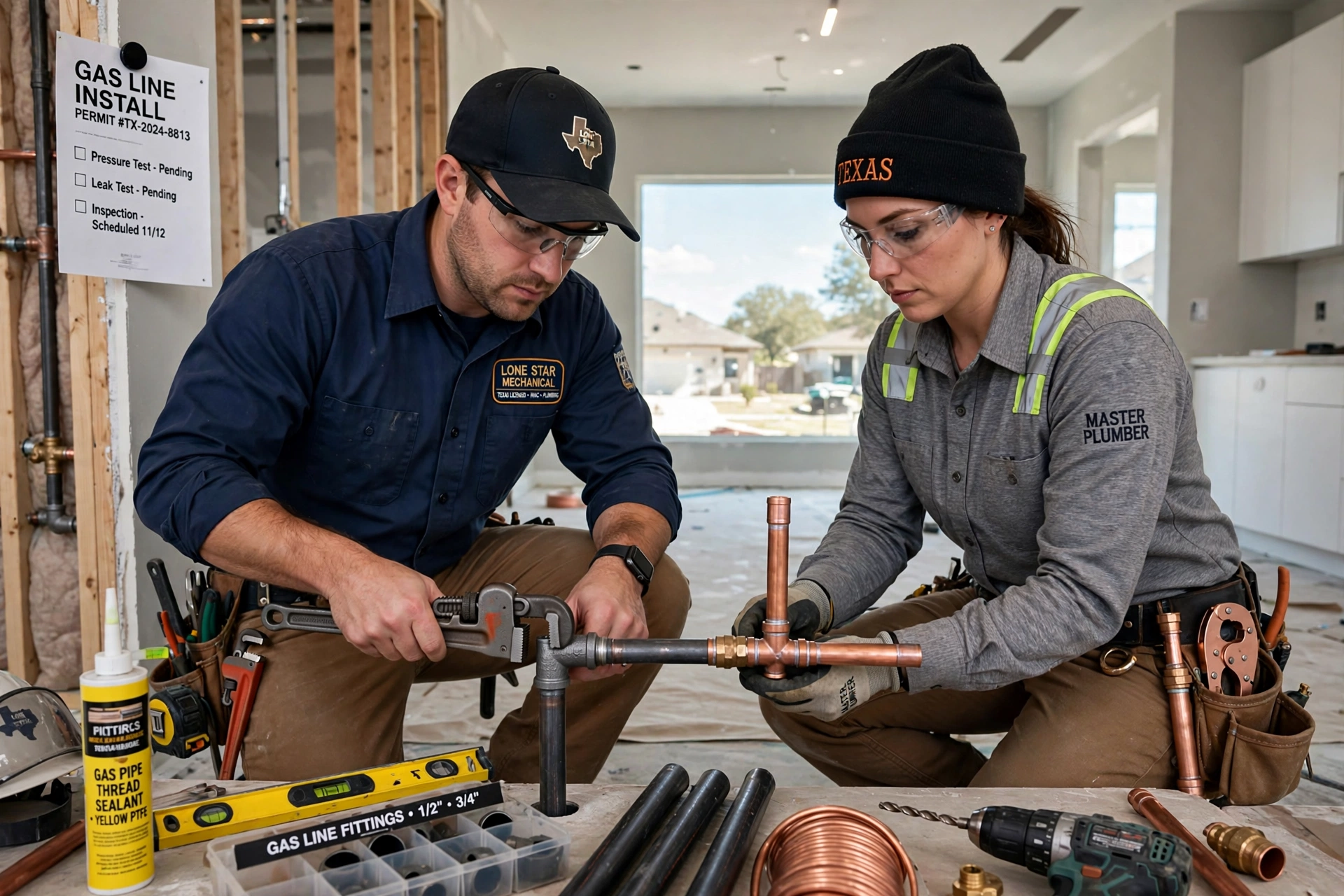
Gas technician applying pipe thread sealant to a galvanized steel elbow fitting for a new outdoor gas line in Leander, TX
Experienced Experienced & Bonded
Fully Insured Insured & Bonded
24/7 Emergency Emergency Calls Answered
Careful Workmanship Checked and Tested Before We Leave

Gas for Grills, Outdoor Kitchens, and Fire Features

An outdoor gas line turns your backyard into a place that is always ready — no tank to check, no charcoal to light, no extension cords snaking across the patio. We install the underground run from your home’s gas supply to exactly where the appliance or feature will live, with the right pipe size, the right depth, and a shutoff you can reach without digging. Here are the projects we build most often around Leander.

Built-in grills and outdoor kitchens

A dedicated stub-out for a built-in grill — or a full outdoor kitchen with grill, side burner, and maybe a pizza oven down the road — starts with sizing the line for the total BTU load, not just today’s grill. We routinely run lines with capacity to spare and stub-outs capped for future additions, so your outdoor kitchen can grow without retrenching the yard.

Fire pits and fire features

Gas fire pits, fire bowls, and linear fire features need a steady, properly regulated supply to burn cleanly and evenly. We size the run for the burner’s rating, place the shutoff where it is reachable but out of the way, and coordinate with your hardscaper or paver installer so the line lands exactly where the feature will sit — before the patio goes in, not after.

Pool and spa heater feeds

Pool heaters are the hungriest outdoor appliances, often drawing more gas than everything else in the yard combined. A long run to the equipment pad can starve an undersized line, leaving the heater underperforming on the coldest nights — exactly when you want the spa hot. We calculate the load over the actual run length and size the pipe so the heater gets full fuel at full distance.

Patio heaters and torch lighting

Freestanding patio heaters, mounted infrared heaters, and tiki-style torch lines each need their own takeoffs with individual shutoffs. These smaller loads are easy to add while we are already trenching for a bigger project — a stub-out today costs far less than a second trench next year.

Sizing the Line: BTUs, Distance, and Future Plans

The number one mistake in outdoor gas work is an undersized line. Gas loses pressure over distance, so a pipe that would feed a grill ten feet from the meter may starve the same grill sixty feet away at the back fence. We start every project with a load calculation: the BTU rating of each appliance the line will serve, plus the length of the run, plus a margin for the future. That math — not a guess — sets the pipe size.

Distance is the silent factor most DIY plans miss. In Leander’s larger backyards, runs of fifty to a hundred feet are common, and long runs demand larger pipe to deliver the same BTUs at the far end. We map the route, measure it, and size accordingly — because a fire pit with a weak, sputtering flame is almost always a sizing problem, and it is entirely preventable at the planning stage.

We also plan for what is not built yet. If there is any chance of a future outdoor kitchen, a second fire feature, or a pool heater down the road, we say so now — while the trench is open. Upsizing the main run and adding capped stub-outs during the initial install costs a fraction of digging everything up again later. Good outdoor gas design thinks two projects ahead.

Regulator placement matters too. Outdoor appliances expect gas at the right pressure, and long runs sometimes need the regulator staged correctly along the route rather than crammed at the meter. We set regulators where they are protected from weather and lawn equipment but still accessible for service — a small detail that prevents big headaches years from now.

Buried Runs: Depth, Materials, and Protection

An outdoor gas line lives underground, and underground in Leander means dealing with Hill Country limestone and expansive clay. We trench or bore the route, lay piping rated for direct burial, and protect it the way the conditions demand. Shallow, unprotected, or poorly bedded pipe is how future leaks start — so we do not cut those corners.

Depth and cover come first. Buried gas piping goes below the depth where lawn aerators, edgers, and future landscaping projects will find it, with proper bedding material under and around the pipe — not sharp limestone rubble that can abrade it as the clay shifts. Where the route crosses driveways or heavy-traffic areas, we add the extra protection those crossings deserve.

We also make the line findable and identifiable. Tracer wire alongside non-metallic piping and warning tape above the run mean anyone digging in your yard years from now gets a warning before a shovel meets gas pipe. It is a code-minded practice and a neighborly one — future you, or a future landscaper, will be glad it is there.

Corrosion protection rounds out the job. Buried metallic components get the protection they need against soil conditions, and risers — where the line comes up out of the ground — get particular attention, since the soil-to-air transition is where corrosion likes to start. In Leander’s clay, which holds moisture against buried metal, this is not optional detailing; it is the difference between a line that lasts and one that does not.

Shutoffs, Quick-Disconnects, and Outdoor Gas Safety

Every outdoor gas appliance needs a way to be shut off quickly and obviously. We install accessible shutoff valves for each run — at the house where the line branches off, and at or near each appliance — so gas can be stopped without tools, without digging, and without hunting. In an emergency, seconds matter, and a valve you cannot find might as well not exist.

For grills and other movable appliances, we use proper quick-disconnect fittings rated for outdoor gas service. They let you disconnect the grill for cleaning or replacement without touching the piping, and they seal automatically when separated. It is a small piece of hardware that makes the whole setup more practical — and it is the right fitting for the job, not a hardware-store improvisation.

Freeze protection deserves a mention, because Central Texas does freeze. Exposed piping, regulators, and valves on the north side of a house or in a low spot need protection from hard freezes — the February 2021 freeze cracked plenty of outdoor plumbing across the region. We route and protect exposed gas components with that history in mind, and we will show you which valves to know about before winter.

Finally, we walk you through the whole system before we leave: where each shutoff is, how the quick-disconnect works, what to do if you ever smell gas outdoors, and when to call us versus when to call Atmos Energy. A safe outdoor gas system is one the homeowner understands — so we make sure you do.

Permits, Inspections, and Your Outdoor Project

01

We plan the route and handle the permit

What we do: Outdoor gas work in Leander typically needs a permit, just like indoor gas work. We lay out the route, size the piping, and make sure the plan meets local requirements before a shovel hits the ground — so the project starts legal and stays that way.

→ No mid-project surprises from the permit office.

02

Trench, pipe, and protect — then pressure test

What we do: We open the trench, lay and protect the piping, install shutoffs and stub-outs, and then pressure test the new run before a single shovelful of dirt goes back. Testing on open trench is the whole point: any issue is found while the fix is easy.

→ You get measured proof the line is sound before it disappears underground.

03

Inspection, backfill, and final walkthrough

What we do: With the test documented, the work is ready for inspection, then we backfill and restore the trench line. Before we leave, we walk the route with you, point out every shutoff and stub-out, and explain winter care — so you know your new system as well as we do.

→ Your backyard is ready for the grill, the fire pit, or the pool heater — and the paperwork is in order.

Planning Your Outdoor Gas Project in Leander

Leander’s big lots and outdoor lifestyle make this one of the most popular upgrades we install — but local ground conditions shape every project. Shallow limestone, expansive clay that moves with the seasons, and the occasional hard freeze all argue for professional design and installation over a weekend trench with whatever pipe was on sale. Here is how the local picture looks by neighborhood.

Where We Install Outdoor Gas Lines

  • Sarita Valley

    Newer homes with generous backyards — the classic outdoor-kitchen and fire-pit market. We often trench here before patios and pools go in, coordinating with builders and hardscapers.

  • Mason Hills

    Established lots where homeowners are adding the outdoor living they skipped the first time around: grill islands, fire features, and patio heater runs tied into the existing house supply.

  • Crystal Falls

    A big community with varied lot sizes and plenty of pools — pool heater gas feeds are a frequent request here, and long equipment-pad runs make proper sizing essential.

Local Ground Conditions We Build For

  • Expansive clay and shallow limestone

    Leander soil swells when wet and shrinks when dry, stressing buried pipe — and limestone shelves can force creative routing. We bed, protect, and route every run for these realities, not for ideal soil that does not exist here.

  • Hard freezes and long hot summers

    The February 2021 freeze showed what deep cold does to outdoor plumbing, so exposed components get freeze-minded routing. Summer’s heat and UV, meanwhile, argue for protecting anything above ground from sun and weather.

Talk Through Your Project With Us

Call Gas Line Repair Leander TX at (512) 877-2533 and describe the backyard you are dreaming up — a grill station, a fire pit, a pool heater, the whole backyard. We will talk through the route, the sizing, the permit, and the timeline, and give you a clear quote before any work begins.

Outdoor Gas Problems We Solve in Leander

Backyard gas projects go wrong in predictable ways — usually at the planning stage. These are the situations we are called to fix or, better, to prevent.

Problem

A grill chained to propane tanks

You are hauling 20-pound tanks back and forth, running out mid-cookout, and paying far more per BTU than piped natural gas costs.

Our Fix

We run a dedicated gas line to your grill station with a quick-disconnect fitting — endless fuel, no tank swaps, and a cleaner setup. Most homeowners wonder why they waited.

Problem

A pool heater that never quite keeps up

The spa takes forever to heat or the heater short-cycles on cold nights — classic signs of an undersized or over-long gas run starving the burner.

Our Fix

We calculate the true load over the real run length and install properly sized piping so the heater gets full fuel. If an existing run is the problem, we will tell you honestly and price the correction.

Problem

Unpermitted buried gas line from a previous owner

You discover a mystery gas line in the yard — shallow, unmarked, no permit record — and nobody knows if it is safe.

Our Fix

We assess what is there, pressure test it to find out if it holds, and bring it up to a safe, documented standard — or replace it properly if it cannot be trusted.

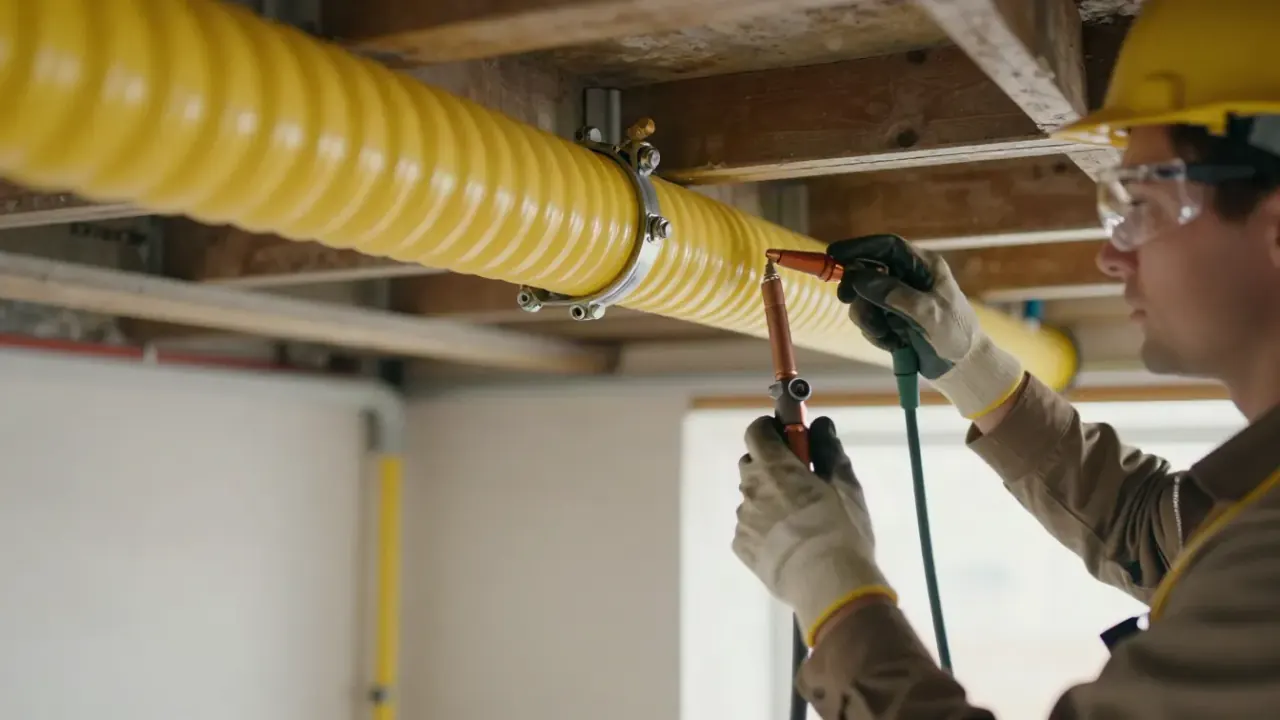
Finished yellow CSST gas line run installed along an exterior wall in a Leander, Texas backyard project

Benefits of a Professionally Installed Outdoor Gas Line

Done right, an outdoor gas line is one of those upgrades you use constantly and think about never. Here is what a proper installation buys you.

  • Cook and gather without tank swaps

    Piped gas means the grill is always ready — no checking tank levels before a cookout, no mid-party runs for propane, no half-empty tanks piling up. For anyone who grills weekly through Leander’s long warm season, this alone is worth it.

  • One trench, multiple features

    A well-planned install serves the grill, the fire pit, and the patio heaters from a single trench with individual shutoffs. Bundling the work while the ground is open is far cheaper than three separate projects — and the yard only gets dug up once.

  • Safer than portable fuel

    No gasoline or propane cans stored by the patio, no charcoal lighter fluid, no tanks tipping over. A fixed, permitted, inspected gas line with accessible shutoffs is simply the safest way to fuel outdoor living.

  • Built for Leander soil and weather

    Proper depth, bedding, corrosion protection, tracer wire, and freeze-minded routing mean your line handles clay movement, limestone, and the occasional hard freeze. It is installed for this place — not for generic conditions.

Outdoor Gas Line Installation Cost in Leander

No two backyards are alike — run length, number of appliances, trenching conditions, and whether we are working around an existing patio all change the scope. Call (512) 877-2533 with your project in mind and we will give you a clear, itemized quote before any work begins. No surprises, no vague estimates.

How we price the work

Based on run length, appliances, and site conditions — call for a clear quote

Our quotes reflect the real work: the load calculation and sizing, trenching or boring, piping and fittings, shutoffs, the pressure test, and the permit paperwork. You will see what everything covers before we start.

What changes the price

01

Length of the run

A grill ten feet from the meter costs less to serve than a pool heater at the back fence. Longer runs mean more trenching, larger pipe, and more labor.

02

Number of appliances and stub-outs

Each grill, fire pit, heater, and future stub-out adds fittings, valves, and sizing. Bundling them in one project is the economical way to do it.

03

Ground conditions

Clean soil trenches faster than shallow limestone. If we hit rock, boring or rerouting adds time — we will explain the options and the costs before proceeding.

Our Approach to Every Gas Job

How We Work

  • Fuel-gas code practices — outdoor runs installed to fuel gas code practices and local requirements
  • Sized by calculation, not guess — every run gets a real load calculation for BTUs over distance
  • Tested before backfill — new buried piping is pressure tested while the trench is still open

Our Experience With Outdoor Gas in Leander

Outdoor gas is where planning matters most — once the trench is closed, the design is final. Here is what we bring to your backyard project:

  • Regular outdoor gas installs across Leander’s master-planned communities, from grill stub-outs to full outdoor kitchens.
  • Load calculations that account for BTU ratings, run length, and future additions — so nothing gets starved for fuel.
  • Trenching and routing experience with Hill Country limestone and expansive clay soils.
  • Permit handling and inspection coordination, plus pressure testing on every new buried run before backfill.
Get Started Today
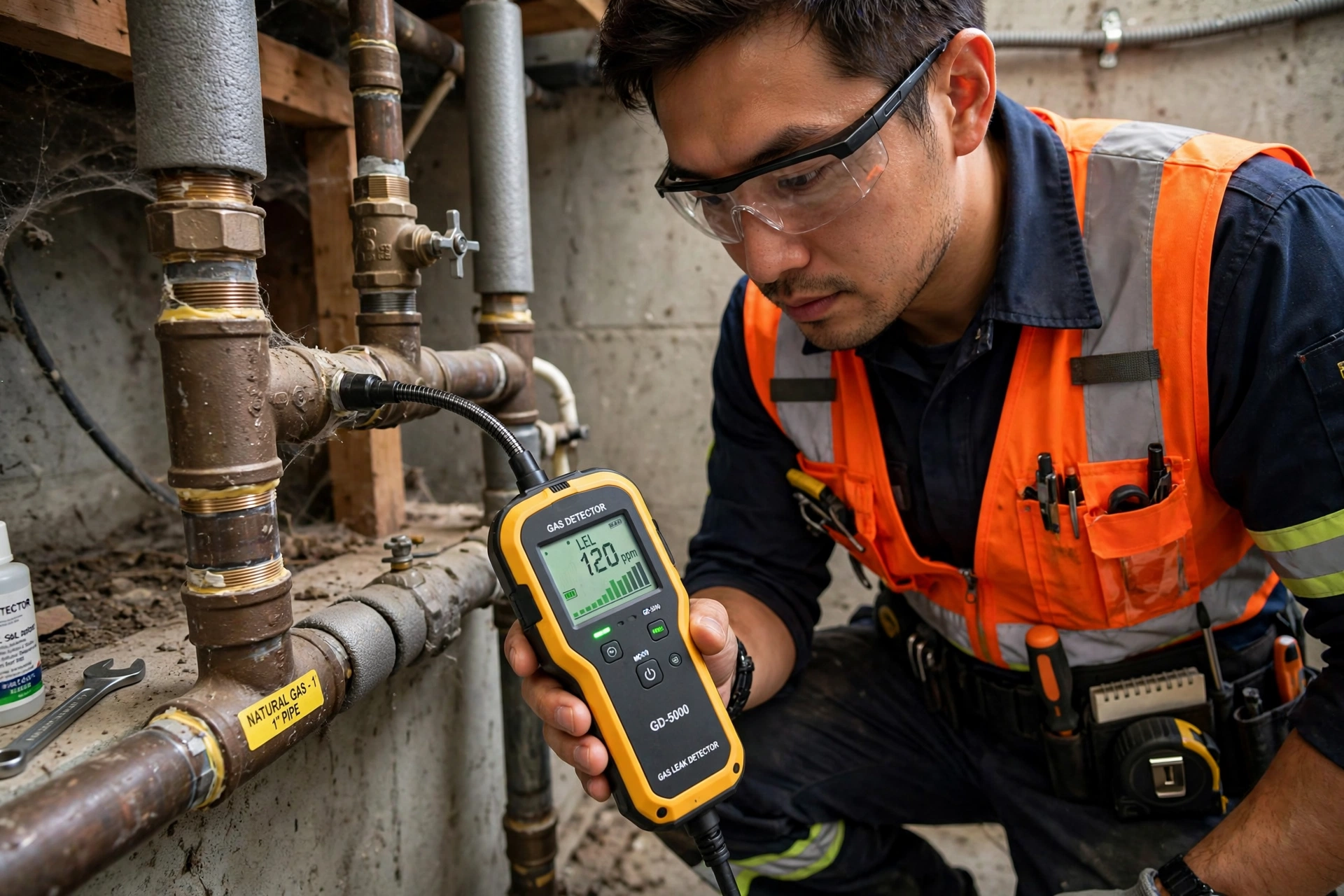
Technician wearing safety glasses tightening an outdoor gas pipe fitting with a large wrench in Leander, TX

Frequently Asked Questions

Can you run a gas line to my grill or outdoor kitchen?

Yes — that is one of our most common projects. We run a dedicated line from your home’s gas supply to the grill location or outdoor kitchen, sized for the grill’s BTU rating plus any future additions like a side burner. We install a shutoff valve and a quick-disconnect fitting so the grill can be serviced or replaced without touching the piping. If you are still in the planning stage, call (512) 877-2533 before the patio goes in — routing is much easier before hardscaping.

How deep does an outdoor gas line need to be buried?

Buried gas piping needs enough cover to protect it from lawn equipment, aerators, and future digging — plus proper bedding material around the pipe rather than sharp rock. The exact depth and protection depend on the location: runs under a lawn differ from runs crossing a driveway. We also install tracer wire and warning tape so the line can be located and identified by anyone digging in the future. Depth is not a place to improvise, so we follow code-minded practice for every run.

Do I need a permit for an outdoor gas line in Leander?

In most cases, yes. Gas piping — indoor or outdoor — is permitted work in Leander, with an inspection to follow. We take care of the paperwork and sequence the job so the inspector sees the piping and pressure test before anything is backfilled. Unpermitted gas work can cause problems at resale and with insurance, so doing it properly from the start protects you twice over.

Can my existing gas system handle a pool heater too?

Maybe — and the honest answer requires math, not optimism. Pool heaters draw a lot of gas, and the question is whether your meter, the main house line, and the run to the equipment pad can deliver the heater’s full BTU rating at that distance. We calculate the existing system’s capacity and the new load; if the system can handle it, we tie in — if not, we will explain exactly what needs upsizing and why. Guessing here leads to a heater that underperforms on the coldest nights.

How long does an outdoor gas line installation take?

Most residential projects — a grill run or a fire pit line — are completed in a day once the permit is in hand, including trenching, piping, shutoffs, and the pressure test. Larger projects with multiple appliances, long runs, or limestone to work around can take two to three days. The permit timeline is the variable we do not control, so we get that process started promptly. Call (512) 877-2533 and describe your project for a realistic schedule.

What is a quick-disconnect, and do I need one?

A quick-disconnect is a purpose-built fitting that lets you separate an appliance — typically a grill — from the gas line by hand, without tools, and it seals automatically when disconnected. You need one if the appliance will ever be moved for cleaning, maintenance, or replacement, which describes nearly every grill. We install outdoor-rated quick-disconnects as standard practice on grill runs; it is a small part that makes the whole setup far more practical.

How do I winterize my outdoor gas line?

Piped natural gas itself does not need winterizing the way water lines do — but the exposed components deserve attention before a hard freeze. We will show you where your outdoor shutoffs are and how to protect exposed regulators and valves during deep cold. After the February 2021 freeze, every Central Texas homeowner learned the value of knowing their shutoffs ahead of time. If you will be away all winter, we can discuss shutting down and securing the outdoor runs.

How far can you run an outdoor gas line?

Practically speaking, as far as your property needs — we have run lines the full length of large Leander lots to reach pool equipment pads and back-fence fire features. The constraint is not distance itself but sizing: longer runs need larger pipe to deliver full BTUs at the far end, and at some point the economics argue for checking meter capacity too. During the estimate we measure the actual route and size the pipe for it — so the flame at the far end is just as strong as at the house.
Get Your Outdoor Gas Line Installed in Leander

Stop hauling propane and start enjoying the backyard. Whether it is a simple grill run or a full outdoor kitchen with a fire pit, call now or send a request — we will design it, permit it, install it, and test it.

Call Now Request Service

Get in Touch With Us

Tell us about your project — what you want to fuel and where it sits in the yard. We will talk through the route, the sizing, the permit, and give you a clear quote. Reach out during business hours for the fastest response.

Or call us right now at (512) 877-2533 — we answer.

Gas Line Repair Leander TX


  • Address

    1789 S Bagdad Rd, Leander, TX 78641, USA, Leander, Texas

  • Hours

    Mon–Fri: 7AM – 7PM
    Sat: 8AM – 4PM
    Sun: Emergency Only
    24/7 Emergency Available

Call (512) 877-2533 Get Quote
Call Quote